

OPINION - Following on from a previous article post putting some blame on landowners for poor veld and fire management, let's have a look at an example.
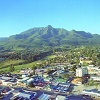
The urban interface of my hometown, George, on the Garden Route is nothing short of a disaster waiting to happen. This area was previously well-maintained plantations for timber production with beautiful natural fynbos and forest interspersed, but has become a destitute mess for which nobody wants to take responsibility.
The area is made up of a maze of different landowners, including the George Municipality, DFFE [Department of Forestry, Fisheries and the Environment], SANParks and CapeNature. All these bodies have failed to different degrees to act on their legal obligations in terms of Nemba [the National Environmental Management: Biodiversity Act] to control and eradicate alien invasive plant species.
Furthermore, this non-compliance may infringe on Section 24 of the South African Bill of Rights, which states that "everyone has the right, a) to an environment that is not harmful to their health or well-being; and, b) to have the environment protected, for the benefit of present and future gene-rations, through reasonable legislative and other measures that, i) prevent pollution and ecological degradation, ii) promote conservation ..."
I argue that the failure to clear alien invasive species creates an environment conducive to uncontrolled and dangerous fires infringing on residents' rights to a safe and healthy environment.
I fear and warn that the next fire is not far away, since the last fire here was about eight years ago, so the time for action is now!
What concerned me even more when I visited home over Christmas was the attempted logging of selected alien trees on DFFE land. If this was legal harvesting, why were trees being cut so high and without any herbicide application to prevent coppicing? If it were illegal, why was it not being stopped? This was not something that happened overnight.
My question now to these public landowners: How many times are you going to ignore warnings from the scientific community? And how many more disasters like Knysna in 2017, George in 2018 and Mossel Bay most recently have to happen before you properly invest in proper alien vegetation clearing and fuel load management around George - and throughout the Cape, for that matter?
 Dry leaves and cut tree branches. Photo: Dr Brian du Preez
George Herald sent Du Preez's piece to the various authorities he mentions. Here are some responses:
CapeNature's Comment:
CapeNature, and in this case the Outeniqua World Heritage Site and Nature Reserve (WHS&NR), welcome the interest shown by Dr Du Preez and other members of the public with a focus on alien invasive plant eradication and fire management.
The Outeniqua WHS&NR comprises an area of more than 47 000ha stretching between the Gouritz River and the Touw River, with various densities of alien infestation and species throughout. After the 2018 George fire, there has been an increase in densities of alien invasive species, with areas that were in a maintenance phase exponentially increasing in density.
CapeNature implements an annual plan of operation in which work such as alien invasive plant clearing, firebreak maintenance, jeep track and trail maintenance are prioritised in terms of the budget and priority.
CapeNature can confirm that we are on target with the planned work for 2025/26 with a focus on alien invasive plants, firebreak maintenance and the repairs of flood damaged roads.
A draft annual plan of operations has also been completed for the year 2026/27.
Dr Du Preez is welcome to contact the conservation officer on reserve (087 087 3059) if he requires more detailed information. Additional to this, Dr Du Preez is welcome to attend the Protected Area Advisory Committee (Paac) scheduled for 24 February 2026.
 'Time for action is now.' - Dr Brian du Preez
George Municipality's comment:
The George Municipality acknowledges the concerns raised regarding veld and fire management at the urban-wildland interface and appreciates the contribution of scientific perspectives to this important discussion.
In terms of the National Veld and Forest Fire Act (Act 101 of 1998), veld fire management is a shared responsibility, with each landowner legally required to manage fire risk on land under their control. The George Municipality fulfils its obligations by implementing strategic firebreaks along the boundaries of municipal properties, based on historical fire behaviour and identified high-risk areas.
The municipality's fire services are responsible for firefighting within the urban edge, as well as on municipal land outside the urban edge where applicable.
Alien vegetation management on municipal land is guided by the municipality's Alien Vegetation Management Plan, which is being actively implemented. Clearing operations are ongoing on prioritised municipal properties, and the current plan is under review to further refine priority areas and methodologies. In addition, two controlled burns were recently undertaken on municipal land outside the urban edge, north of the Garden Route Dam and near the airfield used by Working on Fire, to reduce fuel loads.
The municipality has also developed riverine maintenance management plans for watercourses traversing the urban area, recognising that these require specialised clearing approaches. Final decisions on implementation methodologies are anticipated by mid-2026 to allow for effective and environmentally compliant intervention.
It is important to note that the land surrounding George comprises multiple landowners, including national and provincial authorities.
Areas north of the botanical garden and Heatherlands fall under the Department of Forestry, Fisheries, and the Environment (DFFE), which has commenced harvesting activities on former plantation sites. The municipality has raised concerns regarding fuel loads in these areas, and we will continue to engage DFFE to better understand their fire prevention and land management approach.
The municipality remains committed to responsible land management within its jurisdiction and continues to engage with other landowners, relevant authorities, and district-level co-ordination structures to reduce wildfire risk and protect communities, infrastructure and the natural environment.
• No response was received from the DFFE nor SANParks. The newspaper's request for comment had been sent out on 20 January.
Dr Brian du Preez, a botanist born and bred in George, is these days affiliated with the UCT Science Faculty.
Read more Opinion pieces here.
‘We bring you the latest Garden Route, Hessequa, Karoo news’