

Video
GEORGE NEWS - Enter a world in which the ancient art of spinning connects people with themselves, nature and their fellow human beings.
Forest sanctuary
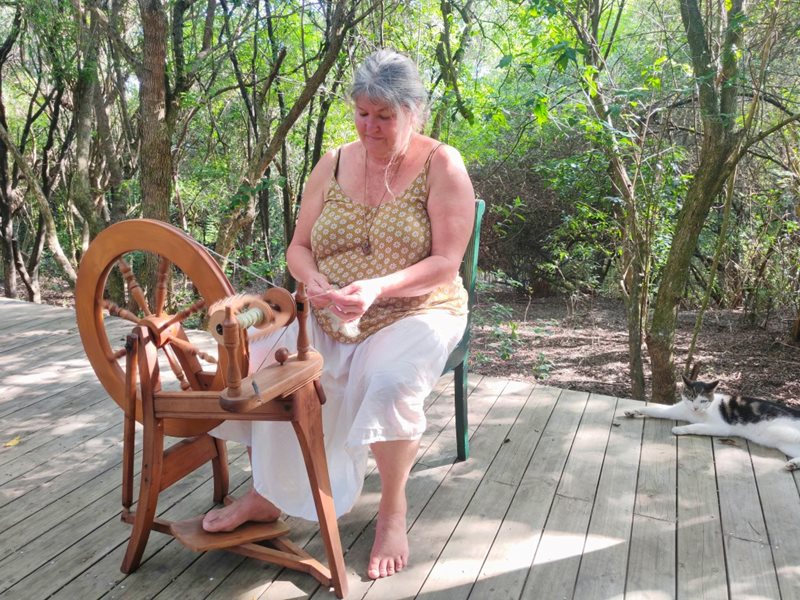
Deep in the Wilderness forest, surrounded by birdsong and dense vegetation, Lindi Hewitt-Coleman practises and teaches spinning, an art that has almost disappeared from everyday life. Here she has created a space in which creativity, nature and community meet.
Hewitt-Coleman is one of the few people in the Garden Route who still practises and teaches spinning.
Together with her family, she lives close to nature and their beloved Angora goats, cats, dogs and chickens. Recently, one of their beloved horses, Ostara, passed away at the ripe old age of 33.
The forest forms a protective canopy over the goat field and the family home. The dense vegetation drowns out the noise of the outside world and creates a doorway to a life closely interwoven with nature. It is here, with forest birds chirping overhead, that Hewitt-Coleman has created a haven in which the body, mind and spirit can flourish. Her family lives in gentle symbiosis with the area, growing some of their own food and maintaining a respectful relationship with the wildlife around them.
Meditative craft
Watching Hewitt-Coleman spin is entrancing. The process feels meditative, and the rhythmic sound is soothing. She makes it look effortless, but it took years for her to feel satisfied with her work.
It all began in 2010 when she adopted two orphan Angora goats, mostly to help clear some invasive species like black wattle. Soon they needed their first haircut. Hewitt-Coleman, who is creative by nature and already had an interest in permaculture and sustainable living, decided to find out more about how to put their mohair to good use. She found spinning wheels online and taught herself through YouTube tutorials. “I thought it was going to be a meditative process, but the first six months were torture. I struggled to work the old spinning wheels and my first threads were horrible, gnarly and hard.”
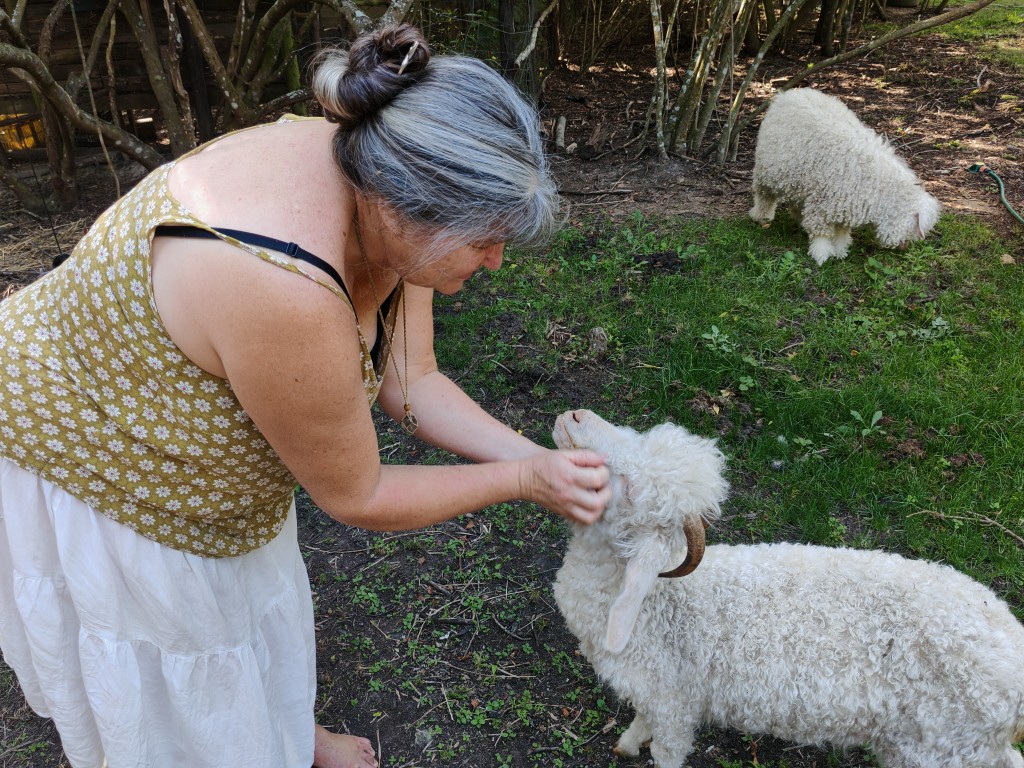 Lindi Hewitt-Coleman with her goats. Photo: Marguerite van Ginkel
With time and persistence, she mastered the craft. She began selling mohair yarn and finished products at the Sedgefield markets. At one point she had nine goats, but high seasons would wipe out her stock, making it difficult to produce enough yarn for the rest of the year. Goats can only be sheared twice a year, and timing is crucial. They are sensitive to temperature shifts and require shelter before and after shearing. “Rain turns them into massive wet blankets,” she says.
Only the mohair from younger goats can be used for products that touch the skin. As goats grow older, their fibre becomes coarser and is used for rugs, mulch or insulation. When space became an issue, Hewitt-Coleman reduced her herd to five goats, which she says is far more manageable.
Teaching thread
Today, 16 years later, she no longer sells yarn or finished products. Instead, she focuses on teaching. Realising that people were fascinated by the craft, Hewitt-Coleman acquired more spinning wheels and began offering lessons.
Visitors now travel from across South Africa and overseas to learn in her forest classroom.
Those who come to learn quickly realise that the experience is about far more than spinning. The practice engages touch, smell, sight and sound, while focusing the mind and creating a deep sense of calm. Surrounded by nature, students immerse themselves in the moment, reconnecting with their own creativity while interacting with fellow learners. Many leave forming bonds with the goats, Hewitt-Coleman, her family, and one another.
Nature connection
Hewitt-Coleman and her family take great care with the goats during the shearing process. A baby goat’s first cut determines its lifelong association with shearing, and fibre length affects its quality and usability. The goats are offered a calming environment and sweet leaves while standing on a table where they are carefully hand-clipped with scissors. Once removed, the mohair is washed and dyed using natural colourants such as khakibos, iron solution, coreopsis, ferns, comfrey, blackwood bark and elder leaves. The fibres are then combed and prepared before being spun into yarn.
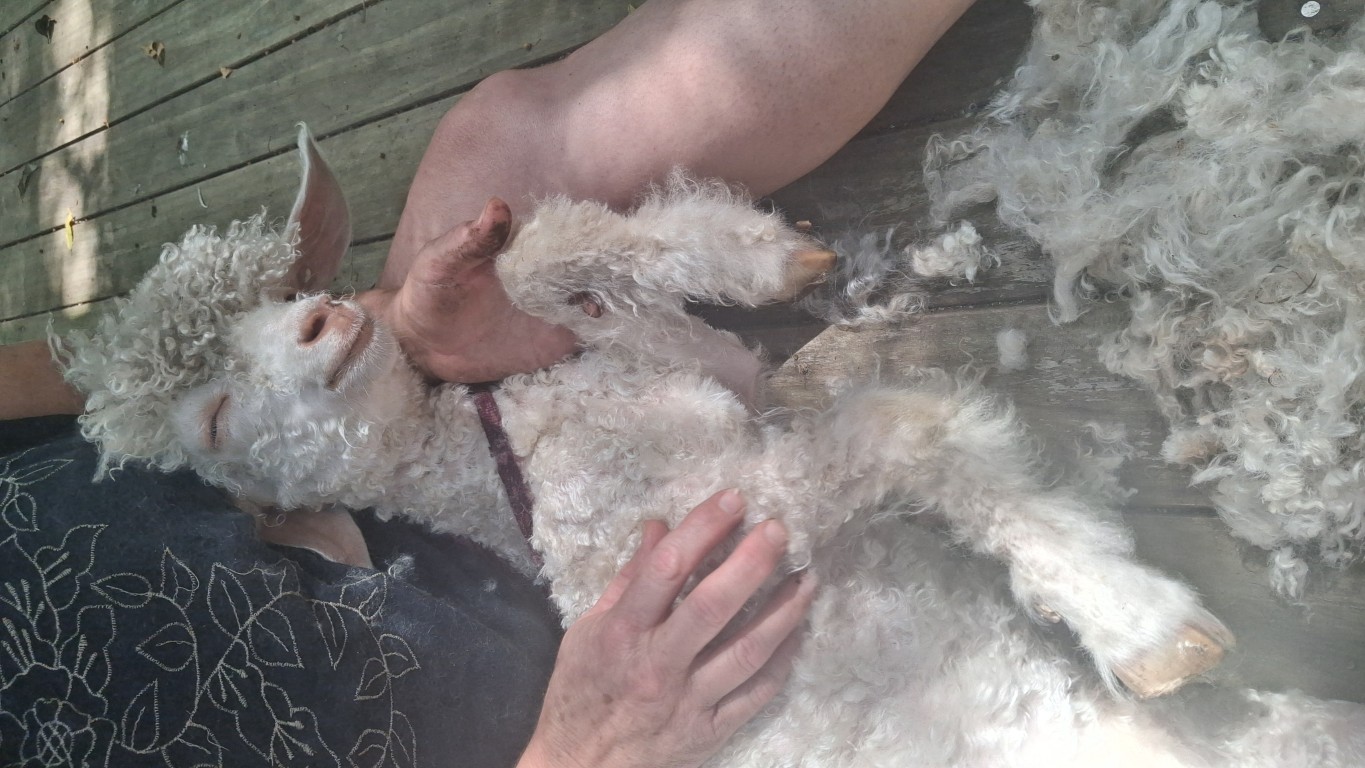 The two kids had their first haircuts and toenail trims on Sunday, 15 March. Goats can only have two haircuts a year.
Photo: Lindi Hewitt-Coleman
Despite their unusual way of living, Hewitt-Coleman and her family are far from isolated. Her husband, Allan Glogauer, is a freelance producer working in the film industry.
One daughter, Tamarisk, teaches writing for performance at Rhodes University, another, Arum, works as an artist and the youngest, Jem, is also a writer and is currently studying at the University of Cape Town. Hewitt-Coleman herself is an avid writer and teaches both online and in-person creative writing classes.
She believes creative arts help people reconnect with themselves. For her, it is one path among many. Their family has found a way to balance technology with a slower, more intentional lifestyle. “Instead of isolating from the outside world, we are merely more conscious about what we welcome into our space, while still staying connected with the outside world. Like everybody else, we go to town, shop at Checkers, and engage with online platforms to run some of our workshops.”
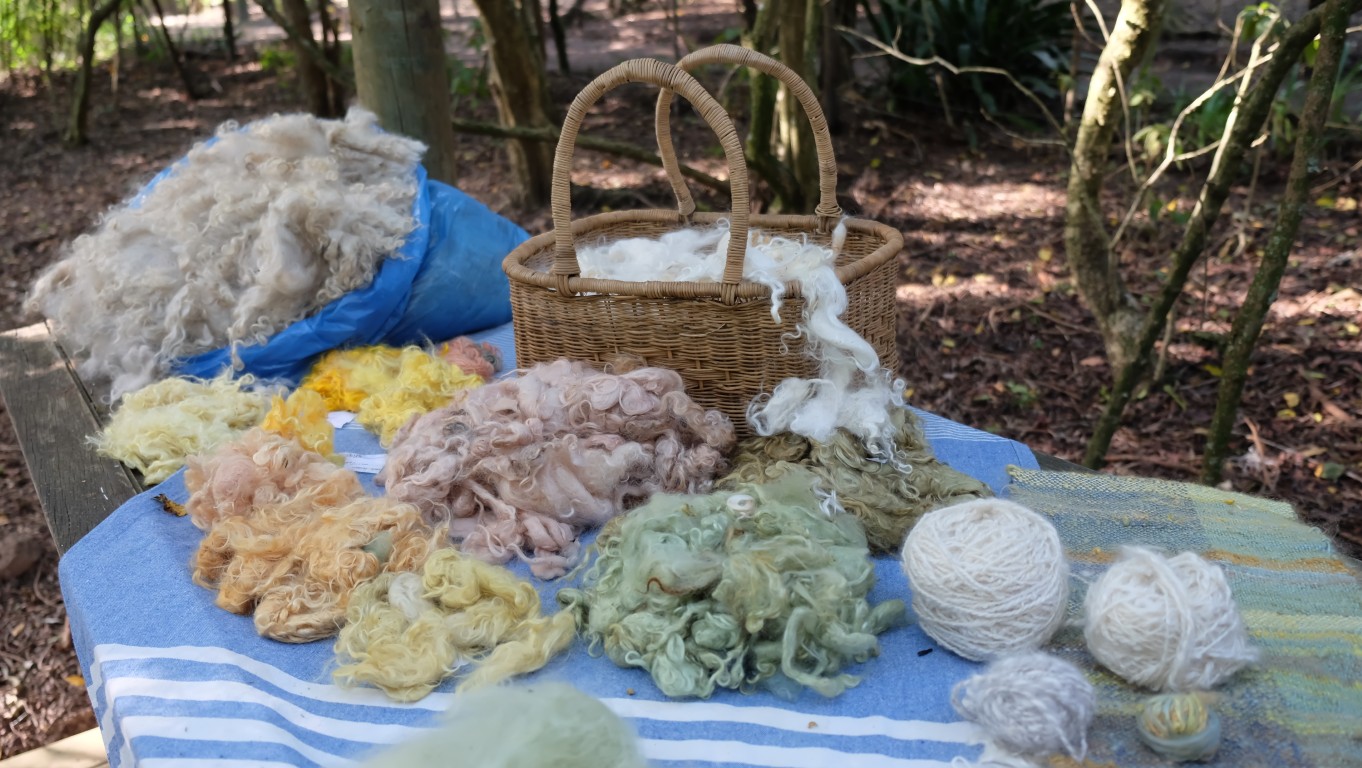 A mohair table displaying examples of cut, washed, dyed, combed and spun fibre and yarn. Photo: Marguerite van Ginkel
Wild classroom
Her workshops are a safe space for exploration. Once participants give themselves permission to fail and be wildly, awfully terrible, they often begin to enjoy the process. Teenagers in particular, who often have much to say but hesitate to put it on paper, find that removing the fear of “I can’t” allows their voice to emerge naturally. “A lot of people are struggling with the way we live and the state of society. Many feel disconnected - from each other, from family and from the environment. An antidote, not the only one, but one of many, is engaging in creative tasks. Writing, crafting or working on community projects cultivates a sense of connection and belonging. It is all a fabulous mystery.”
Watch: Coleman as she spins mohair from her Angora goats, explains the fibre, natural colours, and combing process, and shares the meditative rhythm of this almost-lost craft.
In the quiet of the Wilderness forest, with spinning wheels humming and goats grazing nearby, Hewitt-Coleman has created a doorway to connection, creativity and the simple joy of making something with your own hands.
‘We bring you the latest Garden Route, Hessequa, Karoo news’