

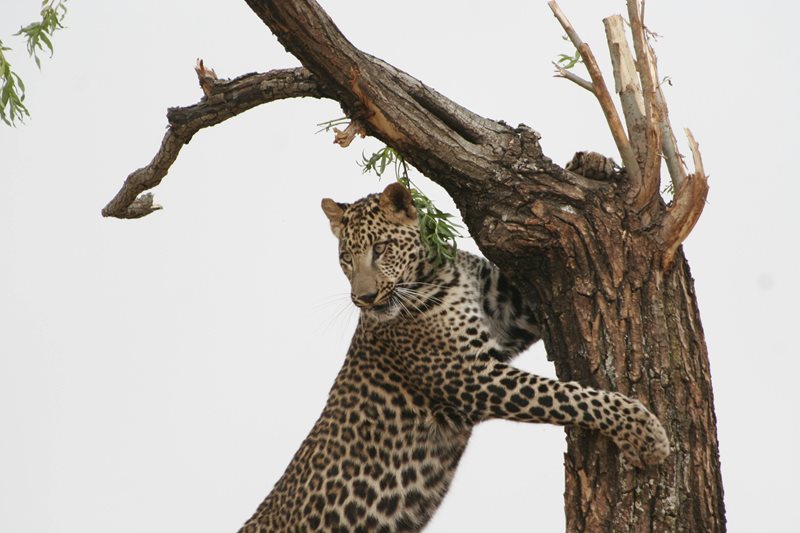
GARDEN ROUTE NEWS - Landmark Rewilding has launched the Garden Route Leopard Conservation Project, an initiative aimed at protecting leopards and securing biodiversity across both protected and unprotected areas in South Africa.
The project focuses on safeguarding the region’s leopard populations through rescue operations, research and community engagement.
Conservation teams rescue injured animals where possible, fit GPS collars and release leopards back into safe natural habitats.
Researchers also conduct detailed studies on predator populations, behaviour and habitat use to inform conservation strategies and improve protection efforts.
Leopard habitat spans a wide range of ecosystems, including mountains, forests and semi-arid areas, as well as landscapes used for forestry, farming and towns. To better understand how these predators move through such diverse environments, conservationists use remote-sensing camera traps and GPS collars.
These technologies provide valuable insights into leopard ecology, population structure, predator-prey relationships and interactions with other wildlife species.
The species, the Leopard (Panthera pardus), is currently listed as vulnerable. Estimates suggest there are about 448 leopards in the Eastern Cape and 553 in the Western Cape, with populations declining by roughly 8% per year.
Despite the presence of protected habitats in the region, leopards still face significant threats. Habitat fragmentation, loss and transformation reduce the space and resources available to wildlife. This leads to lower population densities, increased isolation and reduced genetic diversity, all of which threaten the long-term survival of the species.
Another major threat is the use of snares, which are commonly set for bushmeat but indiscriminately trap and kill many animals each year, including leopards. Conservationists say these snares should be actively removed during field patrols. Human-wildlife conflict is also a challenge, particularly where livestock farming takes place.
Experts encourage improved husbandry practices and non-lethal deterrents to reduce losses and limit conflict with predators.
Other risks include road collisions, trophy hunting and illegal harvesting.
The project also promotes wildlife-friendly land management through the Fair Game™ certification and works with landowners, schools and communities to raise awareness about conservation.
Residents can contribute by adopting wildlife-friendly farming practices, removing snares where possible, raising awareness in their communities, volunteering or supporting conservation initiatives financially.
Through research, collaboration and public involvement, conservationists hope to ensure that leopards continue to roam the Garden Route landscape and that biodiversity in the region can flourish for generations to come.
‘We bring you the latest Garden Route, Hessequa, Karoo news’