

Video
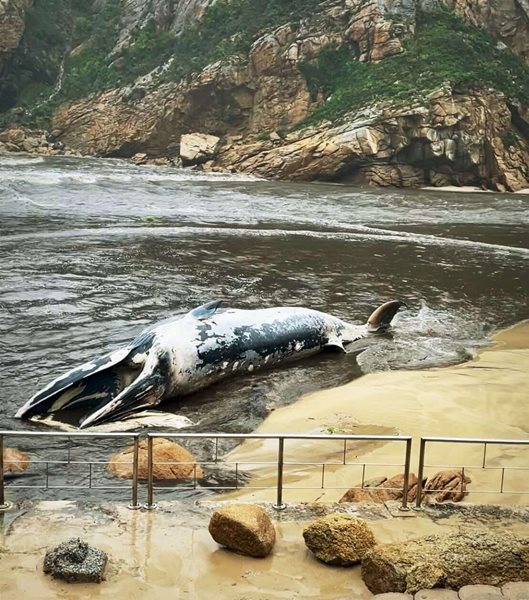
GEORGE NEWS - The baleen whale carcass that washed up at the Gwaiing Beach river mouth on Sunday 3 May, is more than a striking sight for beachgoers. It offers a rare glimpse into the lives, and deaths, of some of the ocean’s largest animals.
According to Wal Marsh of the Stranded Marine Animal Rescue Team (SMART), the whale appears to be a baleen species, a group that includes the largest animals on Earth.
Unlike toothed whales, baleen whales feed by filtering seawater through comb-like plates in their mouths, trapping tiny prey such as krill and plankton.
George Herald research reveals that these animals travel vast distances and are constantly on the move. When one strands, it is usually the result of several contributing factors rather than a single cause.
Whale strandings are not uncommon along the South African coastline. Causes can include illness, injury, navigational errors and rough sea conditions. Older whales nearing the end of their lifespan may also drift closer to shore. Coastal features such as sandbanks and shallow gradients near river mouths can further complicate a whale’s ability to return to deeper water.
Logistical challenges
The location at Gwaiing Beach presents practical challenges. The river mouth is inaccessible to heavy machinery, making removal or burial difficult. Marsh indicated that the carcass will most likely be left to decompose naturally by authorities or be carried back out to sea by strong tides.
Wilderness carcass
Although the sight and smell of decomposition may be unpleasant, it plays an important ecological role. Whale carcasses provide a rich source of nutrients for coastal and marine ecosystems. Scavengers such as seabirds, fish and smaller marine organisms benefit from this sudden influx of energy.
For researchers, a stranded whale can provide valuable scientific information. Where possible, samples may be collected to help determine the species, health condition and potential cause of death. This contributes to a broader understanding of marine health and conservation.
Residents are urged to keep a safe distance and not to interfere with the carcass.
Video: WATCH
‘We bring you the latest Garden Route, Hessequa, Karoo news’