

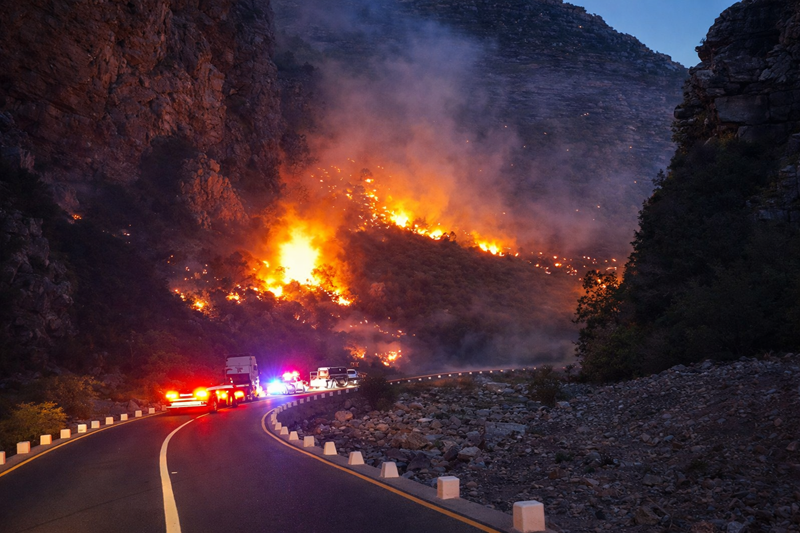
OPINION - The Garden Route environment has once again been placed under immense strain as widespread wildfires, fuelled by prolonged drought and relentless winds raged across large parts of the region in recent weeks.
Multiple fires between Mossel Bay and Gqeberha pushed communities to the brink, with only the dedication and expertise of highly trained firefighting teams preventing catastrophic loss of life and property.
“Only committed and well-equipped firefighting expertise saved the day,” says Cobus Meiring of the Garden Route Environmental Forum (Gref). “The scale and intensity of these fires underline just how vulnerable the region has become under current climatic conditions.”
Despite early warnings and repeated calls for landowners to implement fire breaks and clear invasive alien plants to reduce fuel loads, many properties, particularly along the urban edge were ill-prepared for the fires that followed.
Although these fires were predicted months in advance due to extremely dry conditions and persistent winds, the ferocity and reach of the blazes left many residents shocked. With several dry months still ahead, the likelihood of further fire incidents remains high.
Beyond the physical damage, the psychological toll on communities living under constant threat of fire is profound.
This stress is compounded by the ongoing drought, with water restrictions firmly in place across the Garden Route and Knysna reportedly on the verge of running out of water.
Fire and drought are intrinsically linked in this region, as painfully demonstrated during the 2017 Knysna disaster, when the town faced near-total water depletion while simultaneously dealing with the aftermath of South Africa’s most devastating fire event.
Collective effort required
Climate change is no longer a distant threat but a present reality. Authorities are doing what they can with limited resources, but adaptation to this new normal requires a collective effort.
Residents are urged to heed early warnings, reduce risk proactively, and take responsibility for safeguarding their properties and communities.
The financial cost of fighting multiple large-scale fires is staggering, while the physical and emotional strain placed on firefighters and disaster management personnel working around the clock cannot be quantified.
The Garden Route’s firefighting and disaster management capacity is widely regarded as world-class, built on years of planning, training, and constant preparedness. These efforts deserve recognition and sincere appreciation.
• Gref serves as a public platform for environmental managers and a climate change think tank (www.greecsf.co.za).
Comment and opinion are that of the author and not necessarily shared by Group Editors, any of its publications or staff members.
‘We bring you the latest Garden Route, Hessequa, Karoo news’