

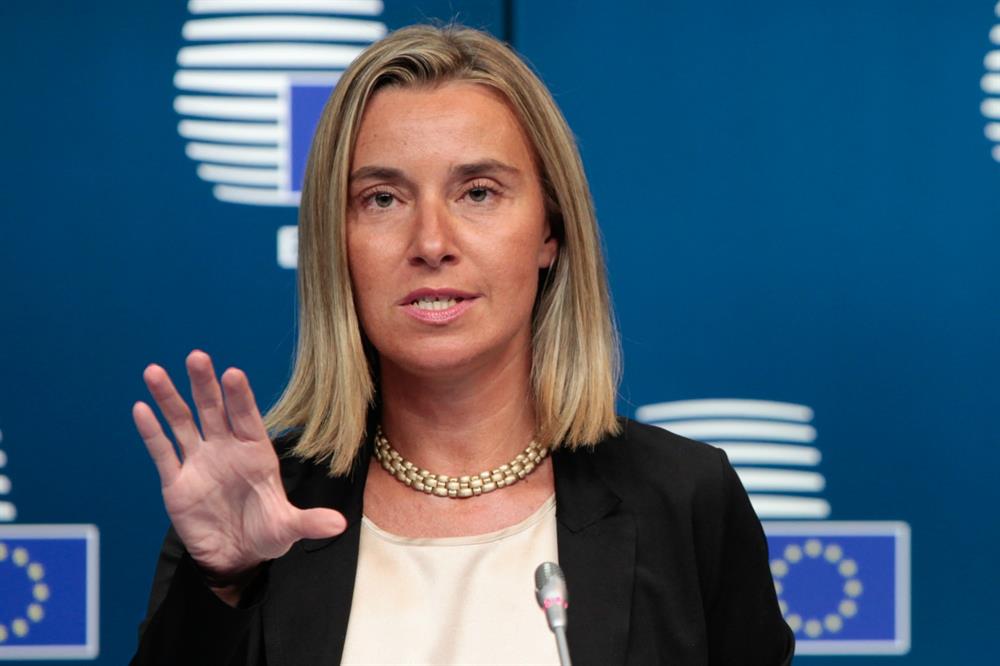
Federica Mogherini, the High Representative for Foreign Affairs and Security Policy was speaking in a panel discussion at the SA Institute of International Affairs in Johannesburg on EU-South African relations. Mogherini is also tbe vice president of the European Commission.
Several South African speakers suggested to her that the legacy of colonialism still stained African perceptions of Europe and that many Africans still felt that Europe related to Africa in a “neo-colonial” or domineering way.
Mogherini said she understood well that colonialism continued to shape the perception of EU-African relations and sometimes the relationship itself.
“But we need to move forward. Because I can tell you that in Europe today the fight is not … can I be very blunt … is not whether we have to focus on post-colonial or ex-colonial interests or not.
“The fight today in Europe is keep EU African relationship high on the agenda. That is a fight that my generation and the development community is trying to make.
“It’s a lot of decades ago,” she said, referring to colonialism. “I know it’s deeply rooted.”
“But history cannot prevent us to look at the reality of today and at the future of tomorrow. And today the big fight of people like me in Europe is keep the focus on our partnership and on the need to continue to invest in our partnership for the sake of the agenda that we share.”
Mogherini was also bluntly asked what Europe had to offer Africa today. It was put to her that China was building the road infrastructure without which Africans could not trade among themselves, Japan was connecting the continent digitally and the US was bringing electricity through its Power Africa programme.
Did the EU have anything to offer except anti-terrorism and security? this member of the audience asked, echoing criticism from the panel that the EU was putting African security ahead of development, mainly to protect itself.
Mogherini retorted that the EU was not proposing to bring something new to Africa and didn’t need to invent a slogan to sell to the continent, as it had been already trading with and investing in Africa for many decades. The EU – and not China – was South Africa’s main trading partner, she pointed out.
The EU was also a partner with Africa on security. But this was not a matter of “securitising” the continent and its development, as one panel member had suggested.
This security cooperation was being suggested by African countries themselves. Mogherini said that she had just been in the Sahara desert in Niger, where she had met the mayor and council of a particular town. They had asked the EU to be more flexible in its development assistance, placing more emphasis on security.
“Because for them it doesn’t make any sense to have development if they don’t then manage their security. With their own means. But also with resources.”
The EU was not forcing security onto the agenda, it was being asked to help improve security as a condition for development – and of course it was also promoting development as a condition for security.
In some places likes Syria and parts of the Sahel, the fight against terrorism was about investing in the future of young people and inclusive societies and job opportunities and human rights.
“But in immediate terms it’s also equipment for the police, or training for the border guards to control properly the movement of people, not because they want to prevent people to enjoy their rights, but because they see, as part of their own development, having the instruments to take care themselves of their security.”
Source: African News Agency (ANA)