

AGRICULTURAL NEWS - When a farm is placed under quarantine due to a suspected case of foot-and-mouth disease (FMD), it can take two years or longer before the quarantine is lifted.
This also applies to surrounding farms within a 10km radius of the index farm. The quarantine is usually lifted within a year of ‘Day Zero’, the day when no symptoms remain, says Dr Muller Strydom of the George Animal Hospital.
“The authorities are working to reduce the period after Day Zero to three months, although the 12-month period provides more certainty.”
It can take anywhere from a month to a year for animals to become symptom-free. Once all symptoms have disappeared, they have to be slaughtered. This applies to both dairy and beef cattle.
“Authorities wait until there are no symptoms because at that point the animals shed the minimum virus, if any. This limits the risk of spread on the way to the abattoir and at the abattoir itself.”
If an animal with active lesions reaches the abattoir by mistake, the facility is immediately closed, and staff must remain inside and be washed.
“Everything must be cleaned and the carcass destroyed before work can resume. The state vet then takes over immediately.”
Strydom explains that culling is currently required because the old vaccines have been used.
“With the old vaccines it is not possible to distinguish between a natural infection and a vaccine reaction. The state has introduced the F-brand system to mark vaccinated animals, but some farmers do not like it because of the stigma, or animals can slip through [unbranded].
“With the new Dollvet vaccine from Turkey, it is possible to distinguish between a natural infection and a vaccine reaction. This is especially important when animals or meat are sent for export. In such cases the animals do not need to be slaughtered.”
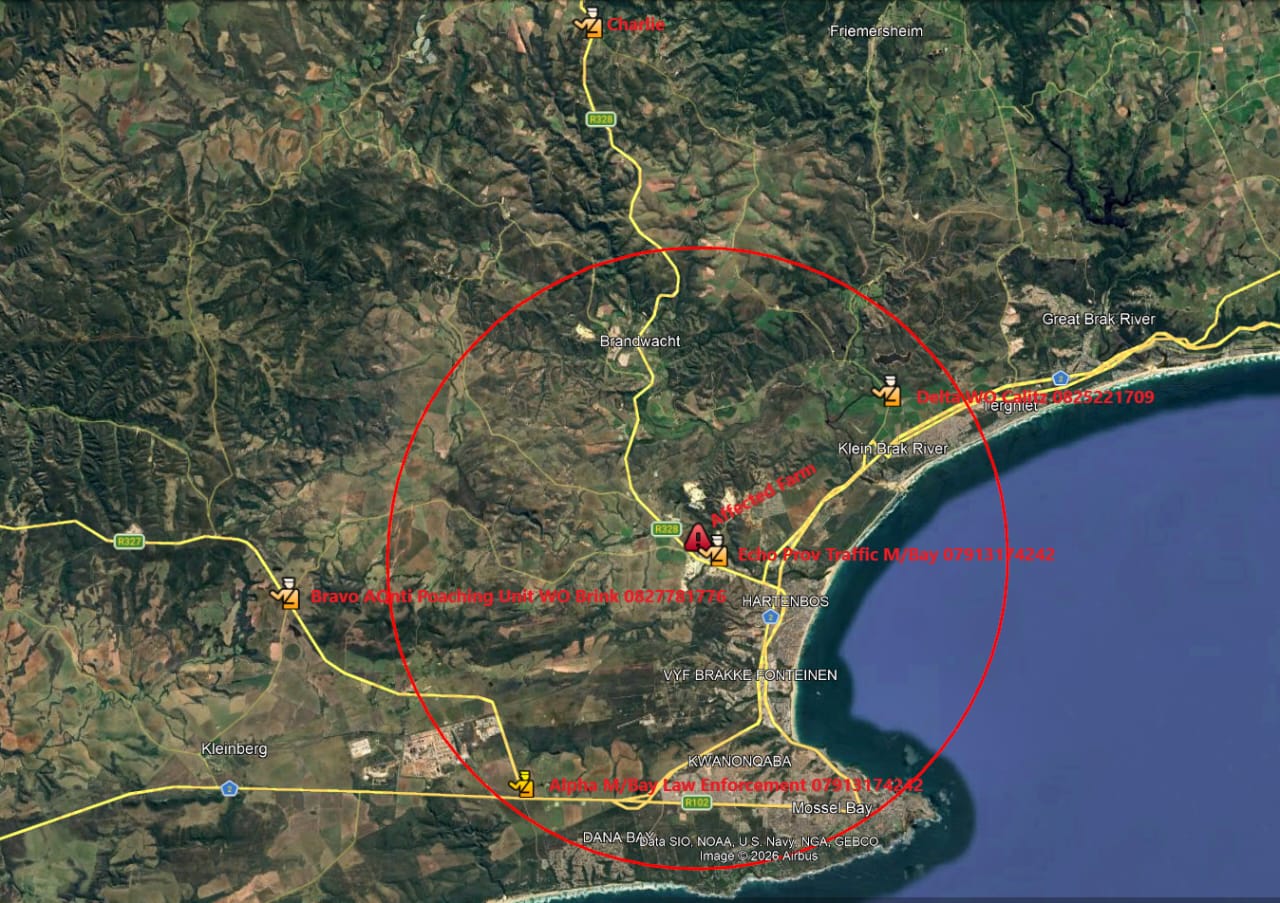 The local state veterinary services' location map of the quarantined area near Hartenbos.
‘We bring you the latest Garden Route, Hessequa, Karoo news’