

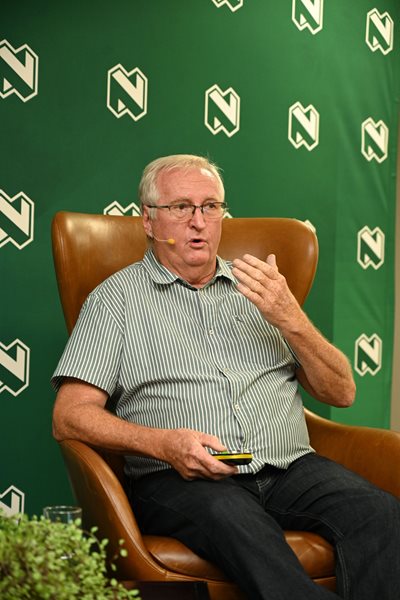
AGRICULTURAL NEWS - Johan van den Berg, a specialist agricultural meteorologist, says long-term climate change and historical climate variability must be factored into agricultural planning, as they increasingly influence temperatures and rainfall patterns.
Van den Berg spoke at the Nedbank Agricultural Webinar on Wednesday 28 January. He said the Southern Cape falls within a climatological strip in which there is a shift in weather patterns that could make it increasingly challenging for farmers to negotiate.
Long-term weather data indicate that the most severe droughts occur in this strip, because in some years it can have both a winter and summer rainfall season, and in “probably most of these years”, both the winter and summer rainfall won’t be sufficient. “So this is a high-risk area. If you are farming in this [area], there are special needs and special planning to factor in.” This strip also includes areas like the Overberg and Tankwa Karoo.
According to the data, the western parts of the Western Cape is a winter rainfall area and the northeastern and eastern parts summer rainfall areas. From 1960 to 2025, South Africa has experienced consecutive multi-year periods during which the rainfall was either above or below average. The current above-average phase has lasted about five years. Van den Berg warned that this increases the risk of farmers becoming complacent and planning for ‘good years’ while they underestimate climate risk.
He warned that global average temperatures have increased rapidly since the 1980s. The year 2024 was the warmest on record and 2025 the third warmest, which reinforces the long-term upward trend. With rising temperatures come more severe floods and droughts. Minimum temperatures show greater variability, and there is therefore also an increased risk for frost in some areas, including parts of the Western Cape, increasing risk of crop damage.
Looking at 2026, he said with the La Niña conditions fading into a neutral phase, the probability of an El Niño developing later in 2026 has increased rapidly, and is exceeding 60% for late winter and spring.
“For the next five years we are expecting more El Niños than La Niñas. Although it’s a negative signal for summer rainfall, it’s not always so negative for the winter rainfall area. It’s not a straightforward situation in which an El Niño brings more rain in the Western Cape, but it depends on the timing.
"If there’s a rapid development of El Niño from about June-July, there can be very wet conditions later in the season. It’s very difficult to forecast that now, but there is some light in terms of the Western Cape. Not much rain is expected for the next month, but the second part of the winter season will be much better.”
The probability for relief for the Southern Cape in the second half of the winter is above 60%.
In the summer rainfall areas, 2026 is expected to bring very hot conditions and a high likelihood of below-average rainfall during the critical November-January period.
‘We bring you the latest Garden Route, Hessequa, Karoo news’