

COMMENT - Recent changes in the Touw Estuary have sparked widespread concern on social media, with residents questioning water quality, unpleasant odours and calls for the estuary mouth to be artificially opened.
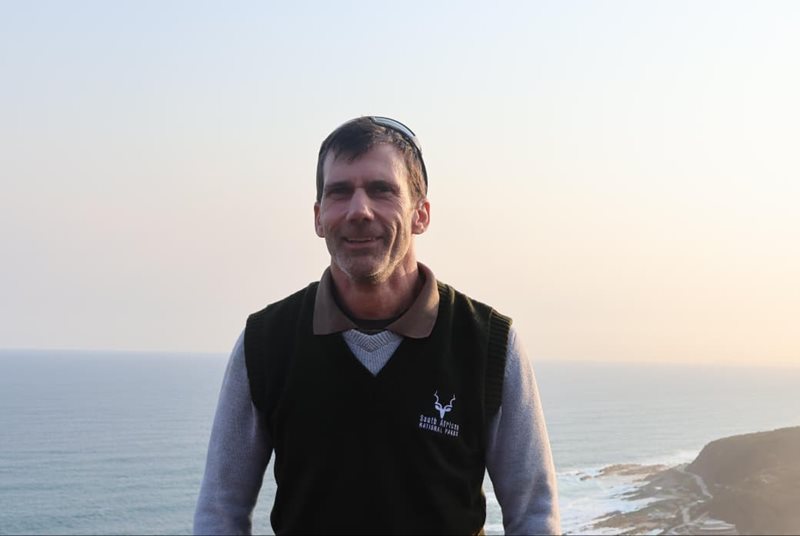
In response to this public outcry, Kyle Smith, a SANParks scientist based in the Garden Route National Park, provides an informed perspective on what is currently unfolding in the estuary.
Drawing on ecological science and local context, he explains the natural processes behind the visible changes, clarifies the management role of SANParks and outlines why reactive interventions may not be the most effective solution.
In response to this public outcry, and amid growing speculation about pollution and mismanagement, this opinion piece aims to provide an informed perspective on what is currently happening in the estuary, the role of SANParks as the managing authority, and why some of the changes being seen and smelled may be the result of natural processes rather than environmental failure.
Public concern about the current condition of the Touw Estuary is both welcome and necessary. Estuaries sit at the meeting point of land and sea, and their health depends as much on sound management as on an informed and attentive public.
Recent reports of unpleasant odours and visible algae have understandably raised alarm, with some calling for the estuary mouth to be artificially opened. These reactions are natural. They are also a reminder of how easily visible changes can be misread without context.
SANParks is the management authority responsible for the Touw Estuary, including decisions around water quality monitoring and estuary mouth management.
Much of the current debate centres on two linked issues: whether the estuary is polluted, and whether opening the mouth would solve what people are seeing and smelling.
The presence of macroalgae is often taken as a sign that something has gone wrong. In some cases, that is true. Elevated nutrients from agriculture, sewage, or urban runoff can fuel excessive algal growth. But algae do not respond to nutrients alone. They respond just as strongly to heat, sunlight, and water that sits still for long periods.
At present, the Garden Route is experiencing prolonged dry conditions. Freshwater inflows into estuaries are very low, temperatures are high, and daylight hours are long. The Touw Estuary mouth is closed, which means water remains in the system longer.
These are ideal conditions for macroalgae to grow. When that algae begins to die and decompose, bacteria break it down and release gases such as hydrogen sulphide. The result is the familiar rotten egg smell that many people associate with sewage, even when no sewage is present.
This distinction matters. Low rainfall also means that upstream pollutants are less likely to be washed into the estuary. Where pollution is suspected, attention often turns to local sources such as sewer infrastructure.
At present, there have been no reported or recorded sewage spills affecting the Touw Estuary. SANParks conducts regular water quality monitoring, including testing for E. coli, a standard indicator of faecal contamination.
Results to date do not point to abnormal pollution events. In short, what we are seeing and smelling can be explained by natural processes under current climatic conditions, rather than by evidence of contamination.
Calls to artificially breach the estuary mouth often follow quickly. The idea is appealing in its simplicity. Open the mouth, flush the system, and the problem goes away. In reality, mouth breaching is neither simple nor without risk.
Artificial breaching of the Touw Estuary is strictly regulated through an Environmental Authorisation issued under national environmental law. It is permitted primarily to reduce flood risk to infrastructure, and only when water levels reach defined thresholds. Those levels are currently far from being met. In fact, water levels have been dropping due to low inflows and high evaporation.
Breaching under these conditions would almost certainly be short-lived. With insufficient water pressure, the mouth would close again within hours or days.
Worse, a brief opening followed by further water loss could leave the estuary shallower, warmer, and more light penetrated. These are precisely the conditions that favour more algal growth, not less. What feels like decisive action could easily make the situation worse.
It is also important to remember that the Touw Estuary is naturally an intermittently open and closed system. Both phases are part of its normal functioning. Open phases allow fish and other organisms to move between the sea and the estuary, supporting breeding, recruitment, and overall biodiversity. They improve flushing and often benefit fishing, though they can make boating more difficult.
Closed phases tell a different ecological story. Water levels rise and spread across shallow areas and floodplains. These habitats are valuable for birds and other species. Salinity drops, food webs shift, and primary productivity increases, often making the water appear less clear. Boating conditions may improve, while fishing opportunities change. Neither state is inherently good or bad. Each plays a role in the life of the estuary.
Looking ahead, the pressures facing the Touw Estuary are not unique. Reduced freshwater inflows, growing development, and climate change are reshaping estuaries along the Garden Route. Managing these systems requires more than reacting to symptoms.
It requires careful attention to what happens in the catchment, how much water is abstracted, where development is allowed, and how future climate risks are planned for.
Relying on estuary mouth manipulation as a cure for complex ecological issues is not sustainable. Over time, it risks undermining the very systems we are trying to protect. A healthier path lies in continued monitoring, clear communication, and shared responsibility between scientists, authorities, and the public.
Concern for the Touw Estuary is justified. Acting on that concern wisely, with an understanding of how estuaries function, is what will ensure that this system remains resilient and valuable for generations to come.
‘We bring you the latest Garden Route, Hessequa, Karoo news’