

Update
GEORGE NEWS - Foreign nationals are quietly packing their belongings, employers are navigating around replacing their workers, and the police across South Africa are preparing for any potential unrest as the tensions over immigration continue to mount ahead of 30 June.
While no official government deadline exists requiring undocumented foreigners to leave the country by that date, fear and uncertainty have already begun reshaping the lives in communities across the country, including George, where a Malawian father says he fears for his life and the future of his two South African children.
The man, who spoke to George Herald on condition of anonymity, is currently living in George and working in Mossel Bay. He admits he is undocumented and says he has lived in South Africa for the past seven years.
He says he had previously travelled to Malawi in an attempt to regularise his status, but was unsuccessful.
He is the sole breadwinner of his family, and his main concern is the well-being of his two children should he be deported or anything happen to him.
He questioned what arrangements would be in place for his children in the event of his death or inability to care for them, and asked whether state intervention would be possible to ensure their continued safety and care.
"I want to ask the government of South Africa to adopt my two kids, because we are getting chased off here in South Africa. I need the government to help me with papers to look after my kids. If I take them back to Malawi, I can register them there as Malawian, but they are South African. So I need Home Affairs to help me get the correct papers so I can stay and look after my children. I am crying every day," he said.
His partner, a South African woman, is unemployed and cares for their children at home. Together they are raising three children: her eldest daughter from a previous relationship, and the couple's two children, a son (3) and a nine-month-old daughter.
"Before 30 June, I heard that all of us must go back to our countries, so I will go if the South African government takes care of my children," he said in a message. One of his young children is currently staying in a neighbouring town with a family member due to the current safety concerns.
'30 June deadline'
Social media messages claiming a '30 June deadline' have been circulating widely, but there is no government directive requiring undocumented foreigners to leave the country by that date.
The claim originates from calls by anti-immigration groups and carries no legal authority. No person's immigration status changes on 1 July.
In a widespread WhatsApp message, immigration attorney Stefanie de Saude-Darbandi has also warned against misinformation, saying that while employers must verify their workers' legal right to work, the reports of immediate fines of up to R100 000 and a formal deadline are incorrect.
Fines are, however, being proposed in a bill still before Parliament, and are not yet law.
However, employers are already required to take reasonable steps to verify that their employees have the legal right to work, and knowingly employing undocumented workers is already an offence.
Any potential penalties would also not be immediate on-the-spot fines, but would follow a formal legal process involving investigation and possible labour court action.
Legal position regarding South African children
Under the South African Constitution, children who are citizens cannot be deported.
Section 28 of the Constitution states that a child's best interests are of paramount importance in all matters concerning the child.
If an undocumented parent is detained or deported and no other legal guardian is available, the Department of Social Development is required to intervene in terms of the Children's Act.
Social workers may open an urgent children's court inquiry to place the children in temporary safe care or with suitable relatives, ensuring that South African citizen children are protected and not left without care due to a parent's immigration status.
At the time of going to press, comment from the Department of Home Affairs was still being awaited.
Police readiness
In a response to a media enquiry, the Southern Cape Police's spokesperson, Lieutenant Colonel Malcolm Pojie, confirmed that all possible precautionary measures are already in place. An operational and contingency plan was activated to monitor and source information of any eventuality planned for Tuesday 30 June.
"Public Order Police, other forces and counterparts have been placed on standby for deployment and rapid response where needed. We do acknowledge the right of the community to stage protests as long as that right is exercised within the ambit of the law," Pojie said.
Potential economic impact
Concerns are mounting about the potential impact on local businesses and the wider economy. Social media platforms have seen posts from locals seeking domestic workers, gardeners and other labourers, while some employers report that foreign employees have already left their jobs and homes out of fear.
Others claim workers have resigned voluntarily or have been let go as businesses attempt to ensure compliance with immigration laws.
Comments circulating online suggest that industries such as hospitality, construction and agriculture are among the hardest hit, with employers warning of labour shortages and disruptions to operations.
While the scale of the impact remains difficult to quantify, business owners say the loss of experienced workers could have far-reaching consequences for several sectors.
Options for undocumented foreign nationals with South African children
South African immigration law provides a complex but constitutionally grounded framework for undocumented foreign nationals who are parents of South African citizen children. In commentary on the issue, immigration lawyer Stefanie de Saude Darbandi explains that while such individuals are generally required to regularise their status through the Department of Home Affairs, the law must be applied in a manner that takes constitutional rights into account, including dignity, family unity and the best interests of the child. In practice, this means that lawful pathways may exist for parents to apply for authorisation to remain in the country and regularise their status from within South Africa, although these processes are often affected by significant administrative delays and inconsistencies in implementation.
1. What legal options are available to undocumented foreign nationals who have South African citizen children?
•The starting point in South African immigration law is that an illegal foreigner must depart South Africa unless authorised by the Director-General of Home Affairs to remain in the Republic pending an application for status.
•The Act and the Regulations provide for an undocumented person to request this authorisation where they can show that they became illegal for reasons beyond their control and that they are in a position to immediately apply for an appropriate visa.
•However, where the person is the parent or child of a South African citizen or permanent resident, those provisions cannot be applied mechanically or punitively. South African courts have repeatedly confirmed that immigration decisions affecting spouses, life partners, parents and children of South African citizens or permanent residents must be considered through the lens of the Constitution, including dignity, family life and the best interests of the child.
•In practical terms, this means that an undocumented parent of a South African citizen child may apply to the Director-General for authorisation to remain in South Africa and regularise their status from within the country, provided they are able to apply for an appropriate visa immediately.
•These applications are inherently urgent. In law, these applications are generally meant to be decided within approximately 1 to 3 months, although in practice Home Affairs delays can result in applications taking 8 to 12 months or longer. If refused, appeals can take years to be finalised.
•It is also important to understand that these provisions are not intended to operate as a punishment or criminal sanction. Rather, they function as a form of amnesty mechanism which encourages undocumented foreign nationals to come forward, disclose their unlawful status and seek to regularise their position through lawful processes.
•The legislative scheme contemplates that the Director-General will consider whether to authorise the person to remain in South Africa and apply for a visa from within the country. In other words, the question is ordinarily whether the application should be approved or refused. It is not a process that was designed to deter people from coming forward by exposing them to criminal prosecution.
•In practice, however, some applicants report being told that they must first be criminally charged or treated as immigration offenders before their status can be regularised. This is particularly concerning because a criminal conviction can create further immigration complications and often has consequences far beyond the original purpose of the regularisation process.
•The position becomes even more problematic because the Immigration Act itself provides that a person who was convicted of an offence but merely had the option of paying a fine, without serving a term of direct imprisonment, is generally not regarded as a prohibited person on that basis alone. Despite this, visa applications are sometimes refused for being an undesirable person, requiring applicants to pursue lengthy appeals or litigation to correct decisions that may be legally unsustainable.
•The practical effect is that individuals who have attempted to regularise their status through lawful channels often remain undocumented for far longer than they otherwise would have been, not because they failed to come forward, but because of delays in processing regularisation applications, delays in adjudicating visa applications and delays in overturning unlawful refusals. In some cases, the very system designed to resolve illegality ends up prolonging it.
•Furthermore, a refusal in these circumstances may be unlawful if Home Affairs fails to properly consider the constitutional rights of the South African citizen child, the parent-child relationship, the reasons the person became undocumented and whether the person is immediately able to apply for an appropriate visa.
2. Does having South African citizen children provide a pathway toward regularisation of a parent’s immigration status, or are such matters assessed strictly under Home Affairs immigration policy?
•Yes. South African law expressly recognises the importance of the parent-child relationship and provides immigration pathways for the parents and children of South African citizens and permanent residents.
•An undocumented parent does not automatically become entitled to citizenship or permanent residence simply because they have a South African citizen child. However, the existence of that relationship may provide a lawful basis upon which the parent can regularise their status.
•In many cases, the first step is for the parent to obtain authorisation to remain in South Africa and apply for a visa from within the country. Once regularised, the parent may qualify for a relative’s visa based on their relationship to their South African citizen or permanent resident child.
•Once the parents are holders of relative’s visas, they may then apply for permanent residence on the basis of that relationship. This reflects the importance which South African law places on preserving family unity and protecting the relationship between parents and their children.
•By law, relative’s visas do not permit employment, however, the courts recognised that this often placed parents of South African children in an impossible position: they were permitted to remain in South Africa to care for their children but were effectively prevented from supporting them financially.
•As a result of constitutional litigation, parents of South African children may now apply for authorisation to work or conduct business while holding a relative’s visa. The courts recognised that preventing a parent from supporting and caring for their child undermined both family life and the constitutional rights of the child.
•These developments demonstrate that South African immigration law does not view the parent-child relationship as merely one factor among many. It is a relationship that has repeatedly been recognised and protected by both Parliament and the courts.
•For this reason again, matters involving the parents or children of South Africans are not assessed solely through the lens of immigration enforcement. They also engage constitutional rights relating to dignity, family life and, where children are involved, the principle that a child’s best interests are of paramount importance.
3. What happens if an undocumented parent is detained or deported and no other legal guardian is immediately available?
•I should note at the outset that I am an immigration lawyer rather than a family law specialist, so I cannot comment in detail on every aspect of the child protection framework. However, speaking generally, South African citizen children do not lose their citizenship because of their parent’s immigration status.
•If an undocumented parent is detained or removed from South Africa and there is no other parent, guardian or suitable caregiver immediately available to care for the child, the matter would ordinarily require the involvement of social workers and the child protection system.
•In general terms, the Department of Social Development would be responsible for assessing the child’s circumstances and determining what arrangements would be in the child’s best interests. Depending on the facts of the case, efforts would ordinarily be made to identify a suitable family member, guardian or caregiver who can assume responsibility for the child. Where necessary, the matter may be referred to the Children’s Court, which has the power to make orders relating to the care and protection of children.
•The guiding principle throughout the process is that a child’s best interests are of paramount importance.
•From an immigration perspective, however, it is important to recognise that these are precisely the kinds of consequences that Home Affairs should consider before taking decisions that may separate parents from their South African citizen or permanent resident children. South African law does not treat immigration enforcement and children’s rights as entirely separate issues. The constitutional rights of affected children must form part of the decision-making process.
4. What is the role of the Department of Social Development and the Children’s Court in such circumstances?
•As mentioned above, this falls more directly within the field of child protection and family law than immigration law. Speaking generally, once concerns arise that a child may be left without appropriate care, the Department of Social Development and the Children’s Court become the primary institutions responsible for safeguarding the child’s welfare.
•The role of social workers and the Department of Social Development is typically to investigate the child’s circumstances, assess any risks, identify suitable family members or alternative caregivers and make recommendations regarding what arrangements would be in the child’s best interests.
•Where formal intervention is required, the matter may be referred to the Children’s Court. The Children’s Court has broad powers to make orders concerning the care, protection and wellbeing of children, including placement with suitable family members or caregivers, foster care arrangements, supervision by social workers and other protective measures.
•The purpose of these interventions is not to punish a parent for their immigration status but to ensure that a child is not left without care and protection.
•From an immigration perspective, the existence of these protections reinforces an important principle: where immigration enforcement may result in the separation of a parent from a South African citizen or permanent resident child, the consequences for the child cannot be ignored. The law requires that the child’s interests be properly considered and protected.
5. Is there any legal mechanism for a parent in this situation to request state intervention or alternative care arrangements for their children?
•As discussed above, there are mechanisms within the child protection system that may become available where a child is left without appropriate care.
•However, as an immigration lawyer rather than a family law specialist, I am cautious about commenting on those processes in detail.
•From an immigration perspective, the more important point is that the law seeks to avoid these situations arising in the first place. Parents of South African citizens and permanent residents enjoy important constitutional protections and both the Immigration Act and the courts recognise the significance of the parent-child relationship.
•In my view, the focus should not ordinarily be on making alternative care arrangements for a child because a parent may be detained or deported. The focus should be on ensuring that Home Affairs properly considers the rights of the parent and child and, where the law permits, assists the parent to regularise their status so that family unity can be preserved.
•South African law recognises that the separation of a parent from a child is a serious matter. For that reason, immigration decisions affecting such families cannot be made without proper regard to the constitutional rights involved.
6. How does South African law balance immigration enforcement with the best interests of children?
•South Africa is fully entitled to regulate immigration, enforce its immigration laws and remove persons who are unlawfully in the country. However, immigration enforcement does not occur in isolation from the Constitution.
•Section 28(2) of the Constitution provides that a child’s best interests are of paramount importance in every matter concerning the child. As a result, immigration laws must be interpreted and applied in a manner that properly takes account of the rights and welfare of affected children.
•Importantly, this principle is reflected not only in the Constitution but also in the Immigration Act itself. South African immigration law contains specific provisions dealing with the spouses, parents and children of South African citizens and permanent residents. Those provisions exist because Parliament recognised the importance of preserving family unity and protecting these relationships.
•The courts have repeatedly confirmed that immigration decisions affecting parents and children cannot be made without proper regard to constitutional rights, dignity, family life and the best interests of children. This has resulted in the expansion of protections available to parents of South African citizen and permanent resident children, including the ability in appropriate circumstances to regularise their status from within South Africa and obtain authorisation to work and support their families.
•In practical terms, this means that Home Affairs cannot approach the parent of a South African citizen or permanent resident child in the same way that it might approach a foreign national with no such constitutional or statutory ties to South Africa. The relationship between the parent and child is a legally significant factor which must be properly considered when immigration decisions are made.
•In my experience, the real challenge is often not the absence of legal protections but ensuring that those protections are applied consistently and timeously in practice. Delays, administrative errors and unlawful refusals can leave families in prolonged periods of uncertainty, sometimes for years, despite the law recognising the importance of the family relationship and the rights of affected children.
7. Are there common misconceptions currently circulating regarding immigration enforcement?
•Yes, there are several.
•One of the most common misconceptions is that private organisations, community groups or individuals can determine who is entitled to remain in South Africa or impose immigration deadlines. They cannot. Immigration enforcement is the responsibility of the state and must take place through lawful processes in accordance with the Constitution and the Immigration Act.
•Another misconception is that every undocumented foreign national is immediately deportable without any further enquiry. The legal position is often far more complex. Many undocumented individuals may have pending applications, pending appeals, pending litigation, pending requests for regularisation, or rights arising from their relationship to South African citizens or permanent residents. These factors may significantly affect their legal position.
•There is also a widespread misconception that once a person becomes undocumented there is no lawful way to resolve their status. In reality, South African immigration law contains mechanisms which may allow certain individuals to regularise their status from within the country, particularly where constitutional rights and family relationships are involved.
•A further misconception is that immigration status is always entirely the fault of the foreign national. In my experience, many people become undocumented because of administrative delays, lost records, pending applications, unlawful refusals, delayed appeals or other failures within the immigration system itself. The courts have repeatedly recognised that individuals should not necessarily be prejudiced by delays caused by the administration.
•I am also increasingly encountering people who believe that if they approach Home Affairs to disclose that they are undocumented, they will automatically be arrested, prosecuted or deported. The law in fact provides mechanisms through which certain undocumented individuals may come forward and seek to regularise their status. Those provisions were intended to facilitate compliance with the law, not discourage it.
•Finally, there is often confusion regarding processing times. The legal framework envisages relatively short periods for the adjudication of many immigration applications. However, in practice, applicants frequently experience delays lasting many months or even years. It is important to distinguish between what the law requires and what may unfortunately occur in practice.
•South Africa has every right to enforce its immigration laws. Equally, the rule of law requires that those laws be administered lawfully, fairly, efficiently and in a manner consistent with the Constitution. Immigration enforcement and constitutional rights are not mutually exclusive; both must be respected.
•With respect to the Malawian father you mentioned and based only on the information you have provided, namely that he is the father of South African citizen children and is concerned about his undocumented status, it is difficult to comment on his specific circumstances without understanding his full immigration history, how he became undocumented, whether he entered South Africa lawfully, whether he has previously submitted applications and whether there are any adverse findings against him such as allegations of fraud, misrepresentation, prohibited person status or a declaration of undesirability.
These factors are important because they may affect the process that must be followed before a person can regularise their status.
•However and as discussed above, if he qualifies, the first step would be to apply for regularisation by requesting authorisation from the Director-General of Home Affairs to remain in South Africa and apply for a visa from within the country.
•Once that authorisation is approved, he would then apply for the relative’s visa based on his relationship to his South African citizen children . In terms of the Constitutional Court judgment referred to above, a parent in this position may also request authorisation to work or conduct business while holding that relative’s visa.
•Once the relative’s visa has been issued, he may then apply for permanent residence based on the parent-child relationship.
•In law, this process is not meant to take years. Regularisation and temporary residence visa applications are generally meant to be processed within 2-3 months, and permanent residence applications within 8 months. The reality is often very different because of delays, backlogs and the time it takes to challenge unlawful refusals.
•This is why his fear is understandable, but it is also why it is important not to assume that deportation is the only outcome.
•The problem is often not the absence of a legal pathway, but the failure of the system to process these matters lawfully, efficiently and within the timeframes the law envisages.
 The Malawian father and his little South African daughter. Their faces have been blurred to protect their identities.
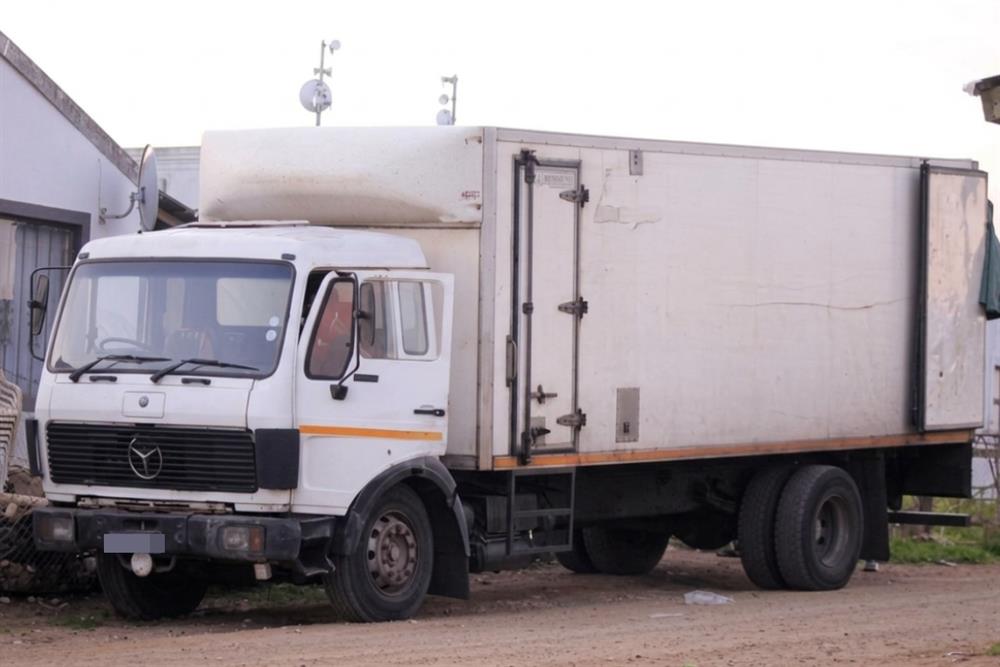 A moving truck in front of a foreign national’s house in Thembalethu. They are preparing for the long move back to Malawi.
 During a protest march by Thembalethu locals on Friday 19 June, the organisers said they feel that the employment of illegal foreigners in George accounts for most of the locals’ unemployment. Photo: Zama GaguPrevious articles:
‘We bring you the latest Garden Route, Hessequa, Karoo news’