

Update
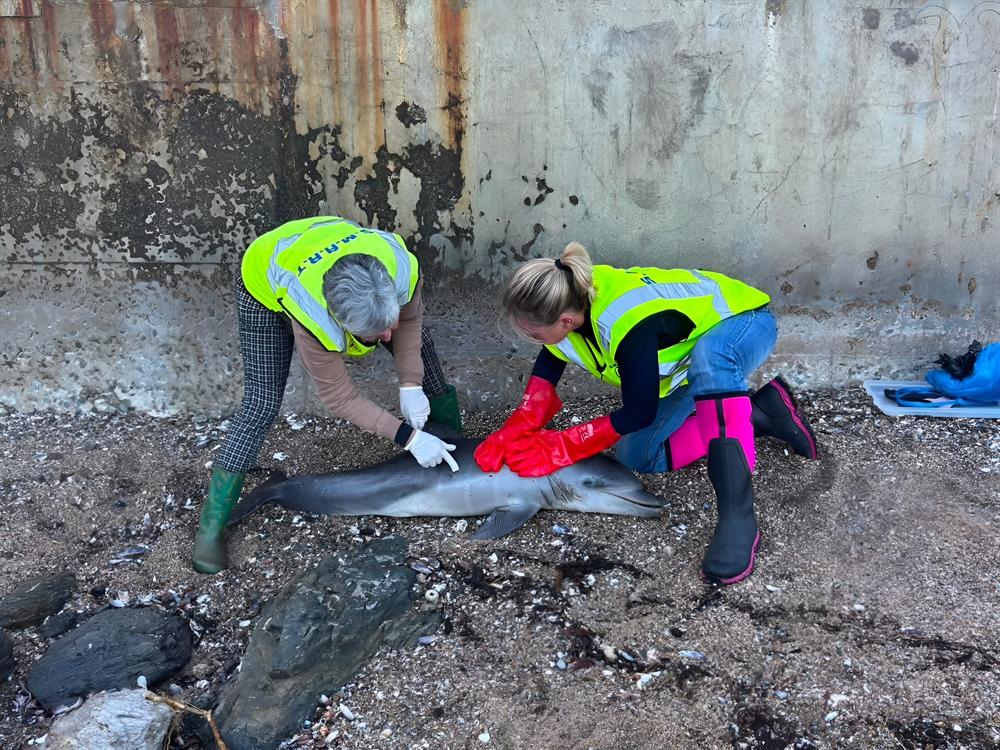
GEORGE NEWS - A newborn bottlenose dolphin that had washed ashore at Herolds Bay last week was recovered by volunteers from the Stranded Marine Animal Rescue Team (Smart), and a necropsy will be conducted to determine the cause of death.
According to Smart, the animal was reported on Thursday 11 June, and its volunteers retrieved the carcass and transported it to the organisation’s freezer facility for preservation.
The dolphin will be collected by marine mammal specialist Dr Greg Hofmeyr of Bayworld in Gqeberha next week, when a necropsy will be conducted to determine the cause of death.
The findings will contribute valuable information to the ongoing marine conservation research.
Hofmeyr has identified the dolphin as a newborn bottlenose and said the scratches found on its body were possibly caused by it scraping against some rocks.
According to information on the International Whaling Commission’s website, bottlenose dolphins are found in almost every ocean and sea, except the coldest waters at the poles.
There are two species of bottlenoses: the common bottlenose dolphin (Tursiops truncatus) and the Indo-Pacific bottlenose dolphin (Tursiops aduncus). Common bottlenoses are native to South African waters and can be found in coastal and offshore waters, frequenting bays, lagoons, channels and river mouths.
Smart thanked its volunteers for their swift response and dedication to protecting and monitoring marine wildlife.
Members of the public are urged to report stranded marine animals, whether alive or dead, as soon as possible.
Early reporting can play a vital role in rescue, rehabilitation, research and conservation efforts. Anyone who encounters a stranded marine animal may contact Smart immediately on 072 227 4715.
Previous articles:
 Dr Greg Hofmeyr of Bayworld in Gqeberha will collect the body next week and will perform a necropsy. Photo: Smart
 The scratches seen here were possibly caused by its body scraping against some rocks. Photo: Smart‘Ons bring jou die nuutste Tuinroete, Hessequa, Karoo nuus’