

OPINION - On Saturday morning, I woke up to a message from one of our journalists reporting that people had been killed during the KwaNonqaba unrest on the night of Friday, 29 May, and that a photograph of a body had been circulated.
We had reported on the march against foreign nationals that took place on Friday. We had reported that police were forced to use stun grenades to disperse the crowd. After that, communication from our sources went quiet.
We hoped things would calm down.
The message from my journalist made my stomach turn. I asked her to send me the photograph. It has still not been confirmed who the man lying on the ground was, or whether he was a foreign national.
We sent an enquiry to the police spokesperson and later learned that two people had indeed been murdered in the area during the early hours of Saturday morning.
Whether these killings are directly linked to the march and the xenophobic violence that erupted in our town has yet to be confirmed.
Later on Saturday morning, a colleague told me she had driven past an area in Mossel Bay where many foreign nationals had gathered in a parking lot. I went there myself, and what I saw struck me deeply.
Hundreds of men, women and, in some cases, children stood together, visibly devastated.
Most held only a cellphone in their hands. Some carried a small bag containing the few belongings they had managed to save.
A heavy atmosphere hung in the air. A police vehicle stood watch a few metres away while people spoke quietly among themselves or made phone calls, trying to make sense of what had happened.
I approached a woman carrying a small baby on her back. She did not cry, but her eyes told the story of a night of terror in Asla Park before she spoke a single word.
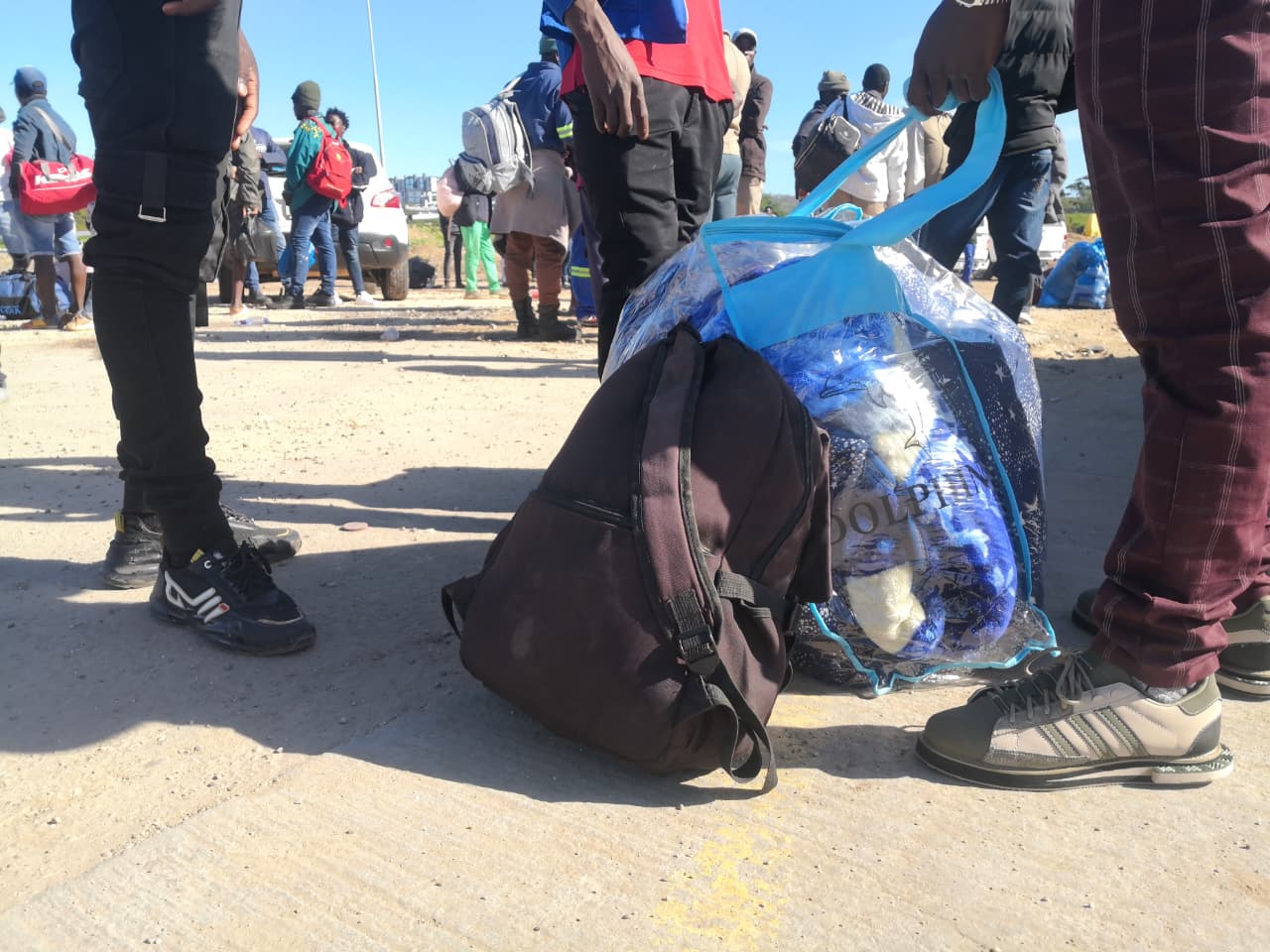 It was reported that over 300 people have been displaced following suspected xenophobic attacks in Asla Park, KwaNonqaba. Photo: Chelsea Pieterse
She told me that people had burned down her home and that she had grabbed what she could before fleeing with her child.
Originally from Mozambique, she had come to Mossel Bay in search of a better future for herself and her family. Now, she said, she had no money and no idea where she would go.
As I looked across the crowd before me, I saw people trapped in despair.
I understand the realities of unemployment and deep socio-economic hardship in our communities.
What I struggle to understand is how one human being can treat another in this way. How people can burn down the home of a mother and her baby. How they can assault her aunt.
Where is the compassion?
What happened this weekend forces us to confront difficult questions about who we are and what kind of community we want to be.
Every human being deserves dignity, safety and compassion.
As I write this, I find myself wondering where that woman and her child will be sleeping tonight.
Mossel Bay is facing a deep humanitarian crisis. The suffering unfolding before us is real, and it demands both our attention and our humanity.
‘We bring you the latest Garden Route, Hessequa, Karoo news’