

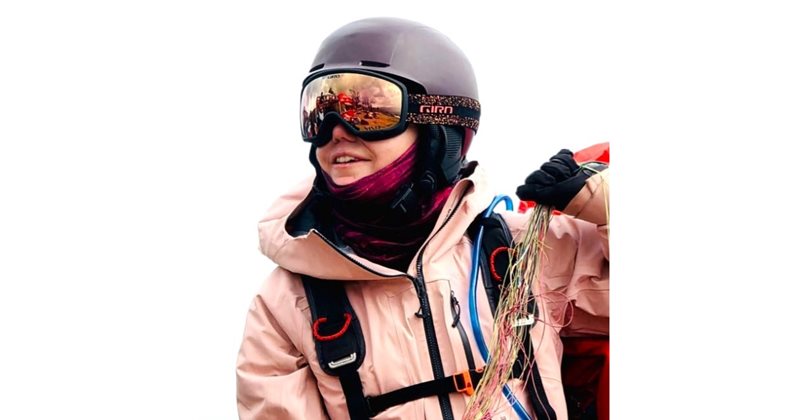
GEORGE NEWS - When paraglider pilot Emma Emanuel, formerly of Wilderness, was seriously injured in a crash at Hartbeespoort Dam, it sent shockwaves through South Africa’s paragliding community.
In this personal account, fellow pilot Jeff Ayliffe reflects on Emma’s journey, the events surrounding her accident and the realities of a sport that offers extraordinary freedom while demanding respect for the forces of nature.
Through her story, he gives readers an insight into both the exhilaration and the inherent risks of this beautiful pursuit.
On Saturday evening, 4 July, I received a message that every paraglider pilot dreads. A fellow pilot informed me that a good friend had crashed while paragliding at Hartbeespoort Dam, affectionately known as ‘Harties’.
Details were scarce. She had been seriously injured and was in hospital, but apart from that, very little else was known.
Emma Emanuel is 32 years old. I met her in Wilderness and, from the very beginning, I was impressed by her independence, quiet strength and confidence. A qualified chef, Emma flew with us in the Wilderness area, but from the outset her drive was apparent. When her focus began to shift towards competition flying, I wasn’t in the least surprised.
I became accustomed to seeing her on take-off with her beloved dog, Astro. When the weather wasn’t conducive to flying, she was either walking him on the beaches or riding horses in the foothills of the Outeniqua Mountains. She is, above all else, an animal lover.
Chasing the sky
Emma was not content with traversing the Wilderness ridges in the onshore winds. It soon became clear that she was pursuing a higher level of performance flying.
It wasn’t long before she was demonstrating the potential that would one day make her a serious contender.
The 2026 Barberton Open took place in June, bringing together some of the country’s finest pilots.
Unsurprisingly, Emma finished on the women’s podium in third place behind veteran national team pilot Khobi-Jane Bowden and winner Tyla-Jane Christodoulou. It was evident that Emma had found her place, and she was loving every moment of it.
After the competition, she posted: “Competition flying has a way of pushing you beyond your comfort zone. Some days go exactly to plan, others teach you lessons you didn’t know you needed. But every flight adds something valuable, and every day in the air is a privilege.
“I’m leaving this experience feeling grateful - for the miles flown, the people I’ve shared the skies with, the laughs at launch and landing, and all the moments in between.”
Following the competition, I sent Emma a congratulatory message: “Congratulations, Em! Stoked for you! It’s awesome to see the beauty of having a vision for a goal, and watching the hard, undeniable currency of effort, risk and sacrifice pay dividends!”
I also included one of my favourite quotes: “Happy are those who dream dreams, and who are prepared to pay the price to see them come true.” - Gérard de Nerval
She told me she was heading to Johannesburg to continue flying, and I was delighted that she had found her tribe, her place to excel and to push herself to new heights in competition flying.
Then came the message about her accident.
Reading the invisible
In competition paragliding, one of the pilot’s key skills is finding the thermal - that elusive rising column of air - climbing with it, and then making the crucial decision of when to leave it and glide towards the next turn point before repeating the process.
The aim is to complete the course to goal as quickly as possible.
Unlike surfing, where a surfer can see a wave and position themselves perfectly, a paraglider pilot cannot see a thermal. Finding one is a subtle skill. Pilots learn to use multiple cues to predict where it will be.
They read the terrain below, imagine how a thermal will drift in the prevailing wind, watch birds and fellow pilots, observe wind patterns on nearby dams and study colour differences in the landscape beneath them. Dark fields, for example, are more likely to trigger thermals because they heat the air more efficiently.
As paragliders enter a thermal, they immediately feel the wing respond. A variometer begins beeping, while its display provides a visual indication of the rate of climb. It is a skill refined over many years in the air.
Every pilot’s greatest concern is encountering severe turbulence close to the ground, strong enough to cause an asymmetric collapse of the wing.
When things go wrong
Nobody witnessed the actual incident, but reports from another pilot who had been flying with Emma indicate that she was about 23 m above the ground when she encountered what may have been a dust devil, something that is not uncommon at Harties at this time of year.
Dust devils can wreak havoc on a soft paraglider wing, and Emma was ultimately too low to deploy her reserve parachute safely.
The impact was severe. She sustained broken ribs, a punctured lung, a broken pelvis, spinal fractures and fractures to her orbital socket.
Emma was evacuated off the mountain by the paramedic team using the cable car before being transported to a Johannesburg hospital, where she is now in good hands. She is waiting for the swelling to subside before doctors can operate.
The South African paragliding community has rallied around her, and messages of support continue to pour in.
Unsurprisingly, Emma remains focused on the positive. She is already looking forward to being back in the air and has shared this message with the community:
“I am so grateful for all the support from everyone! It means so much and is very heartwarming! I truly believe that love and care heal, and I am definitely getting plenty of that! Thank you, everyone.”
The good with the bad
For now, we wait for the swelling to subside and wish Emma nothing but the very best for the operations ahead.
Sadly, this sport, which gives so much joy, freedom and purpose, can, like all pursuits that rely on nature as a power source, also deliver moments when things go terribly wrong.
But pilots are not reckless daredevils. They understand the risks and accept them with clear eyes.
In retrospect, it could have been far worse. Even now, Emma is displaying the very qualities I admired from the day I met her: that quiet strength and unwavering positivity that tells me she will one day be back in the sky.
As De Nerval wrote in that now haunting quote: “Happy are those who dream dreams, and who are prepared to pay the price to see them come true.”
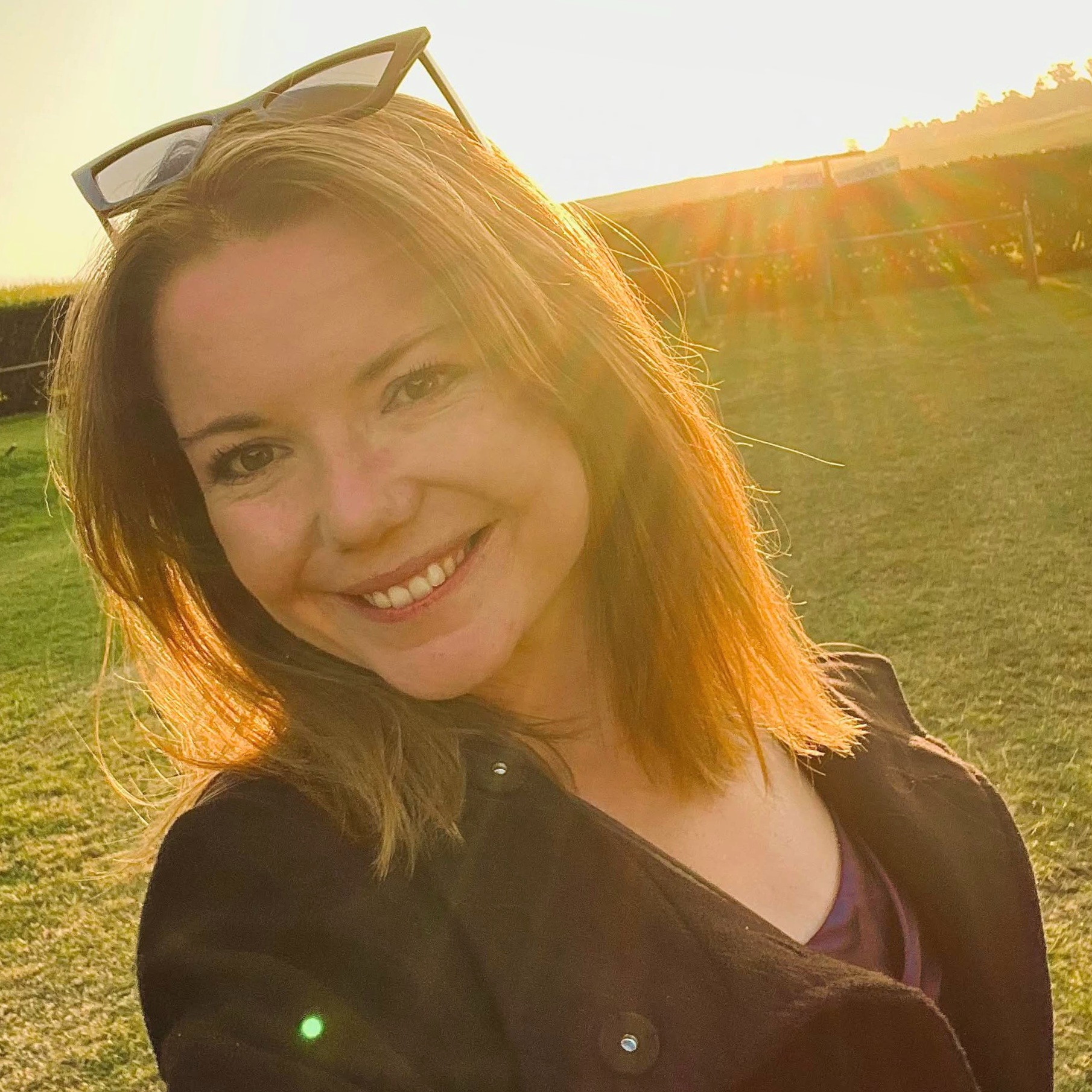 The beautiful Emma.
‘We bring you the latest Garden Route, Hessequa, Karoo news’