



GEORGE NEWS - Wildfires present a serious risk to homes, especially in areas where residential properties border natural vegetation. The primary threat is wind-driven embers, which can travel ahead of the fire front and ignite structures long before flames arrive.
These steps will not stop a wildfire, but they can significantly reduce the chance of your home igniting and improve firefighter safety.
Remove ignition sources
Flammable items around the home ignite first and must be cleared quickly.
Bring outdoor furniture, cushions, loose mats and carpets inside. Remove doormats entirely. Move refuse bins, firewood, braai wood and gas bottles well away from buildings. Close outdoor umbrellas and move pot plants away from walls, doors and windows.
Seal the home against embers
Embers enter through small gaps and openings.
Close all windows and external doors. Open curtains and blinds to keep fabric away from windows. Close internal doors if time allows and lock windows where possible to prevent heat or wind from forcing them open.
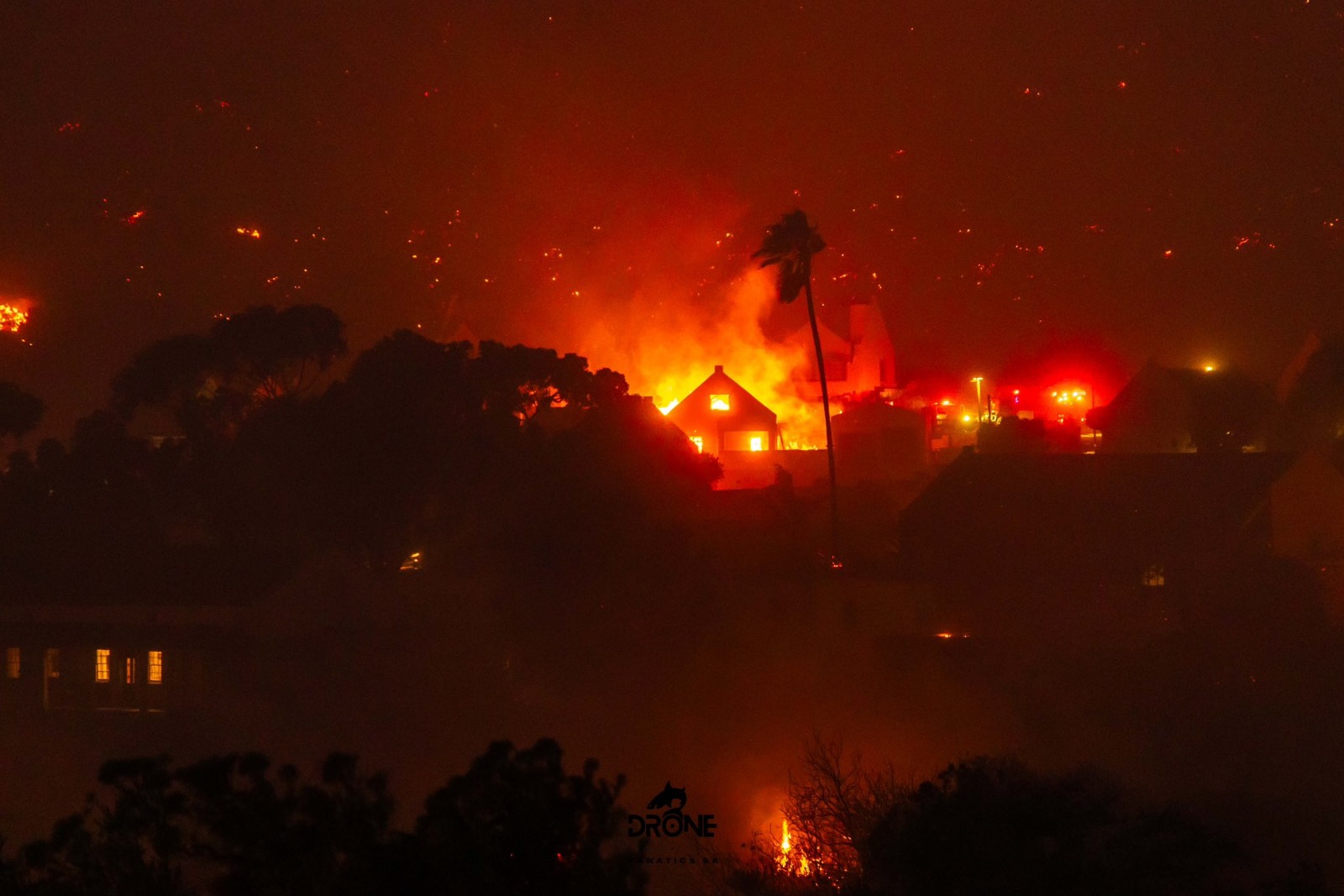 Aalwyndal on 6 January, in a blaze of fire. Photo: Drone Fanatics
Gas, electricity and lighting
Turn off the gas supply at the cylinder. Switch off non-essential electrical appliances. Leave lights on only if recommended by emergency services, as this may assist visibility in heavy smoke.
Strategic use of water
Water should be used to reduce ignition risk, not to fight the fire.
Fill containers or buckets with water and place them near entrances, wooden fences, decks, building corners and dry garden areas close to the house. Wet down door and window frames, wooden steps, decks and garden beds immediately next to walls. Connect hoses to taps and keep them accessible. If water pressure allows, leave taps slightly open.
Do not spray water into smoke, embers in the air or active flames.
Be ready to evacuate
Evacuation may be ordered with little warning.
Have an emergency bag packed and placed by the door. Keep closed shoes ready, keys gathered and pets secured on leads or in carriers. Do not delay if authorities instruct evacuation.
Develop an evacuation plan and review it with your family and immediate neighbours. While planning ahead can be difficult, any preparation is far better than facing a wildfire unprepared.
Prevention: A safe zone around your home
Maintain a safe, fire-retarding area around your home. Clear flammable vegetation and debris within 9 to 10 metres of your home, focusing on the immediate 1.5m. Remove dead leaves from roofs and gutters, clear beneath decks and balconies, and move flammable materials away from walls. Use gravel or other non-combustible ground cover close to the house.
In the surrounding area, keep grass short, thin shrubs and trees, and remove dead branches to slow fire spread.
Most homes are lost due to embers igniting vulnerable points rather than direct flame contact. Early preparation and decisive action significantly reduce risk and protect lives.
Sources: https://overbergfpa.co.za ; https://www.nfpa.org
‘We bring you the latest Garden Route, Hessequa, Karoo news’