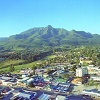


OPINION - Andrew Stroebel writes: The sight of a dam overflowing can be remarkable to observe. Recently, the Katze Dam in Lesotho was seen overflowing, presenting a scene of abundance.
However, in contrast, the situation in the Southern Cape is markedly different. Several towns in the same region are currently facing extremely low dam levels and strict water restrictions. This situation is far from ideal, as water is essential for every farmer, business and resident.
Places like Swellendam, George, Knysna and Plettenberg Bay face an even greater challenge with the upcoming influx of holiday visitors.
This creates a catch-22. The local economies rely on tourism for jobs, but more visitors will further deplete already limited water resources. While many have opinions about who is at fault, I will leave those discussions to social gatherings, expert social media commentators and public representative decision makers.
So what is the governance in this vital issue? In challenging and emotional times, it's important to look to legislation, which clearly outlines roles and responsibilities.
Through the Department of Water and Sanitation (DWS), National Government oversees national water resources, including the planning, development and management of major water infrastructure such as dams.
The DWS sets policies and laws and is establishing the South African National Water Resources Infrastructure Agency (Sanwria), a new state-owned company, to manage these assets.
Provincial departments authorise projects by ensuring compliance with environmental laws and requirements like environmental impact assessments before construction begins.
District municipalities mainly support and assist with disaster management when water supplies threaten human health.
Local municipalities are responsible for supplying, treating and piping water, enforcing restrictions and providing sanitation, but not for building large raw water dams. They may receive grants, such as the municipal infrastructure grant (MIG), to develop local infrastructure like reservoirs and pump stations.
Water boards and entities such as Rand Water, uMngeni-uThukela Water, Overberg Water and others help finance, implement and operate bulk water infrastructure, reporting to the DWS.
It's clear why there's public confusion about responsibility and why blame often falls on whichever level of government feels closest. The contested and highly debated District Development Model (DDM) needs to be resolved and put into practice with only one clear funded mandate: bulk water supply.
This will be welcomed by all residents alike as it's currently a major concern for all spheres of government.
Remember, water doesn't come from the tap, it only passes through it. Without any new major dams being built in the Western Cape since the Berg River Dam in 2007, we all remain at risk of running out of water.
I conclude, no new major dams, no increased bulk water capacity - plain and simple. Please be water-wise!
Andrew Stroebel is the former mayor of Garden Route District Municipality.
Comment and opinion are that of the author and not necessarily shared by Group Editors, any of its publications or staff members.
Read more Opinion Pieces here.
‘We bring you the latest Garden Route, Hessequa, Karoo news’