


GEORGE NEWS - With many children in George urgently needing safe, stable homes, George Child and Family Welfare is appealing to residents to consider becoming foster or safety parents, particularly those willing to take in older children and sibling groups.
The organisation currently has 525 children in foster care in its area.
In late August, the organisation posted an urgent appeal on their Facebook page that it had endured a particularly difficult month after removing six babies, aged between eight days and 18 months, from unsafe circumstances. They also removed two little girls aged five to six and another older child. As a result, they ran out of premature, newborn and one- to three-month clothing for both boys and girls. Days later, members of the public responded with an outpouring of support, donating baby clothes, nappies, milk, toiletries and other essential items.
While the community rallied to meet the immediate needs of these children, the organisation says a far greater challenge remains - finding safe, stable homes for children who need somewhere to stay.
A greater need
With only six foster homes and one safe house, one of its biggest challenges is finding safety parents prepared to accommodate older children. The situation becomes even more difficult when two or three siblings need to be removed from unsafe circumstances at the same time.
“The focus is to keep the children together and not having to split the children,” said Rachel Jooste-Booysen. She and two colleagues, Leilanie Peacock and Jo-Anne Kleynhans, sat down with George Herald this week.
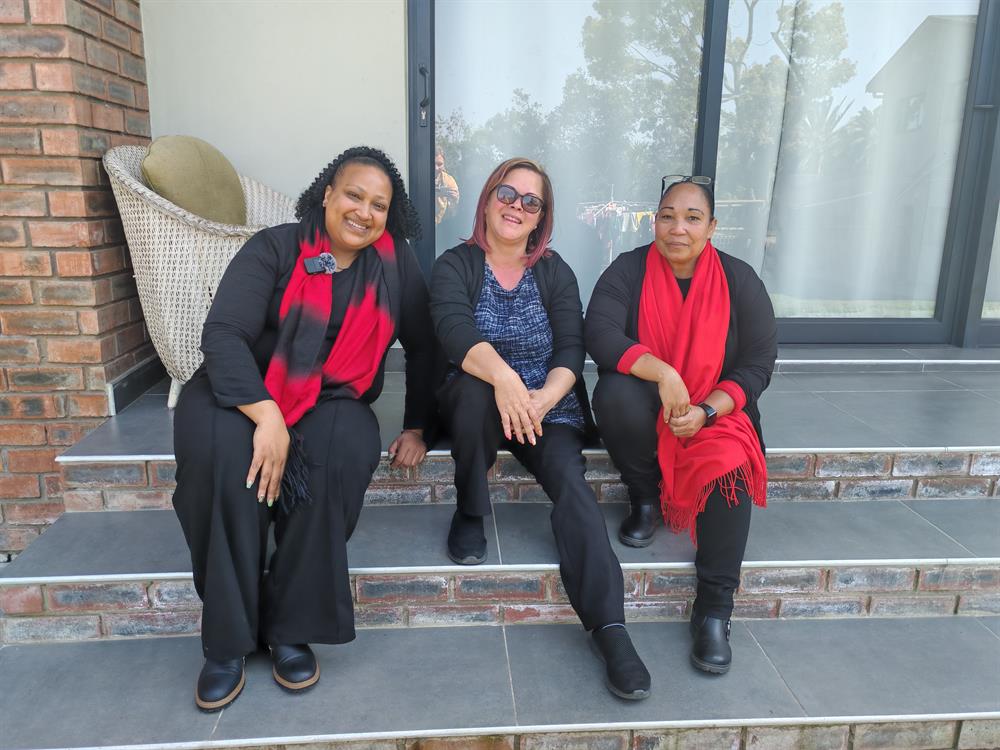 George Child and Family Welfare Centre’s senior personnel: Leilanie Peacock, Rachel Jooste-Booysen and Jo-Anne Kleynhans. Photo: Marguerite van Ginkel
A temporary safe haven
For those considering opening their homes, it is important to understand the difference between safety care and foster care.
A safety parent provides short-term care, generally for a period of up to 90 days, while an investigation into the child’s circumstances takes place. During this time, the child needs a stable, loving and nurturing home while social workers assess the situation and determine the appropriate way forward.
Safety parents should also be prepared for the possibility of regular contact with the child’s biological parents during the investigation. This can be emotionally challenging and, in some cases, safety parents may ultimately decide that foster care is not for them.
Foster care, by contrast, is a longer-term statutory arrangement. Where intervention has taken place and a court order is issued, foster care is generally ordered for a period of two years at a time.
Children arrive carrying trauma
Children may require alternative care after experiencing neglect, abuse, exploitation or abandonment.
Moving into a safe home does not mean that the difficulties they have experienced simply disappear. Children can struggle to adapt to their new circumstances and may display challenging behaviour as a result of trauma. They may have to change schools, adjust to an unfamiliar community and navigate relationships with their biological parents while adapting to a new home.
For this reason, safety and foster parents need more than a spare bedroom. They need patience, emotional maturity, commitment and the ability to provide consistency and security.
Prospective safety parents are screened and trained and must meet the requirements prescribed in Regulation 57(2) of the Children’s Act 38 of 2005, including providing a healthy, hygienic and safe environment, adequate nutrition and suitable sleeping facilities.
They must also be healthy and physically able to care for a child, psychologically sound, emotionally mature, committed and dedicated to the responsibility.
Reunification is a process
One of the most difficult aspects of foster care is the possibility that a child who has become part of a foster family may eventually return to their biological family.
George Child and Family Welfare said foster care monitoring and family reunification services take place simultaneously.
Reunification is a process rather than a single decision. Biological parents are supported and encouraged to make positive changes, while regular contact between parents and children is encouraged where appropriate.
This can initially involve a monitored day visit with the biological parents. If that goes well, the child may progress to weekend or holiday placements, with ongoing monitoring by social workers or auxiliary social workers.
Reunification is only considered when it is in the best interests of the child and when the circumstances that led to the statutory intervention no longer exist.
The foster parent is supported throughout the process, with open communication between those involved. After reunification, aftercare services are also provided.
You don’t have to foster to make a difference
For residents who cannot become foster or safety parents, there are still important ways to support vulnerable children.
The organisation’s strongest appeal is for members of the public to report suspected abuse and neglect to child protection organisations, providing as much information and identifying detail as possible.
Early intervention can be critical in protecting children from continued harm.
 At one of the foster homes in George. The laundry is done, and there is ample space for the children to run and play. Photo: Marguerite van Ginkel
The need is not unique to George
Figures from the Western Cape Department of Social Development show that 43 528 children were in foster care in the province as at 31 March, up from 42 699 in 2025 and 40 043 in 2024.
Wendy Kaizer-Philander, member of parliament and DA Western Cape spokesperson on social development, said the growing number of children requiring foster care demonstrates that child protection is a shared responsibility. She encouraged residents who are able to make a difference to enquire about becoming foster parents and help give vulnerable children the opportunity for a brighter future.
Information workshop on 12 September
George Child and Family Welfare will host an information workshop on 12 September for people interested in becoming safety parents.
The workshop will explain the process of becoming a safety or foster parent and allow prospective caregivers to better understand what the role entails.
People interested in attending can contact Rachel Jooste-Booysen by email at [email protected] or via WhatsApp on 074 019 9604.
Ultimately, the organisation says vulnerable children need what every child needs: love, care, security and attention.
But there is an important distinction between simply providing a place to stay and opening your home to a child. “When you commit yourself to this labour of love, ensure that they become part of your family and treat them as your own children,” the organisation said.
For children who have already experienced instability and harm, that sense of belonging could be the beginning of something very different: a safe place to heal, grow and feel at home.
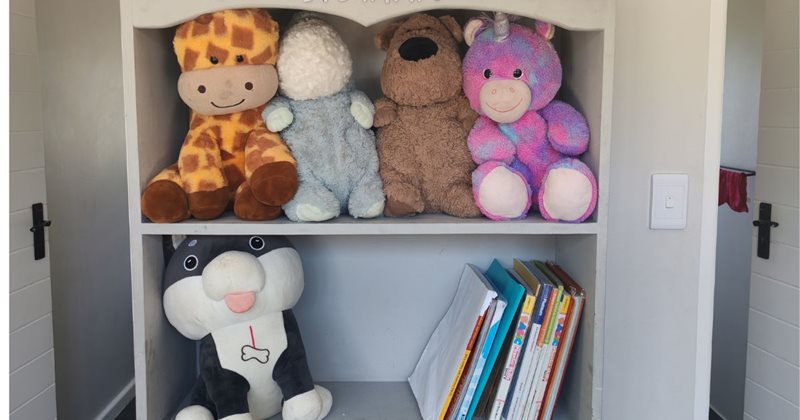
 The learning centre at one of the foster homes in George.
Photo: Marguerite van Ginkel
George Child and Family Welfare is a child protection organisation mandated by the Department of Social Development to protect children at risk through family preservation, foster care services and reunification, using a range of interventions and programmes.
‘We bring you the latest Garden Route, Hessequa, Karoo news’