


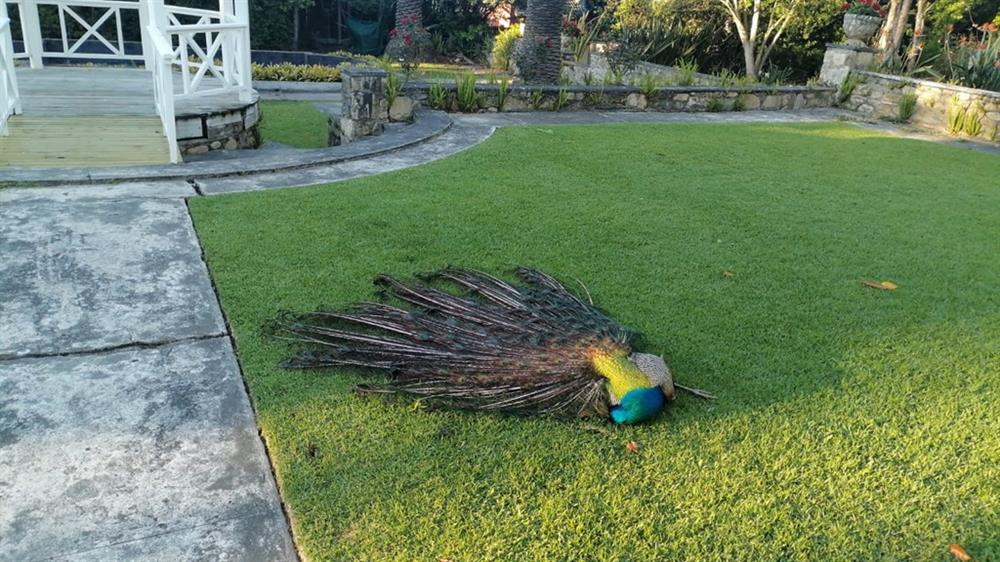
GEORGE NEWS - The death of nine peacocks in the Heatherlands neighbourhood during the past three months is being investigated by a group of concerned residents, the Garden Route SPCA George branch and the Wildlife Crime Information Network (WCIN).
A necropsy on two of the birds confirmed that the cause of death was poisoning.
"We haven't had any such incidents in the eight years since the acquisition of the hotel," says Vandri du Plessis, general manager of the Hawthorn Hotel, where most of Heatherlands' peacocks roost at night.
Du Plessis says about three months ago, one peacock died, followed by another some time later. Then another two.
"When three died the one after the other in one week, we thought it might be a disease like bird flu."
Monica Vaccaro, a concerned resident, took one of the birds to a vet, and Jonestha Moths, the hotel beverages manager, took the second one, and poisoning was confirmed.
Dead peacock at hotel entrance
Du Plessis says one of the peacocks was found dead in the neighbourhood, but the others all on the hotel property, some close to the hotel. "Staff found one on the lawn and another at the hotel entrance. The security guard has been instructed to keep an eye out for any peacocks remaining on the ground at night, because we know something is off if they don't sleep in the trees."
 One of the poisoned peacocks on a patio of the hotel. Photo supplied
Vaccaro says it is now breeding season and the male birds make a lot of noise, vying for female attention. It is suspected that an irritated resident could be responsible for the poisoning. Either a rodenticide or possibly Curaterr, an organophosphate, was used. Blue poison pellets mixed with apples and sweetcorn were found in the birds' stomachs during the necropsy, which indicates intentional poIsoning.
"Peacocks are a foreign bird species, so they are not protected, but it is an immensely cruel death. In addition, putting out food with poison affects wildlife. Other animals such as bushbuck, genets, porcupines and a variety of wild birds are at serious risk of posoning."
Vaccaro asked residents to be vigilant. "The pattern of deaths suggests the poisoning is occurring in the early evenings, likely as the birds return toward the hotel area."
Du Plessis says the breeding season is from November to January. The females lay their eggs in different places through the hotel garden and hatch them for two to three weeks. "The other day, a guest brought us an egg that was laid on his patio."
The hotel guests have earplugs in their rooms for when they want to block out the noise from the peacocks at night.
"When guests book, we don't hide the fact that we have them at the hotel. The peacock is the hotel's signature. It's in our logo and the birds inspired much of the interior decor. Most of our guests embrace their presence, especially those from overseas."
Many people think the peacocks belong to the hotel and phone in when they see one wandering in the neighbourhood. "It's tragic that someone would want to kill them," says Du Plessis.
 One of the magnificent male peacocks at the hotel. Photo supplied
Peacocks around for 85 years
According to Vaccaro, the birds were introduced in 1940 by the original hotel owners, so they have been around for 85 years and are part of the urban landscape, like the city's plane and oak trees.
Sue Noakes, manager of the Garden Route SPCA George branch, expressed her outrage at what she deemed blatant cruelty towards defenceless birds.
She asked any residents with information concerning the poisonings to contact the GRSPCA on 082 378 7384. "With the necessary evidence, a case can be opened under the Animals Protection Act, No 71 of 1962."
‘We bring you the latest Garden Route, Hessequa, Karoo news’