

LIFESTYLE NEWS - The tools are built into your daily routines. Mundane activities like cooking, gardening, shopping, or driving to school can become language-rich experiences when you repeatedly and consistently expose your child to vocabulary, describe what you’re doing, and ask open-ended questions.
Hands-on experience and daily routines provide endless learning opportunities. These real-world experiences help children connect words with meaning and reinforce vocabulary in context.
Eating dinner together as a family offers valuable opportunities for conversation and can even trump story time as a vocabulary building opportunity.
These mindful and shared moments create a routine where children can practice their storytelling, descriptive language, and turn-taking. Parents can support language by asking open-ended questions such as, “Who made you laugh today?” or “Tell me something new you learned.”
This dialogue builds vocabulary and encourages children to express themselves in complete thoughts. We also build our children’s self-esteem by responding with interest.
Simple follow-up comments like, “I loved the story you shared at dinner last night,” or “I can’t wait to hear what you think about this,” show that we’re really listening.
Asking questions like, “What do you think would make a great present for Gran?” invites them to share opinions and feel respected. These small but meaningful conversations and moments at the dinner table can send a powerful message to our children: your voice matters.
Books, whether read aloud or listening to audiobooks, are rich sources of language, vocabulary, imagination and visualisation. Parents enhance comprehension and vocabulary by discussing new words; “Where else have you heard that word?”, making predictions at the start of the story; “If you were the author, what would you write next?”, relating the events to a child’s experiences; “Does this part of the story remind you of something we’ve done?” and asking questions that target recall, inference skills, problem solving and empathy; “What would you say to the character if you could talk to them?.
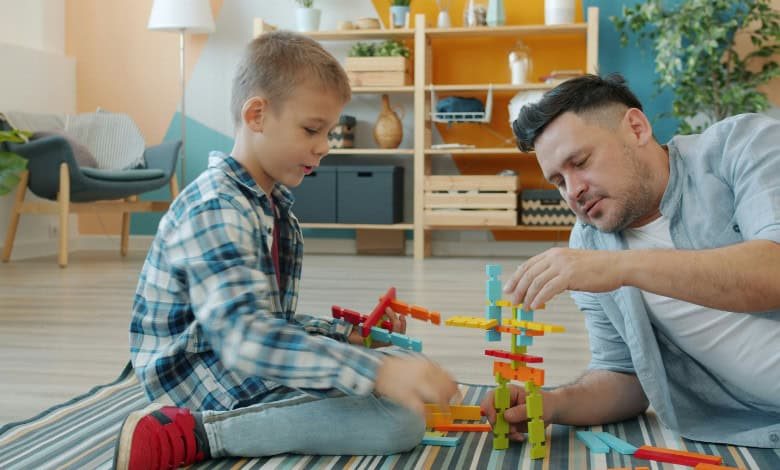
Board games provide more than entertainment; encouraging the use of vocabulary, language, reasoning, thinking and listening skills. Games like Guess Who?, Headbanz, and Scattergories require children to ask and answer questions, follow directions, describe objects, and categorize; all essential language skills.
Games support joint attention as well as attention development. They rely on memory to remember pieces of information while using working memory to participate. Board games offer a platform to practice social skills in a natural, enjoyable setting.
Turn-taking is practiced and builds patience around waiting their turn. Games involve learning and following rules. Children also learn to manage hard emotions like frustration, disappointment, success and excitement.
They allow them to practice good sportsmanship; congratulating others, compromising and coping with losing, developing their resilience.
Parents can model calm and regulated behaviour and scripts such as “maybe i’ll win next time” Games also develop teamwork and collaboration skills.
Perhaps the most important yet overlooked thing parents can do is simply talk with their children. This is more than barking out instructions or reminding them to pack their library book!
Everyday conversations, when meaningful, responsive and reciprocal, across several turns, help children learn how language works. Listening attentively, responding to their ideas, and expanding on their sentences encourages richer expression and deeper understanding.
So supporting your child’s language and vocabulary at home doesn’t require equipment or extra time. It’s about being intentional and present during the moments you already share. For additional resources, visit www.bellavista.co.za
‘We bring you the latest Garden Route, Hessequa, Karoo news’