

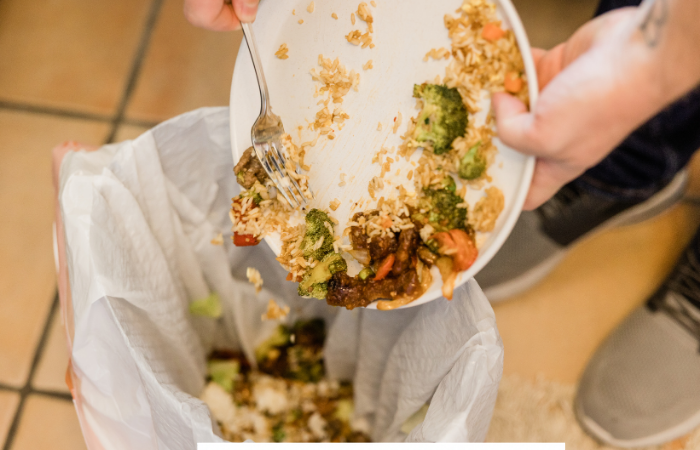
LIFESTYLE NEWS - South Africa throws away an estimated 10.3 million tonnes of edible food every year, even as millions of people struggle to access enough nutritious food.
The waste amounts to 34% of local food production and costs the economy an estimated R61.5 billion annually, equivalent to 2.1% of gross domestic product (GDP), according to figures cited by Stellenbosch Business School.
The issue was highlighted on World Food Day on 16 October by Prof Jako Volschenk, Associate Professor of Strategy and Sustainability at Stellenbosch Business School, who said reducing food waste was essential to improving food security, protecting the environment and making better use of resources.
One in five South African households experiences uncertainty about where its next meal will come from, while almost three million children regularly go to bed hungry, according to figures cited in the statement.
Despite the country's ability to produce enough food to feed its population, access to nutritious meals remains a challenge for many households.
“Addressing food waste must not only reduce the size of the losses of edible food but also ensure that nutritious food that may be surplus in one area moves to the areas where people need it the most,” Volschenk said.
The hidden cost of throwing food away
Food waste affects more than household budgets. Every item discarded represents water, energy and fertiliser used in its production, as well as the resources required to process, package and transport it.
Food sent to landfill also contributes to greenhouse gas emissions.
Volschenk said food insecurity and poor nutrition can have lasting consequences, particularly for children. More than a quarter of South African children under five experience stunted growth associated with chronic undernourishment, which can affect physical development, learning and future employment opportunities.
Access to healthy food is another concern, with nutrient-rich foods such as fruit, nuts, vegetables and animal-source foods accounting for nearly 70% of the cost of a healthy diet, according to the statement.
“Providing more calories is masking a failure on nutrition,” Volschenk said, highlighting the difference between having enough food to eat and receiving the nutrients needed for good health.
Simple ways to reduce food waste at home
Households can play a meaningful role in reducing food waste through everyday habits that also help stretch grocery budgets.
1. Plan meals before shopping
Check what is already in the fridge, freezer and cupboards before buying more food. Planning meals for the week and making a shopping list can help prevent unnecessary purchases and reduce the risk of fresh food spoiling before it is used.
2. Store food correctly
Use suitable storage methods to keep food fresh for longer. Refrigerate foods that require it, keep dry goods in airtight containers and freeze suitable items that will not be used in time.
3. Make use of leftovers
Leftover vegetables can be added to soups, stews or omelettes, while cooked meals can often be portioned and frozen for another day. Freezing excess food before it spoils can help reduce waste and provide convenient meals later.
4. Give imperfect produce a chance
Fruit and vegetables that are unusually shaped, smaller than expected or marked on the outside may still be perfectly suitable to eat.
Volschenk pointed to a campaign by French supermarket chain Intermarché that promoted imperfect fruit and vegetables at discounted prices to encourage consumers to buy produce that might otherwise be rejected.
Choosing suitable imperfect produce can help reduce waste while making fresh food more affordable.
5. Buy seasonal produce
Choosing locally available, seasonal fruit and vegetables can offer more affordable options. Supporting local producers may also help reduce transport distances, although the environmental benefits depend on how food is grown, stored and distributed.
6. Preserve food before it spoils
Excess fruit and vegetables can be frozen or used to make soups, stocks, sauces and preserves. These practices can extend the useful life of ingredients and reduce the amount discarded.
7. Understand date labels
Check whether a product carries a safety-related use-by date or a best-before date indicating quality. Follow food safety instructions and do not consume food that may be unsafe. A change in appearance or texture should also be assessed carefully, particularly for perishable foods.
Businesses and retailers also have a role
While household habits matter, much of South Africa's food waste occurs before products reach consumers.
Figures cited by Volschenk indicate that 49% of food losses and waste occur during processing and packaging, while 18% occurs at the consumption stage.
Farmers can find alternative markets for produce that does not meet conventional retail specifications, while food processors can improve preservation methods to reduce losses.
Retailers can offer discounts on suitable products approaching their sell-by dates and donate surplus food to food banks, children's homes, homeless shelters and non-profit organisations.
Better storage facilities, reliable electricity and more efficient transport and distribution systems are also needed to keep food fresh and get it to the people who need it.
Volschenk called for coordinated action by government, businesses and civil society to ensure edible surplus food is distributed rather than discarded.
Reducing waste can help build a more sustainable food system
Food waste, hunger, poverty, inequality, climate change and water scarcity are closely connected, Volschenk said. Addressing one issue in isolation will not resolve the wider challenges facing South Africa's food system.
He believes reducing food waste should form part of a broader effort to improve nutrition, make healthy food more accessible and reduce the environmental impact of food production.
For households, a useful starting point is to buy only what is needed, store food properly and find ways to use ingredients before they spoil.
As Volschenk noted, the challenge is not simply to produce enough food, but to ensure that nutritious food reaches the people who need it while reducing the resources lost when edible food is thrown away.
Source: Stellenbosch Business School
‘We bring you the latest Garden Route, Hessequa, Karoo news’