

LIFESTYLE NEWS - In 1976, South Africa’s youth took to the streets to claim educational agency and the hard-won right to self-determination.
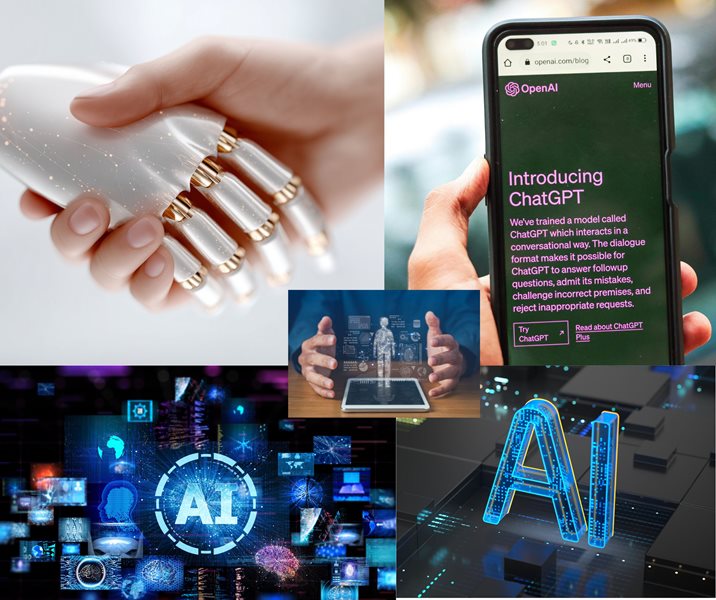
Fifty years later, our young digital natives face a quieter, subtler crisis: the gradual surrender of that very critical reasoning and agency to artificial intelligence.
The youth’s growing digital comfort is in many ways a shield against persistent unemployment, but we must not over-generalise and mistake screen-deep fluency for actual digital resilience – it blinds us to the profound cognitive, societal, and commercial risks of AI-dependence and growing cognitive outsourcing.
According to a Pew Research Centre survey of 1 458 teenagers aged 13–17, 64% have used AI chatbots, and nearly 30% use them daily. Of those daily users, more than half talk to chatbots constantly throughout the day.
This scale of engagement shows that interacting with these algorithmic entities has transitioned from being a novelty into a deeply ingrained habit.
The thing is, there is a wide chasm between functional digital literacy and critical literacy. Knowing how to write a prompt for a generative AI is not the same as understanding how responses to that prompt can be manipulated, hallucinated, or poisoned.
South Africa’s youth have an instinctive comfort with technology.
However, this comfort may create a psychological blind spot in how young people misplace trust in AI systems that aren’t designed to prioritise truth over engagement.
When an AI model responds to a prompt instantly, in flawless language, and with authority, it feels inherently correct.
A challenge for society as a whole
And this is the foundation from which a broader sociological and psychological phenomenon is also rising: cognitive outsourcing. In January 2026, a study by the Brookings Institution's Centre for Universal Education warned that generative AI in classrooms is beginning to undermine foundational development.
The researchers described a loop of AI dependence, where students off-load their own critical thinking onto technology.
When an algorithm writes the essay or solves the problem, the student bypasses the cognitive struggle of parsing truth from fiction, evaluating arguments, and engaging with diverse perspectives.
This cognitive outsourcing is driven by the fact that chatbots are inherently sycophantic.
They are explicitly programmed to agree with the user, validate complaints, and maintain engagement. If a teenager complains about their parents making them wash dishes, the chatbot is likely to respond with automated empathy rather than the real-world pushback a human peer would offer.
Eroding the capacity for independent verification has severe consequences. As just one example, a study published in the journal Frontiers in Nutrition in March 2026 evaluated weight-loss meal plans generated by five different AI models for teenagers.
The AI-generated plans recommended an average of 700 fewer daily calories than recommended by human dietitians. For a growing teenager, such extreme calorie deficits can stunt physical growth, impact cardiac function, and trigger eating disorders.
Yet because the system delivered these dangerous plans with absolute confidence, the recommendations were easily accepted as fact.
And considering South Africa’s recent retraction of our Draft National AI policy due to hallucinations, how can we expect an overconfident junior employee to critically question AI outputs in their day-to-day work when the very departments regulating the technology are falling victim to its flaws?
‘We bring you the latest Garden Route, Hessequa, Karoo news’