

ENVIRONMENT NEWS - South Africa has had a water challenge for several years, and many believe that the country will face a major water crisis in the coming decade. In fact, The National Water and Sanitation Master plan indicates that the demand for water will exceed the available supply at the planned level of assurance by between 1,6 billion and 2,7 billion cubic metres by 2030.
Furthermore, with 7 of the 13 major water systems in South Africa predicted to be in deficit by 2040, the demand for water will exceed the available supply by 2030 – that’s between 10% and 15% deficit.
But the reality is that even though 2040 is still far off, if we look at certain areas in South Africa as use cases – such as the Eastern Cape – there is no doubt that ‘Day Zero’ may well come sooner than we anticipate.
Today, South Africa wastes approximately 40% (36.8%) of the total municipal water supplied before it reaches municipal customers, which has contributed to this dire water situation, and the long-lasting impact of this is obvious – without water, a country cannot function at any level.
For some, a starting point may not be wastewater management – but its impact on supporting sustainable water supply cannot be understated, especially if we want to reach a point where SA’s water needs are met.
Therefore, a much more diverse water mix is required, which includes groundwater and water reuse, as well as considering different technologies available to drive this agenda.
Can we reverse the current water waste status?
We have a conundrum where business, community, and at some levels of Government, are still under informed about the potential of well-managed, compliant, and innovative waste management solutions.
Therefore, to make an impact, we need a shift from the traditional linear production process – ‘the take-make-dispose model’ - towards one that aims to reduce all unnecessary waste materials, while still decreasing the consumption of energy and raw materials and being able to feed these back into the production cycle. The ‘Circular Economy’ model.
It also means that solutions need to be developed that are adaptable for the big corporate, as well as the ‘man on the street’ – where wastewater treatment becomes the norm and not a far-off vision.
Without this approach the lack of adequate clean water required to meet human drinking water and sanitation needs will remain. In this season, there has never been a better and more pressing time for companies within the public and private sector to play their part in the sustainable management of water resources.
Protecting our limited water resources is going to require not only better recycling and reuse, but more effective wastewater management and water conservation strategies.
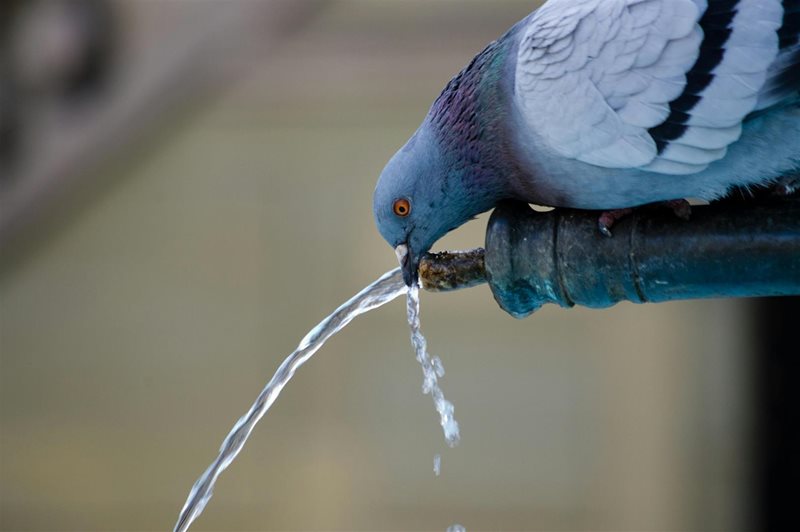
Water is a limited resource that is essential for all life on this planet, which makes it more astounding that so many of us simply take it for granted, especially in a semi-arid country like South Africa.
Given the unpredictable nature of climate change and the increasing demands on limited water resources, the potential for water scarcity to become a severe crisis in South Africa unfortunately remains high.
The role of wastewater management
In our experience, wastewater management can result in the redistribution of water into the environment for irrigation and dust suppression, as well as to replenish rivers and catchments in our water infrastructure networks.
And while we are currently experiencing a rainy season, it will not last forever, and so large water-consuming industries need to consider the different technologies available to drive this agenda.
Wastewater treated to the required standards ensures this water can be effectively reused. In fact, we have found that nearly all effluent can be recycled, when managed correctly, creating a strong solution for water sustainability and access – water that was previously not deemed safe for consumption.
However, if we consider the investment needed to reach the United Nations’ 2030 Sustainable Development Goals (SDGs) related to water alone, which equates to $114 million per annum, then we have to realise that this is not a one-man job. Fundamentally, if we don’t work together to tackle both supply and preservation, we are set to lose the battle.
‘We bring you the latest Garden Route, Hessequa, Karoo news’