

BUSINESS NEWS - The colleague you turn to when you're stuck may no longer be sitting at the desk next to you.
Instead, you might be opening an AI chatbot.
As artificial intelligence becomes increasingly embedded in the workplace, employees are using tools such as AI assistants not only to complete tasks, but also to brainstorm, test ideas, seek advice and even work through workplace frustrations.
According to the The Human Connection Workplace Index, 76% of employees use AI tools for professional advice, while 52% use AI for brainstorming. Perhaps more surprisingly, 37% say they turn to AI for what the research describes as “workplace companionship”.
That growing reliance raises an important question: what happens to workplace relationships when the easiest person to ask is no longer a person at all?
Why AI is so easy to turn to
Dr Cindy Friedman-van der Westhuizen, a lecturer in AI Ethics at Stellenbosch Business School Executive Development, says the appeal is understandable.
AI is available instantly, does not appear to judge the user and can repeatedly perform tasks such as reviewing documents, explaining concepts, brainstorming ideas or helping to draft difficult emails.
“Relying on AI as your default collaborator is very tempting,” she says.
But what can look like a small productivity shortcut can replace interactions that have traditionally helped colleagues build relationships.
“Every time you ask someone for a second opinion, challenge an idea together or work through a problem, you're doing more than completing a task,” says Friedman-van der Westhuizen.
“You're building trust, learning how other people think and strengthening relationships.”
The disappearing water-cooler conversation
The five-minute conversation at a colleague's desk may seem insignificant, but those informal exchanges can be where ideas are challenged, problems are shared and relationships develop.
Increasingly, however, the first response to a problem may be to ask an AI assistant.
“The typical water cooler moments are now being replaced with a ‘Hi Claude, please help me, I’m stuck’,” Friedman-van der Westhuizen says.
And there is a fundamental difference between asking AI and asking a colleague.
Human colleagues bring their own experiences, perspectives and - importantly - the willingness to disagree.
AI, by contrast, is designed to be helpful.
When the AI always agrees
Friedman-van der Westhuizen warns that this can create a subtle problem.
“AI doesn't become impatient and it doesn't disagree based on its own lived experience,” she says.
She describes AI as functioning less like a traditional collaborator and more like a sophisticated “yes-man”.
While AI can refine an idea or help identify gaps, she says it is less likely to fundamentally challenge the assumptions behind the user's thinking.
That matters because constructive disagreement is part of how teams develop better ideas and learn to negotiate different perspectives.
The human skills we could lose
The concern is not that AI is making workers less productive. In many cases, the opposite is true.
The bigger question is what happens when efficiency begins replacing interaction.
“If our first instinct is always to ask AI instead of another person, we may gradually lose the everyday opportunities to practice negotiation, persuasion, constructive disagreement and collaborative problem-solving,” Friedman-van der Westhuizen warns.
Those interactions help create what she calls social capital within organisations — something that can be difficult to measure until it starts disappearing.
She also points to the ease with which people anthropomorphise AI.
Because AI can communicate fluently and mirror emotional language, users can begin to perceive their interactions with software as genuine empathy.
That can make it tempting to discuss workplace anxieties or sensitive situations with an AI system rather than risk vulnerability with a colleague or manager.
There is another risk: confidential information
The challenges aren't only social.
Research from KPMG found that 57% of employees globally hide their AI use, while almost half acknowledged using AI in ways that contravened company policies.
This included uploading sensitive company information to free public AI tools.
The research also found that 66% of employees rely on AI output without evaluating its accuracy, while 56% reported making mistakes in their work because of AI.
At the same time, only 47% said they had received AI training, and 40% said their workplace had a policy or guidance on generative AI.
For employers, this makes AI literacy and governance increasingly important.
So, should we stop using AI?
Not according to Friedman-van der Westhuizen.
The efficiency benefits are real, she says. AI can take care of repetitive administrative tasks, summarise information and help improve productivity.
The key is deciding where AI adds value and where the human interaction is the value.
“Not every task that AI can do is one it should do,” she says.
Mentoring, collective problem-solving, coaching, conflict resolution and brainstorming are among the activities she believes should remain protected as fundamentally human spaces.
Making room for humans
Rather than treating AI as a replacement for colleagues, organisations can establish clear boundaries around its use.
The recommendations include:
- Be clear about why AI is being used: Organisations should identify the problem AI is intended to solve rather than introducing it simply because the technology is available.
- Define what AI should and should not do: Certain activities, including mentoring, creative brainstorming, conflict resolution and peer feedback, can be deliberately protected as human interactions.
- Be transparent about AI's limitations: Employees need to understand what AI can and cannot do, including its tendency to prioritise helpful responses rather than genuine disagreement or independent lived experience.
- Create accountability: Organisations can establish AI governance structures and clearly defined responsibilities for monitoring and reviewing how AI is used.
- Invest in AI literacy: Training should cover not only how to use AI, but also issues such as overreliance, anthropomorphism and the potential erosion of collaborative skills.
- Make it safe to raise concerns: Employees should have clear channels for reporting harmful AI outputs and concerns about how AI is affecting workplace interaction.
AI as a tool, not a colleague
Perhaps the most important distinction is a simple one: AI can help us work, but it cannot recreate everything that happens when people work together.
Friedman-van der Westhuizen says organisations should make it clear that AI is a tool rather than a substitute for human engagement.
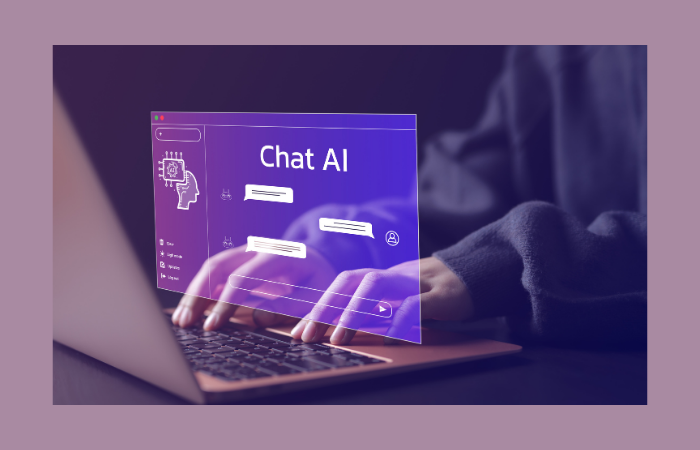
 AI can help us work, but it cannot recreate everything that happens when people work together. Photos: Canva
Used appropriately, AI could even create more space for meaningful collaboration by taking repetitive work off employees' plates.
That could mean deliberately creating AI-free meetings and workshops where colleagues have to negotiate, disagree, exchange ideas and solve problems together.
Because while AI may be the easiest place to ask, “Can you help me with this?”, some of the most valuable workplace conversations still begin by turning to the person sitting beside you.
‘We bring you the latest Garden Route, Hessequa, Karoo news’