

AGRICULTURAL NEWS - A cow cannot tell a farmer that she’s becoming lame, ready to breed or showing the first signs of illness. But bold new technology can detect subtle changes in her movement and behaviour – sometimes before a farmer sees them.
Scale that across South Africa’s cattle industry and the possibilities are significant: healthier animals, earlier disease detection, better breeding and biosecurity, and smarter use of resources such as water, feed and grazing.
But there is another calculation to make: who gets the technology?
South Africa’s livestock industry spans large, technologically advanced commercial operations and smallholder and emerging farmers with far fewer resources. Precision technology could benefit both – or become another advantage available mainly to those with the money and infrastructure to afford it.
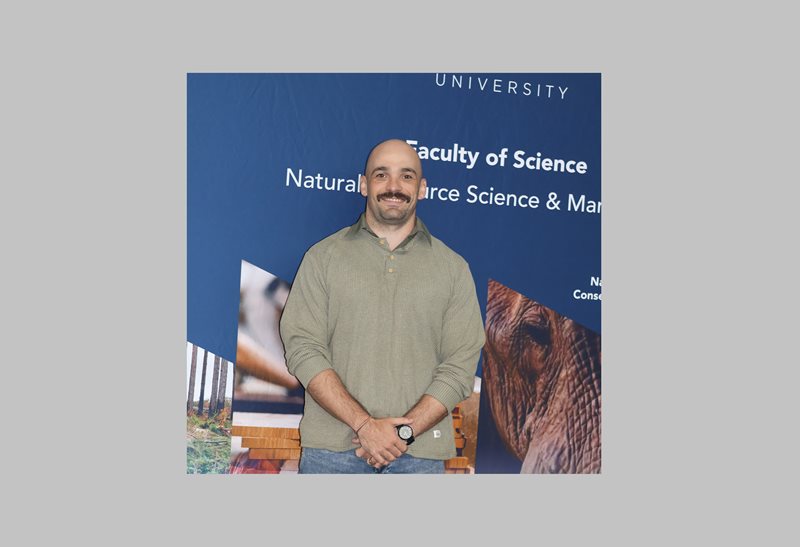
That tension runs through the research of Nelson Mandela University agricultural scientist Anton Gresse, whose work stretches from the data generated by an individual dairy cow to the ecological condition of entire Karoo landscapes.
“Both are true, and I think we need to be honest about that rather than choosing one narrative,” says Gresse, a lecturer in Agricultural Management at the University’s George Campus.
“In principle, these technologies can benefit any farmer, because the underlying problems they solve – knowing an individual animal’s fertility status, health or location – matter just as much to a smallholder with twenty cattle as to a commercial operation with two thousand.”
In practice, implementation costs, data integration and poor rural connectivity remain significant barriers.
“If we are not deliberate about how this technology is rolled out, there is a genuine risk that it becomes another advantage that accrues mainly to those who already have capital and infrastructure, widening rather than narrowing the gap between our commercial and emerging sectors,” Gresse says.
From farm boy to big data
Gresse’s fascination with cattle began well before he knew the term “precision livestock farming”.
Born and raised in Pretoria, he comes from a family involved in beef and dairy farming for generations. As a child, he spent every spare moment he could on the farms, “watching, helping, and asking questions”.
“Growing up around beef and dairy cattle, you learn very quickly that every animal is an individual, with its own history, temperament, and needs,” he says.
He completed his BSc and MSc in Animal Science at the University of Pretoria, with his master’s focused on automated dairy systems. It was there that he spotted something that has driven much of his research since: automated systems were collecting enormous amounts of information about individual cows, but much of it was not being used to its full potential.
“That gap, between the data being captured and the decisions actually being made on farm, is what has driven my research ever since.”
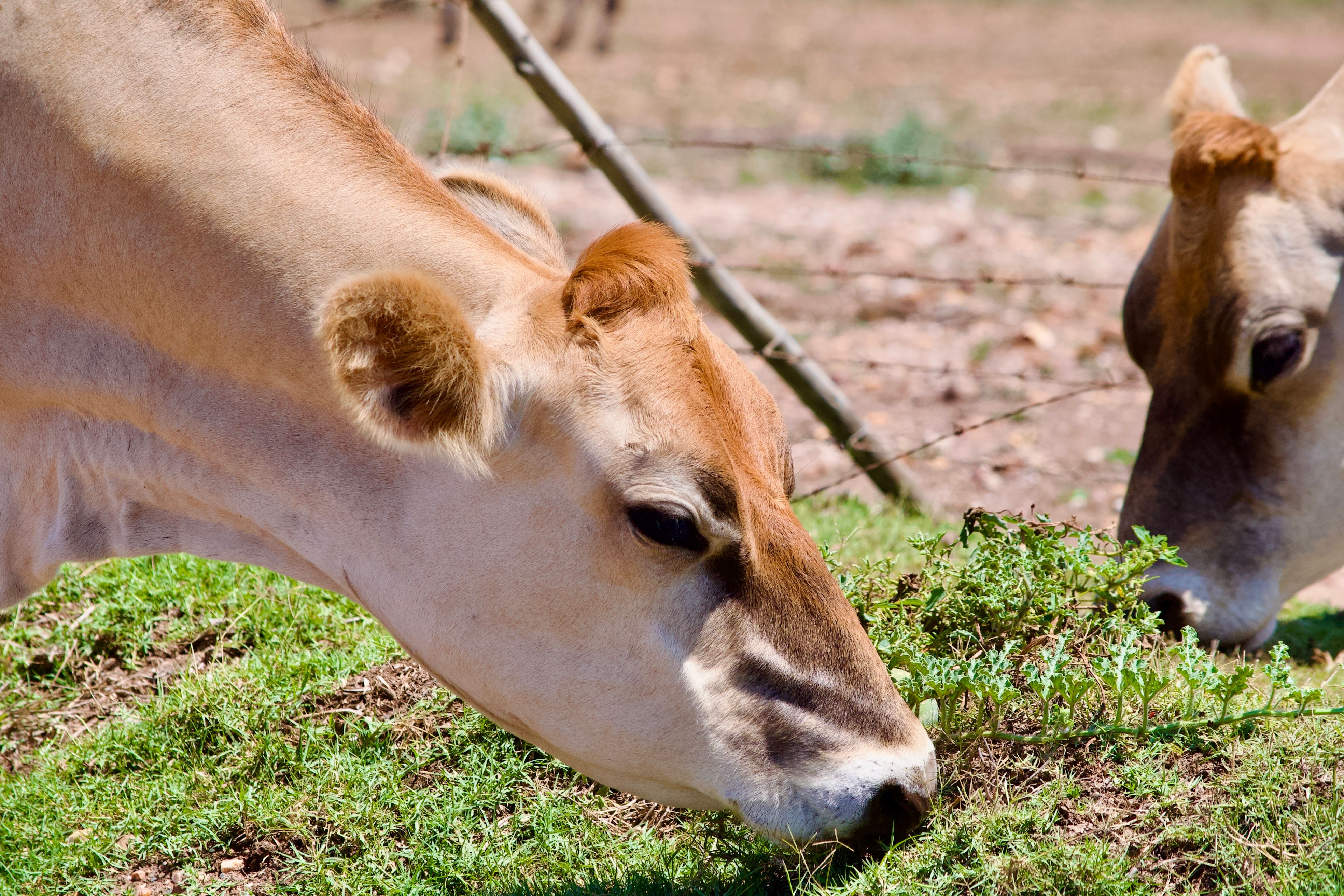 Growing up around beef and dairy cattle, you learn very quickly that every animal is an individual. Photo: Pexels
Two of Gresse’s journal articles now approach that challenge from different ends of the cattle industry.
His 2025 study, Exploring heifer fertility, sire selection, and herd survival analyses in herds with automated data capture, mined years of automatically collected data from two South African dairy farms – one using a total mixed ration (TMR) system and the other pasture-based.
His more recent paper, Precision livestock farming technologies to support sustainable beef cattle production: A South African perspective, turns to the beef industry and examines technologies ranging from electronic identification and GPS tracking to activity sensors and automated systems, and their potential application in South African farming.
Together, they raise a deceptively simple question: what could farmers do differently if they made better use of the information already being collected?
When the herd becomes an individual
Precision livestock farming, or PLF, shifts the focus from managing cattle principally as a herd to using continuous data to understand individual animals.
Radio frequency identification (RFID) can connect an animal to a lifelong record of its movement, health and performance. GPS collars can track cattle across extensive rangelands, while activity monitors can detect changes in movement and behaviour. Automated feeding and weighing systems can link individual inputs to performance.
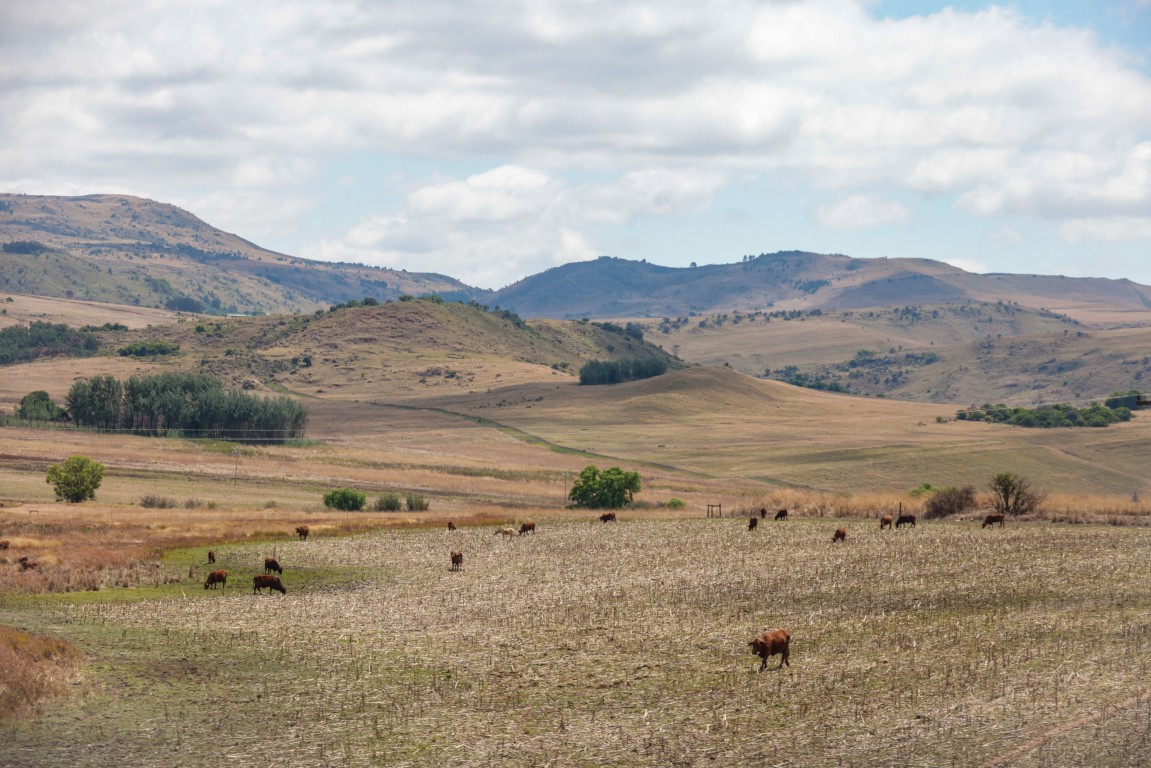 Through precision farming, rotational grazing can be guided and veld condition protected. Photo: Pexels
For Gresse, however, the value lies not in the gadget but in the decision it allows a farmer to make.
His dairy research provides a striking example.
Analysis of years of existing herd records showed a strong correlation between a sire and the survivability of his progeny, with R² values of 0.91 in the TMR herd and 0.97 in the pasture-based herd. The researchers also found that survivability fell sharply after the first few lactations, with most exits occurring between the heifer phase and third lactation.
For Gresse, the findings challenged the assumption that better farming necessarily begins with buying more technology.
“We do not always need new technology to make better decisions. Sometimes we need to properly use the technology and the data we already have.”
Farmers, he says, may already be sitting on “a genuine research and decision-making asset” in their own data.
Beyond the individual animal
For Gresse, healthier, more productive cattle and healthier landscapes are not competing goals.
Accurate animal-level data can help farmers match feed to actual need, while GPS and activity data can show how cattle are using rangeland – information that can guide rotational grazing, protect veld condition and reduce pressure on areas that need time to recover. Better traceability and biosecurity can also help protect South African beef’s access to export markets.
Making those benefits accessible beyond well-resourced commercial farms, however, will require more than cheaper technology. Gresse argues for financing tailored to smaller farmers, better rural connectivity and sustained technical and extension support.
Crucially, he says technology should be designed around what smallholder farmers actually need and can manage, rather than simply offering them scaled-down versions of commercial systems.
It is a philosophy that increasingly takes Gresse beyond the animal itself.
He is completing his PhD at Mandela University using remotely sensed satellite data to rethink conservation and biodiversity management in the Karoo, working across SANParks land, conventional farms, private nature reserves and game farms.
His hope is that the next decade will bring far closer integration between herd and landscape data – combining information from individual cattle with satellite imagery, GPS and measures of veld condition to inform how entire rangelands are managed.
“We need to start managing livestock and biodiversity as part of one connected system rather than treating cattle farming and conservation as separate, sometimes competing, interests,” Gresse says.
“If we get the accessibility question right, this could be a genuine turning point for building more resilient farming landscapes across the country, not just more efficient individual farms.”
What if your cow could tell you something was wrong?
From detecting illness to keeping cattle inside invisible boundaries, precision technology is changing what farmers can see, measure and manage. Anton Gresse’s research maps some of the possibilities.
Spot illness from inside the animal
Internal sensors such as rumen boluses and biosensors can monitor body temperature, pH, rumination, feeding and drinking behaviour – helping detect disease, metabolic problems and even impending calving.
Put up a fence without building one
Virtual fencing can create digital grazing boundaries, allowing farmers to control where cattle move without conventional fences. Research reviewed by Gresse also points to its potential for keeping animals away from environmentally sensitive areas.
Find a missing animal
GPS and movement-tracking systems do more than monitor grazing. They can help locate cattle across large rangelands and have applications in stock-theft prevention – particularly relevant in extensive farming systems.
See heat stress before it takes its toll
Environmental sensors can monitor temperature, humidity, air quality and ventilation, helping farmers manage heat stress and improve animal welfare.
Measure what cattle put into the atmosphere
Methane and greenhouse-gas monitoring systems can measure emissions from cattle, supporting environmental monitoring, sustainability reporting and even selection for lower-emission animals.
Let cameras watch the herd
Machine vision, cameras and drones can monitor behaviour, body condition, lameness, stress, herd distribution and heat signatures – offering non-invasive ways to monitor welfare and manage animals remotely.
And make the data usable
The technology alone is not enough. Gresse’s review highlights training, extension support and simpler platforms capable of integrating different data streams – particularly if precision farming is to become useful to smaller producers rather than remaining concentrated in technologically advanced commercial operations.
‘We bring you the latest Garden Route, Hessequa, Karoo news’