

Video
GEORGE NEWS AND VIDEO - More than R56m in outstanding fire service accounts is currently hanging over the Garden Route District Municipality, while its firefighters must still respond when the next veld or mountain fire breaks out.
Against this backdrop, Deon Stoffels, head of the district's fire services, answered a series of questions about who is liable for this debt, how the process works, and what the law provides.
As previously reported, the municipality is grappling with nearly R70m owed it, and which is largely regarded as uncollectable. About 75% of this is for rendered fire services, R56.4m being specifically for firefighting. The largest portion is owed by private landowners, but also by national and provincial government institutions and local authorities.
According to Stoffels, the district is responsible for veld, mountain and certain specialised fires in the region. He said where services are rendered, the municipality may levy charges regardless of where the fire originated. The point of origin and cause of a fire are therefore not the determining factors for billing, but rather on whose land the service was delivered.
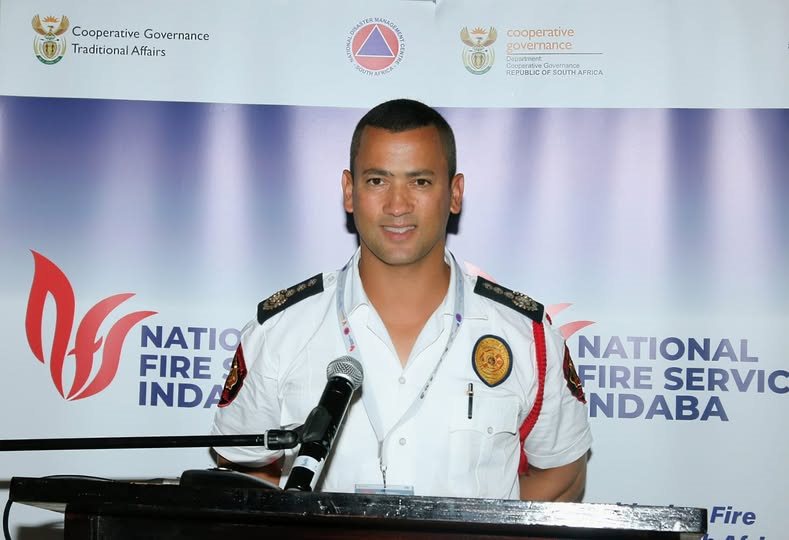
VIDEO - District Fire Chief Deon Stoffels during an interview on Monday 23 February with George Herald's Michelle Pienaar.
The process begins with a fire report, after which an account is generated and sent to the relevant landowner. In many cases, however, these accounts are disputed.
Some owners question the origin of the fire and others argue that they did not call out the fire brigade, or that the taxes and rates they pay to the local municipality should cover the firefighting services.
Stoffels also explained that the issuing of fire permits is currently in a transition phase.
Local municipalities previously handled this function, but the district is in the process of taking it over where it legally falls within its mandate, particularly in rural areas.
According to him, it is essential that the permit system and firefighting responsibility be managed holistically, as the district ultimately carries the risk and costs when controlled burns run out of control.
When payments are not made, reminder letters follow and ultimately legal processes, which can take a long time. In the meantime, the fire service must continue operating, often under difficult conditions.
Investigations into the origin of fires are conducted by private companies, for which the municipality initially covers the cost.
Stoffels pointed out that helicopter costs are among the most significant expenses - exceeding R45 000 per hour per aircraft - particularly due to challenging terrain, drought conditions and strong winds.
The core message, he said, is simple: where firefighting services are rendered, payment is due, just as with any other service.
‘We bring you the latest Garden Route, Hessequa, Karoo news’