

GEORGE NEWS - Although there is currently no official fuel shortage in South Africa, motorists and businesses are beginning to feel the effects of a backlog in fuel supply to local stations.
At the same time, fuel prices are expected to rise significantly from April as global oil markets remain volatile.
The Department of Mineral and Petroleum Resources and the Fuels Industry Association have confirmed that the country’s fuel supply remains stable and have urged residents not to panic-buy petrol or diesel.
While overall supply remains stable, isolated reports of fuel shortages have been recorded. These are attributed to certain suppliers delaying the release of fuel to customers.
Premier Alan Winde called on all suppliers to immediately release full fuel orders to clients. He said hoarding is unethical and will not be tolerated.
“Fuel is essential to our economy, growth and job creation efforts, especially in the agricultural sector, as we enter the fruit harvesting and winter grain planting season. This sector is already under strain due to foot-and-mouth disease,” he said.
Despite these reassurances, analysts warn that the rising cost of crude oil, largely driven by tensions in the Middle East, will inevitably push local prices higher.
One key concern is the disruption to shipping routes around the Strait of Hormuz, which has forced tankers to reroute around the Cape of Good Hope. While this has created opportunities for African bunkering hubs, it has also added transit costs and logistical pressures, contributing to higher fuel prices locally.
In George, some service stations have already reported limited diesel availability, though these are considered distribution issues rather than a nationwide shortage.
However, residents and businesses across the Garden Route are increasingly feeling the pinch. Reports of rationing at fuel stations and delayed diesel deliveries have raised concern, particularly in the agricultural sector at a critical time in the farming calendar.
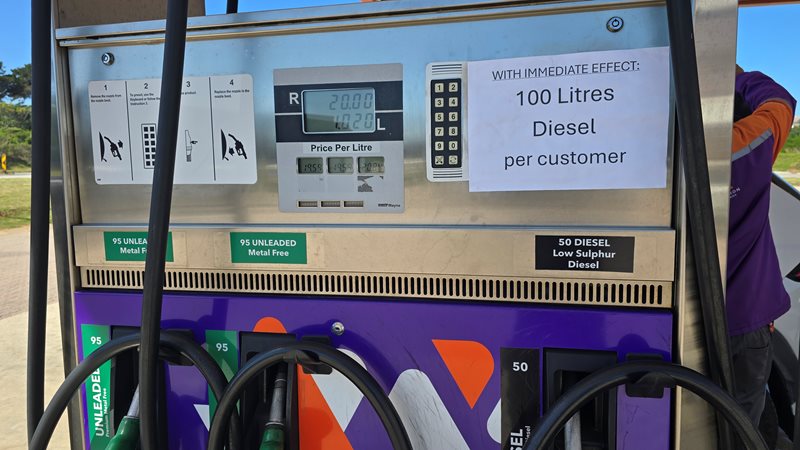
Several stations in George have begun rationing motorists to no more than 50L per customer, while others continue to operate normally.
The isolated supply disruptions are believed to stem from delays in distribution, though there are concerns that some suppliers may be holding back stock in anticipation of the expected fuel price increase in April.
As residents and businesses navigate these challenges, authorities continue to emphasise that the supply is adequate and urge motorists to buy responsibly to avoid creating artificial shortages.
Between the foot-and-mouth disease and mounting diesel supply pressures, the farmers of the Garden Route are facing an exceptionally difficult year.
Agri Western Cape CEO Jannie Strydom said the feedback from farmers indicates the situation is more difficult than official statements suggest. “70% to 75% of the feedback indicated that they do not have access to fuel,” he said. In some cases, farmers are receiving as little as 20% of their usual monthly diesel allocations, and Strydom attributes these shortages to a likely blockage in the supply chain.
According to Laubscher Coetzee, chairperson of Agri Western Cape, farmers are also trying to buy enough ahead of the expected price increase, particularly as it is planting and harvesting season.
The timing of these disruptions could not have been worse. Fuel accounts for 12% to 18% of input costs, and limited access is forcing some farmers to consider scaling back operations.
Dean Barnard, a farmer from Waboomskraal, said he had ordered diesel early last week, but had still not received the delivery by Tuesday.
“Our orders have been placed, but so far no deliveries have been possible. We approached two separate companies last week, but neither was able to supply the fuel. Hopefully, some diesel will come through somewhere. Until then, we wait,” he said.
Another farmer in Herold said while they managed to fill their tanks in time, others were not as fortunate.
Suppliers under pressure
Suppliers are also feeling the strain. In a notice to members earlier this month, the Sentraal-Suid Koöperasie (SSK) in Herold said fuel stocks remain under “significant pressure” due to global market volatility and ongoing supply disruptions.
In a notice issued on 18 March, Moov Energy warned customers of severe disruptions, closing its order book “until further notice”.
While orders can still be placed, delivery timelines cannot be guaranteed until supply stabilises.
Authorities have urged residents not to hoard fuel, warning that panic buying could worsen the already strained supply chains.
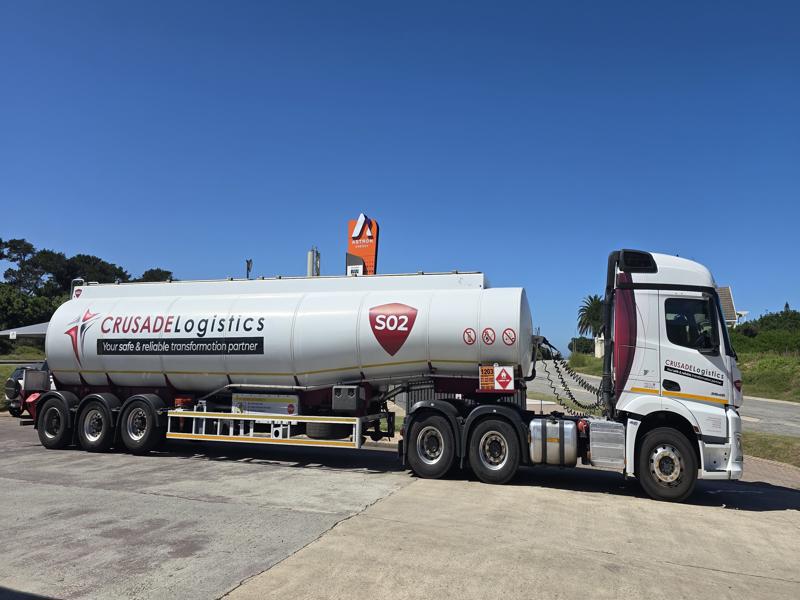 A truck delivering fuel to Astron Energy in Wilderness. Photo: Jeff Ayliffe
‘We bring you the latest Garden Route, Hessequa, Karoo news’