


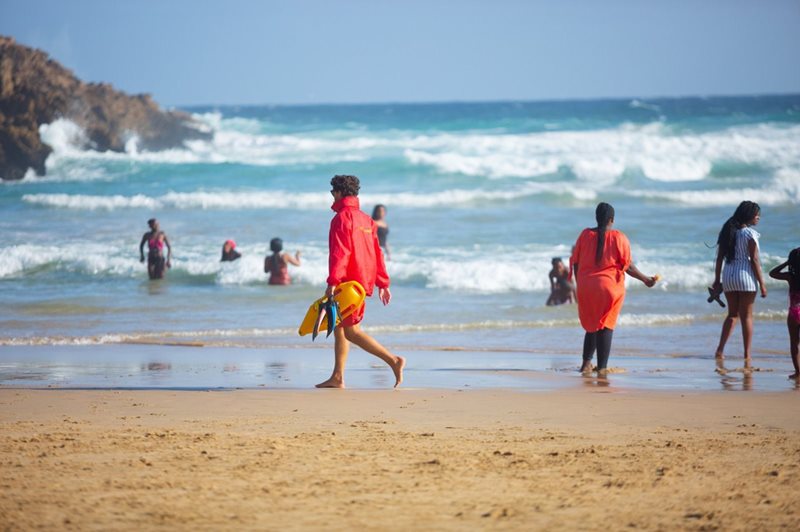
GEORGE NEWS - As the peak summer season draws thousands of residents and visitors to local beaches, the George Municipality has outlined lifeguard deployment schedules and issued an important reminder on beach and water safety.
With varying levels of lifeguard coverage in place throughout the year, beachgoers are urged to take personal responsibility for their safety by following basic water safety guidelines, heeding lifeguard advice and remaining alert to potential hazards in and around the ocean.
Lifeguards are deployed daily from 07:00 to 19:00 at the municipal blue flag beaches at Victoria Bay, Herold’s Bay, Wilderness Main Beach, and Leentjiesklip until 28 February.
From 1 March to 7 April 2026, lifeguards will be on duty only on Saturdays, Sundays, public holidays, and school holidays between 09:00 and 17:00, with an option to extend the hours on good weather days at the Blue Flag beaches.
Gwaing River Mouth, Wilderness Lagoon, and Steps Beaches will have lifeguards during December and January, and after that on high heat days, till the end of the season.
Tips for staying safe on the beach and in the water
Learn to swim
Learning to swim is the best defence against drowning. Teach children to swim at an early age. Children who are not taught when they are very young tend to avoid swim instruction as they age, probably due to embarrassment. Swimming instruction is a crucial step in protecting children from injury or death.
Swim near a lifeguard
Statistics show that the chance of drowning at a beach without lifeguard protection is almost five times greater than drowning at a beach with lifeguards.
No alcohol
Do not swim while under the influence of alcohol or heavy sedation medication.
Swim with a buddy
Many drownings involve single swimmers. When you swim with a buddy if one of you has a problem the other may be able to help, including signalling for assistance from others. At least have someone onshore watching you.
Check with the lifeguards
Lifeguards work continually to identify hazards that might affect you. They can advise you on the safest place to swim, as well as places to avoid. They want you to have a safe day. Talk to them when you first arrive at the beach and ask them for their advice.
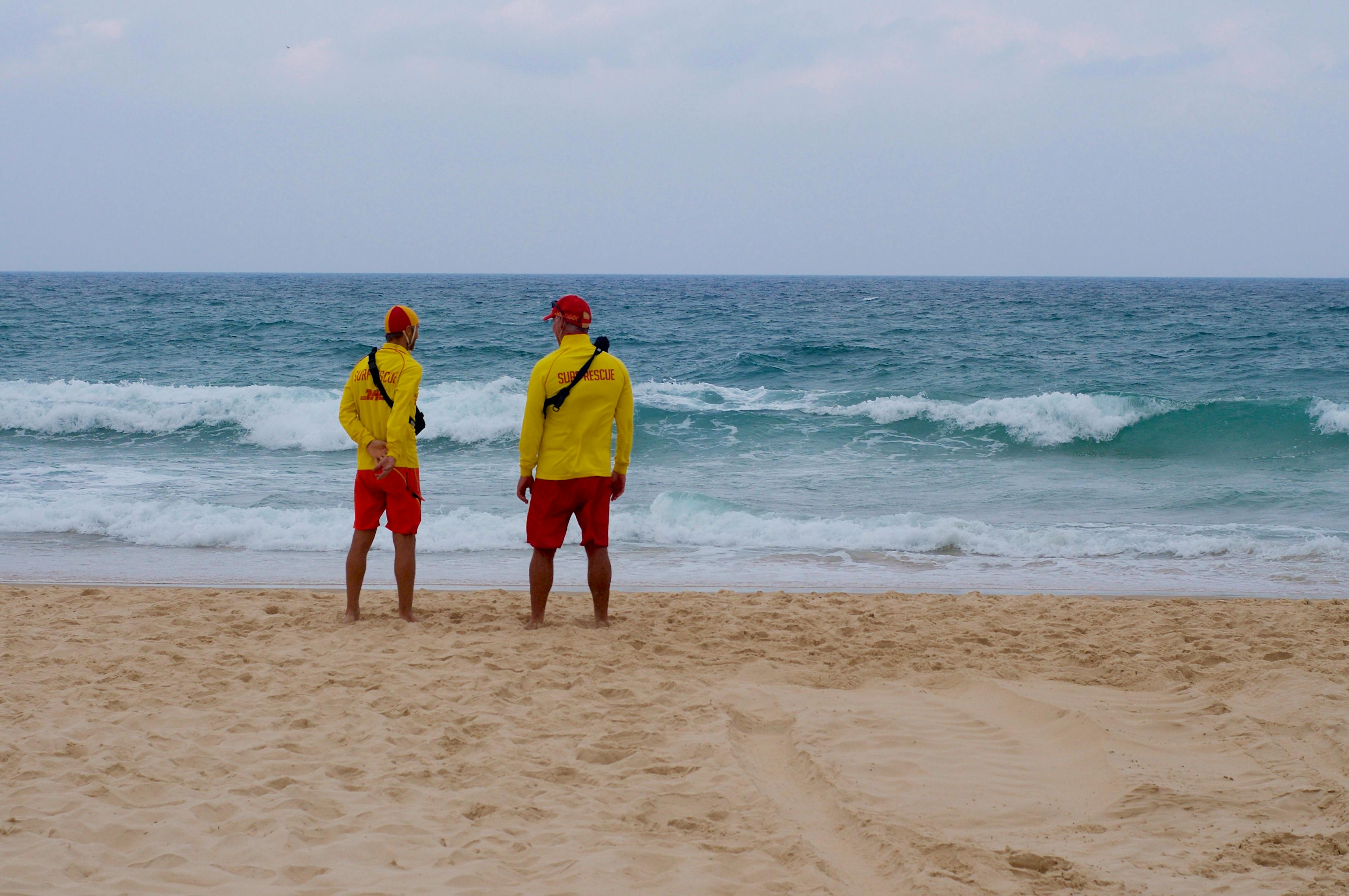 Check with the lifeguards. Photo: Pexels
Use sunscreen and drink water
Everyone loves a sunny day, but remember to protect your skin with "broad spectrum” sunscreen rated from 15 to 50 SPF, or clothing that covers your skin, and reapply sunscreen regularly throughout the day. The sun can also dehydrate you quickly. Drink lots of water and avoid alcohol, which contributes to dehydration. Lifeguards treat people for heat exhaustion and heat stroke from time to time. If you feel ill, be sure to contact a lifeguard.
Obey posted signs and flags
Signs on the beach are intended to help keep you safe and inform you about local regulations. Read the signs when you first arrive and please follow their directions. Flags may be flown by lifeguards to advise of hazards and regulations that change from time to time. You can usually find informational signs explaining the flags’ meaning or just ask the lifeguard. ONLY swim between the flags. They indicate the swimming area. Do not swim if there are no Lifeguards on duty.
Learn rip current safety
80% of rescues by lifeguards at ocean beaches are caused by rip currents. These currents are formed by surf and gravity because once surf pushes water up the slope of the beach, gravity pulls it back. This can create concentrated rivers of water moving offshore. Some people mistakenly call this an undertow, but there is no undercurrent, just an offshore current.
If you are caught in a rip current, don't fight it by trying to swim directly to shore. Instead, swim parallel to shore until you feel the current relax, then swim to shore. Most rip currents are narrow and a short swim parallel to shore will bring you to safety.
Enter water feet first
Serious, lifelong injuries, including paraplegia, occur every year due to diving headfirst into unknown water and striking the bottom. Bodysurfing can result in a serious neck injury when the swimmer's neck strikes the bottom.
Check for depth and obstructions before diving, then go in feet first the first time; and use caution while bodysurfing, always extending a hand ahead of you. Be careful even at the swimming pool.
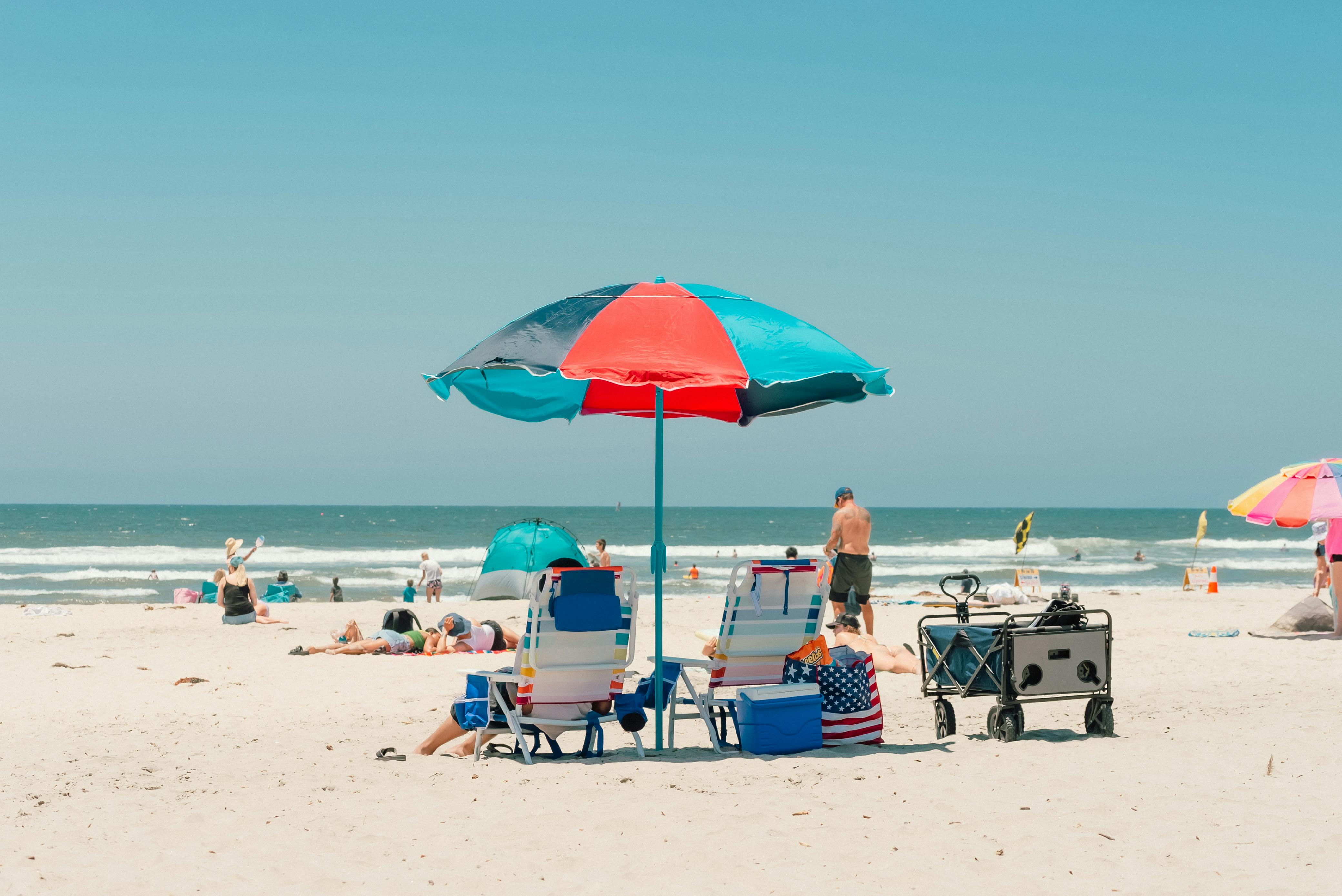 Wear sunscreen and use umbrellas for protection against the harmful rays of the sun. Photo: Pexels
Wear a life jacket when on watercrafts
Some 80% of fatalities associated with boating accidents are from drowning. Most involve people who never expected to end up in the water but fell overboard or ended up in the water when the boat sank. Children are particularly at risk and should wear life jackets whenever they are aboard boats.
Keep the beach and water clean
Nobody likes to see the beach or water littered with trash. Even in places where beach cleaning services pick up trash daily, it may linger on the beach for hours, causing an unsightly mess and threatening the health of birds and animals. Broken glass also poses a great risk of injury to beach users. Do your part. Pick up after yourself and even others.
Beaches and swimming pools that fall under the George Municipality’s jurisdiction are:
- Wilderness Main Beach
- Wilderness Lagoon
- Wilderness Steps
- Wilderness Leentjiesklip
- Victoria Bay Beach
- Gwaing River Mouth Beach and Day Camp
- Herold’s Bay Beach and Tidal Pool
- Conville Municipal Swimming Pool
- Uniondale Municipal Swimming Pool
Essential phone numbers to keep close this summer
The National Sea Rescue Institute (NSRI) Station 23 at Wilderness Beach supports the municipality.
- The NSRI can be reached on 082 990 5955.
- George Fire Department FIRE 044 803 6311
- TOLL-FREE DISASTER NUMBER: 087 152 9999
- George Municipality AFTER HOURS 044 803 6300
 Adhere to the prescribed safety precautions at the public swimming pools. Photo: George Municipality
Public swimming pools
Lifeguards are available at the Conville and Uniondale pools from 1 December 2025 until 10 April 2026, as per the following swimming pool operating hours:
- Monday to Friday: 09:00 – 12:00 and 13:00 – 16:00 (with 2 Lifeguards on Duty)
- Saturdays and Sundays (Public Holidays): 09:00 – 12:00 and 13:00 – 16:00 with 2 Lifeguards on Duty and one Lifeguard on standby.
The following safety precautions are to be adhered to:
- Do not dive into a pool you have never been in before
- Listen to the lifeguards
- Do not swim alone
- Do not let small children swim in the big pool.
- No diving. No pushing
- An adult must escort children under the age of 12
- No weapons
- No alcohol is allowed at the swimming pools
- Right of admission reserved.
The tariffs for entry into both Conville and Uniondale swimming pools are as follows:
Non-sporting events:
Entrance fee: Adult: R 17, 00 per person
Children (16 years & under): R 5, 00 per child
Sporting events:
Hire of Conville Swimming Pool:
Galas for Adults: R1 670,00 / full day
Deposit R1 670, 00 (Refundable)
Floodlights: R 334, 00 / hour
Touchpads: R 4 452, 00 / day – R 557,00 per set per day
Entry fee to the swimming pools is VAT inclusive.
For enquiries/bookings: Conville Swimming Pool
Tel: 044 801 9488
Contact persons:
Mr J Bruinders Email: jbruinders@george.gov.za – senior clerk for Sport Development
Ms LY Botha Email lybotha@george.gov.za – sport development officer
For enquiries/bookings: Uniondale Swimming Pool
Tel: 044-8019020 / 044 7521024 (Uniondale Office)
As of 8 April until 30 November 2026, there will be no lifeguards deployed at the beaches and swimming pools.
‘We bring you the latest Garden Route, Hessequa, Karoo news’