

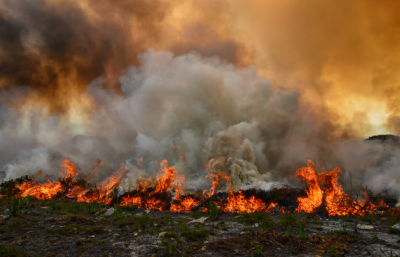
ENVIRONMENT NEWS - The Western Cape is heading into another wildfire season after an estimated 132 000 to 168 798 hectares burned across the province last summer - the second-largest area burned in 25 seasons and equivalent to about 2.4% of the province’s total land area.
With another El Niño weather pattern potentially bringing hotter-than-usual conditions to South Africa, concerns are growing about what could be another intense wildfire season.
But while damaged buildings, evacuations and travel disruption are among the most visible consequences of wildfires, another threat can travel far beyond the flames: smoke and hazardous air quality.
As the Western Cape’s traditional four-month wildfire season stretches from October to May, organisations are being urged to prepare for the wider environmental and health impacts of fires.
Wildfire smoke can travel hundreds of kilometres
“In many locations extreme heat and wildfires are intrinsically linked,” says Dr Chris van Straten, Global Health Advisor for Clinical Governance at International SOS.
“As global temperatures rise, wildfire risk and intensity increase, creating health and operational challenges that can extend far beyond the fire-affected area. Smoke and hazardous air pollutants can travel hundreds of kilometres, affecting workforce members who may never be directly exposed to the fire itself.”
This means the effects of a wildfire are not necessarily confined to the area where flames are burning.
Smoke particles can travel on wind currents and significantly reduce air quality in cities and regions far from an active fire. Businesses may therefore face air-quality risks even when their operations are nowhere near the fire zone.
For organisations, wildfire preparedness needs to extend beyond protecting buildings and planning evacuations to include workforce health, air-quality monitoring and business continuity.
Fine particles can pose a health risk
Fine particulate matter in wildfire smoke can trigger respiratory symptoms and increase cardiovascular strain, with people living with underlying respiratory or cardiovascular conditions potentially more vulnerable to its effects.
“The consequences of wildfire smoke can extend beyond the duration of the event, creating health risks that may persist for weeks, months, or even longer,” says Dr van Straten.
“Workers with respiratory illnesses, cardiovascular conditions, or other health vulnerabilities are especially susceptible. As climate-related hazards become more prevalent, organisations need a comprehensive Duty of Care framework that integrates workforce health protection with business continuity planning.”
Businesses can begin preparing their workforce by:
- Including wildfire and air-quality awareness in existing wellness communications.
- Giving employees an opportunity to voluntarily and confidentially flag relevant health conditions ahead of wildfire season.
- Providing clear information about available health and wellbeing support.
This approach can help organisations identify potential vulnerabilities before an emergency occurs, while giving employees practical information about protecting their health.
The impact can continue after the flames are gone
The health effects of wildfires are not necessarily over when the fire has been extinguished.
“An emergency-prepared organisation knows that invisible dangers still exist even when the immediate threat of the fire is physically removed,” says Dr van Straten.
“Supporting workforce members means addressing both the immediate physical risks of fire and smoke exposure and the longer-term health and mental and emotional impacts that can follow traumatic events.”
For organisations, this means support should continue beyond the immediate emergency.
This can include timely health guidance during a wildfire, resources to help employees build resilience once the immediate threat has passed, and ongoing access to workplace health and wellbeing support.
Preparing for a longer wildfire season
As extreme heat becomes more common and wildfire risk increases, organisations are being encouraged to treat fires and associated air-quality risks as an ongoing environmental challenge rather than an isolated emergency.
“As extreme heat becomes a more common feature of our environment, and wildfire risk correspondingly increases, organisations can no longer treat wildfires and related air quality risk as an episodic challenge,” concludes Dr van Straten.
“Protecting workforce health requires a proactive and enduring approach, built on continuous risk assessment, including air quality monitoring, trusted medical advice, and comprehensive wellbeing support throughout every stage of an incident.”
‘We bring you the latest Garden Route, Hessequa, Karoo news’