

Update
GEORGE NEWS - A Thembalethu Regional Court conviction over the death of a leopard in a cage trap on a farm near Uniondale has reignited the debate about predator management, animal welfare and the responsibilities of farmers when dealing with protected wildlife.
André Barnard of Toorwater Farm along the southern slopes of the Swartberg was found guilty on six charges relating to the leopard's illegal trapping and death.
He is due to be sentenced today, Thursday 20 August.
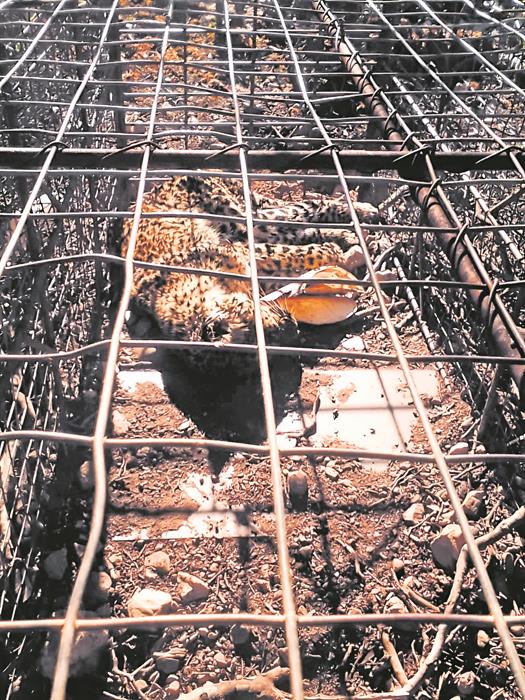
The charges stem from August 2020, when the leopard was caught in a cage trap and died suffering, being left without food or water. Barnard was convicted under the Western Cape Nature Conservation Ordinance and the Animal Protection Act after initially pleading not guilty to the charges.
The sentence is expected to put renewed focus on the circumstances surrounding the leopard's death and the broader question of how protected predators should be managed on farms.
According to Bool Smuts of the Landmark Leopard & Predator Project, Barnard had caught the leopard in the trap and knowingly left it in the cage to die of starvation and dehydration. "Barnard allegedly wished it dead, but did not want to shoot it. Nor would he call CapeNature or the Landmark Foundation for assistance. Instead, it was left to die in the cage," said Smuts.
It is unknown how long the leopard suffered before it died.
"Thirst is the only urge a mammal cannot resist. Dying of dehydration, by deprivation of water, is the cruellest death any animal can be subjected to," said Smuts.
He said there were reasonable alternatives available to the farmer that could have rescued the leopard.
The case has also brought the rules governing the capture of protected wildlife to the fore. Under the Western Cape Nature Conservation Ordinance, hunting includes capturing or attempting to capture a wild animal. A permit or licence is generally required to hunt a protected wild animal, while trapping is a prohibited hunting method for which a special permit is needed.
The definition of a trap includes a cage, snare, gin or spring trap. Leopards are protected wild animals in the Western Cape, meaning their capture or hunting is subject to conservation legislation and the appropriate permits.
What farmers can do
Farmers who want to prevent conflict with leopards have several non-lethal options, including secure livestock kraals, livestock guardian dogs, herders, and protection of natural prey.
Camera traps can also help monitor leopard movements and establish whether an animal is responsible for livestock losses.
Where a leopard poses an ongoing problem, farmers are advised to contact CapeNature rather than attempt to capture or kill the animal themselves. In some cases, problem leopards can be captured by authorised conservation officials, fitted with tracking collars and relocated or released under a managed programme.
Previous articles:
‘We bring you the latest Garden Route, Hessequa, Karoo news’