


OPINION - In this fourth instalment of Business Unplugged, Prof Adele Potgieter turns the spotlight on one of the most overlooked, and most expensive, realities of small business: your people are your business.
For many entrepreneurs, becoming an employer is not a deliberate step, but an inevitable one. Growth demands help.
Help becomes staff. And suddenly, without training or preparation, you are expected to lead, motivate and manage, often learning through costly mistakes.
This week’s column unpacks why hiring in a hurry often leads to problems, what truly retains good employees, and why the simplest management habits - respect, recognition and responsibility - can make or break your team.
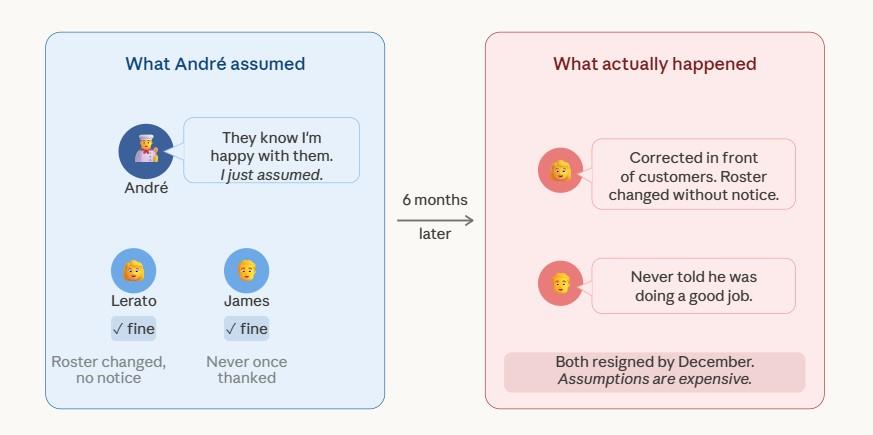
André runs a small café in Knysna. He is a good cook, a warm host, and his regulars adore him. Last year, he hired his first two full-time staff members. By December, both had left.
The first left because she felt André had changed the roster without telling her and kept correcting her in front of customers. The second left because in six months, André had never once told him he was doing a good job.
André was stunned. “I thought they knew I was happy with them. I just assumed they knew.”
That assumption cost him two employees, months of disruption, and the trust of a small team he could not afford to lose.
André's two staff members left for different reasons - but both were preventable.
The skill nobody taught you
Most small business owners became employers by accident. They were good at something - cooking, building, bookkeeping or designing - and the business grew to the point where they could no longer do it alone. Nobody sat them down and explained that managing people is an entirely different skill from the one that made the business successful.
It is also one of the most consequential skills in a small business. A single demotivated employee in a small team affects every customer interaction. A single great employee who leaves takes not just their labour, but their knowledge, their relationships, and often a piece of your culture with them.
Hiring for the right reasons, not the urgent ones
When a small business is understaffed and overwhelmed, the temptation is to hire quickly - to fill the gap as quickly as possible. This is one of the most reliable ways to make a bad hire.
Beyond the CV, there are three things worth assessing in any first conversation. How does this person talk about their previous employer? Someone who blames everyone they have ever worked for will eventually add you to that list. Do they ask questions about the work, the team, and the culture - or only about the salary and the hours? And are they prepared? For a small business, a candidate who has not thought to research you before the interview is giving you a sense of how they will treat your customers.
Skills can be taught. Reliability cannot. Attitude cannot. In a small business where every interaction counts, hiring someone with the right disposition and training them in the technical skills is almost always a better outcome than hiring technical expertise that comes with a difficult temperament.
What actually retains good people
There is a useful distinction in management research between factors that prevent dissatisfaction and those that create genuine motivation.
The basics must be right: fair pay, consistent hours, clear expectations, a clean and safe working environment, and honest communication. If any of these are missing, everything else becomes noise. You can organise team lunches and staff recognition events, but if your employees do not know from one week to the next what their roster looks like, they will leave. Not in anger - quietly, for somewhere more stable.
Once the basics are right, motivation comes from a different source entirely: recognition, responsibility, and the feeling that the work matters. André’s second employee did not leave for more money. He left because in six months, he had never heard that he was valued. That is a management failure, not a compensation failure - and it cost André nothing to fix, except the habit of noticing.
What good management actually sounds like
Great small business management does not just require a performance review system or an HR policy manual. It requires three things done consistently.
The first is specificity: not “Good job this week,” but “The way you handled that difficult customer on Thursday was exactly what this business is about. Thank you.” Specific recognition lands. Generic praise feels like noise.
The second is clarity: not “Do better,” but “Here is exactly what I need from you, and here is why it matters.” Expectations without explanation create resentment. Expectations with context create ownership.
The third is inclusion: not “Here is what we are doing,” but “What do you think?” A small business employee who feels consulted, feels invested. An employee who feels like a pair of hands will behave like one.
The three Rs: The pillars of keeping good people in your business.
- Respect: The basics: fair pay, clear expectations, consistent treatment. Without these, nothing else works. People do not leave bad jobs. They leave bad management.
- Recognition: Specific, genuine acknowledgement of good work. It costs nothing. It is worth more to most employees than you imagine. And most managers do it far less than they think they do.
- Responsibility: The chance to own something. To have authority within their role. To feel that their contribution matters to the outcome. This is what turns an employee into an asset.

This week’s exercise: The two conversations
This week, have two conversations you have probably been putting off.
Conversation 1 - Recognition:
Think of someone on your team who has been doing good work quietly. Tell them specifically what you have noticed and why it matters to the business. Not a vague “well done”, something like: “The way you handled that difficult table on Thursday was exactly what this business is about. Thank you.” Do not save it for a review. Do it this week.
Conversation 2 - Clarity:
Think of something that is not going well with your team, that you have not addressed directly. Have an honest conversation. Not a confrontation - a clear, respectful statement of what you need and why.
Both conversations are harder than they sound and more valuable than almost anything else you will do this week.
Next column: The resource you can never replace - your time, and how to use it on the things that actually grow your business.
Read more Opinion pieces here.
‘We bring you the latest Garden Route, Hessequa, Karoo news’