

OPINION - In the second installment of Business Unplugged, the topic is ‘Know your customer before you spend a cent’.
Most small business owners market to everyone and reach no one. The most common and costly mistake in small businesses is spending money before you truly understand who you are spending it on.
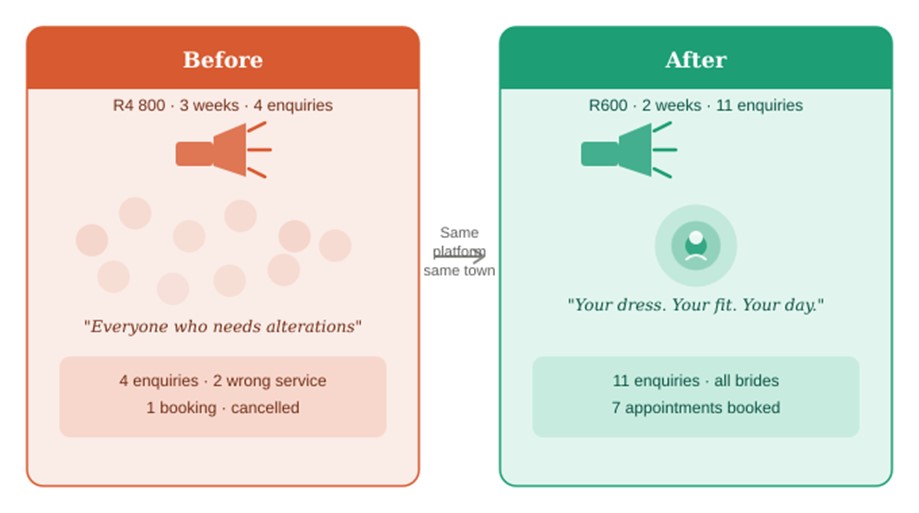
Fatima spent R4 800 on Facebook ads last month. She runs a small alterations and dressmaking business from her home in Pacaltsdorp, and business has been slow.
The ads ran for three weeks. She got four enquiries, two of which asked if she did curtains (she does not), and one booking that cancelled the day before the appointment.
When I asked her who she was trying to reach with the ads, she said: “Everyone who needs alterations”.
That is the problem right there. Not the platform. Not the budget. Not even the ad itself. The problem is that Fatima was speaking to everyone - which is the same as speaking to no one.
The most expensive assumption in small business
Most small business owners operate on an assumption so deeply embedded that they have never thought to question it: that their product or service speaks for itself, and that the right customers will simply find them.
Some do. But not reliably, and not enough. And when business is slow, the instinct is to advertise more, discount more, or post more on social media - usually to the same undefined audience, with the same disappointing results.
The most valuable thing Fatima could do before spending another rand on marketing is not to find a better ad. It is to answer one question with genuine specificity: who is my ideal customer, and what does life look like for them?
What a customer profile actually is
A customer profile is not a demographic bracket. ‘Women aged 25 to 55 in the George area’ is not a customer profile - it is a census category. A real customer profile describes a person.
Fatima’s best customers, it turns out, are not the people who need hems taken up.
They are brides and mothers of brides who want dresses altered to fit perfectly for once-in-a-lifetime occasions. They are anxious. They care enormously about the result. They are not looking for the cheapest option - they are looking for the person they can trust with something that matters.
That is a customer worth designing your entire business around. Once Fatima knows this, everything changes: what she says in her ads, which Facebook groups she participates in, how she photographs her work, how she describes her service, what she charges, and why she should stop mentioning curtains entirely.
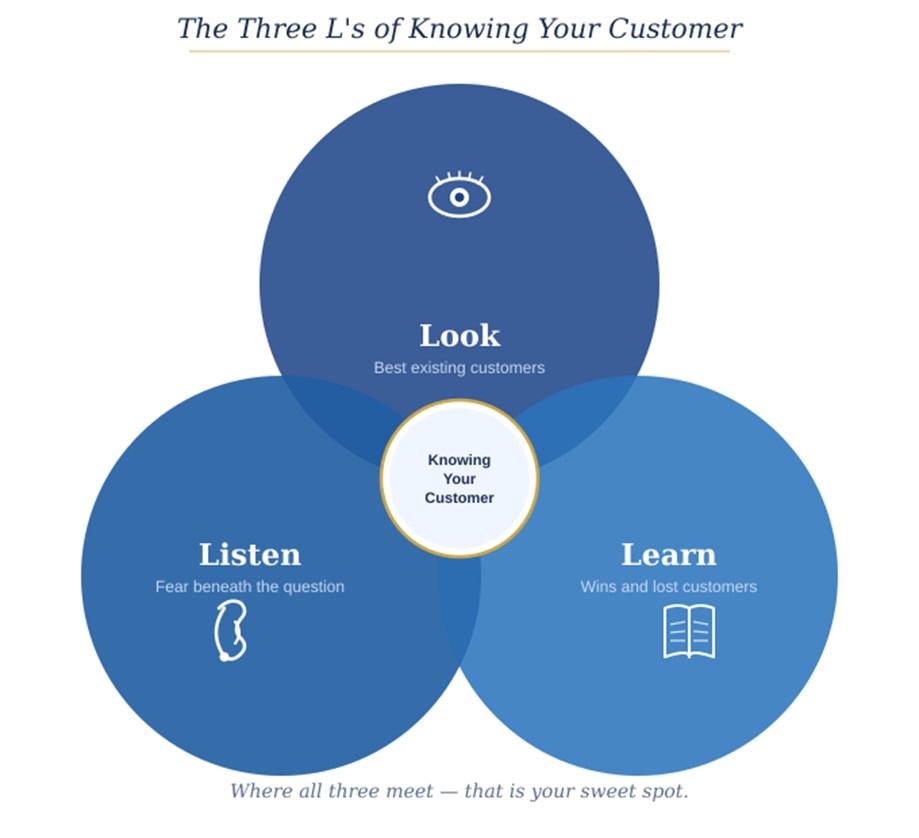
Looking, listening and learning
Building a customer profile does not require market research or a consultant. It requires honest attention to what your business is already showing you.
Look at your five best customers. Not your most loyal, necessarily, but your most satisfied. The ones who refer people. The ones who come back. The ones who never haggle. What do they have in common? Not just age and location - what do they value? What were they looking for before they found you? What made them choose you over someone cheaper or more convenient?
Listen to the questions people ask before they book or buy. The questions reveal the fears. A customer who asks, “Will it definitely be ready by Friday?” is not asking about turnaround time - they are asking you to remove their anxiety.
A customer who asks, “What happens if I am not happy with the result?” is not looking for a refund policy - they are looking for a guarantee that they can trust you. Hear the fear underneath the question, and you understand your customer at a level most competitors never reach.
Learn from the customers you did not get. The enquiries that went quiet, the quotes that were accepted by someone else, the customers who came once and never returned. These are not failures to put aside - they are data. What were they looking for that you did not clearly offer? What expectation was not met? The gap between who enquires and who becomes a loyal customer is where your customer profile lives.
How this changes everything downstream
Fatima’s next Facebook ad, once she had worked through this, featured a photograph of a wedding dress with the caption: “‘Your dress. Your fit. Your day’. It ran for two weeks with a budget of R600.
She got eleven enquiries, all from brides or bridal party members, and booked seven appointments.Same platform. Same town. Completely different customer in mind.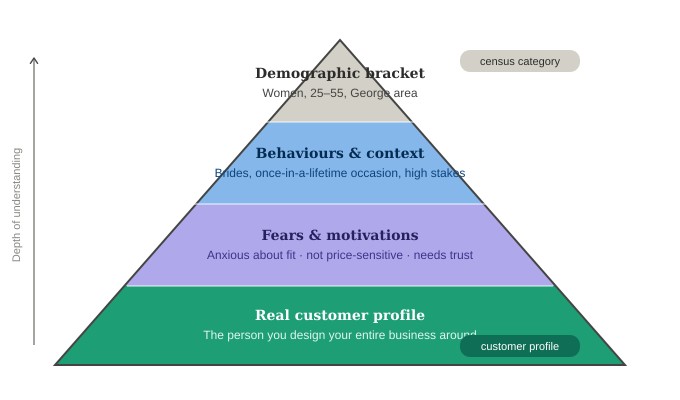
The three Ls of knowing your customer
- Look: Study your best existing customers. Not who you want to serve - who already loves what you do. They are the blueprint.
- Listen: Hear the fear underneath the question. Every enquiry reveals what your customer is really worried about. That is what you are actually selling.
- Learn: Pay attention to what your business is already telling you. Your wins and your lost customers are the most honest market research you will ever get.
This week’s exercise: build your customer profile
Think of your single best existing customer, the most satisfied, most loyal, most likely to refer you.
Now answer these questions about them:
- What were they worried about before they found you?
- What made them choose you over someone else?
- How do they describe you to someone they refer?
- What would make them leave for a competitor?
Write the answers down as if you are describing a real person to a friend. That description is your customer profile. Design everything else around it.
Next column: Once you know who your customer is, you can price for them with confidence.
Read more Opinion pieces here.
‘We bring you the latest Garden Route, Hessequa, Karoo news’