

GARDEN ROUTE NEWS - Acting Western Cape Premier, Dr Ivan Meyer, has likened the floods in the Garden Route to the Laingsburg flood of 1981, but said the preparedness of the provincial and district disaster management centres and other authorities prevented greater loss of life.
One person, Lauren Fredericks, a social worker from Knysna, died after a tree fell on her car.
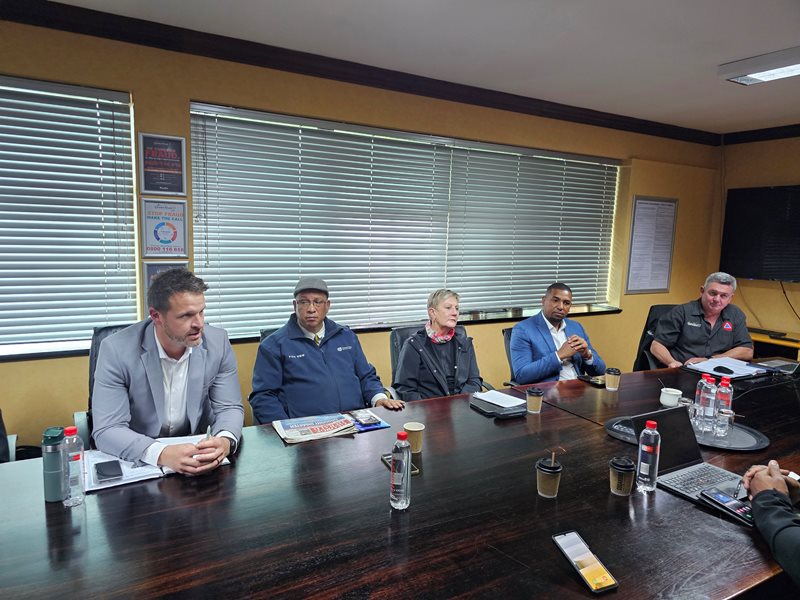
Meyer addressed the media at the Garden Route District Municipality’s offices this afternoon where the head of the Garden Route Disaster Management Centre, Gerhard Otto, gave an overview of the flood and response situation.
He said the province will approach National Government for the declaration of a national disaster once a full assessment of the damage has been done.
“If you look at the number of people who died during that period in 1981, and this is a similar flood, or even worse in some cases, then I think we need to thank this disaster management centre and the various municipalities. They have done an outstanding, world-class job to protect life.”
Meyer said the storm should be viewed as part of climate change rather than as an isolated disaster. He referred to a February 2026 George Herald front page article on the drought that George was facing “100 days ago” as well as other disaster events in the area like fires and disease outbreaks, such as foot-and-mouth disease which is occurring locally and internationally, and said climate change would become a central focus in government and municipal planning.
Meyer addressed the media at the Garden Route District Municipality’s offices this afternoon where the head of the Garden Route Disaster Management Centre, Gerhard Otto, gave an overview of the flood and response situation.
Otto said the accurate and early weather warnings from the South African Weather Service enabled the Western Cape and Garden Route disaster management centres to be activated well in time to be prepared for what was coming. The first adverse weather advisory was issued already on 3 May.
When the warning level reached Level 6 and then Level 8, they realised that it was actually going to happen. “Many times our storms come as far as the Overberg and then they move into the sea. This one was a bit different. This one was coming over the Karoo. We knew it was going to hit us and hit as badly.”
Otto said the school closures were only the third time due to storm weather in the province, but it was a wise decision. Preparatory measures included boosting first responder capacity with four SAPS Swift Water Rescue teams from Cape Town, with two stationed in Oudtshoorn and two in Knysna. Estuary breaching to prevent flooding in low-lying areas prevented flooding in vulnerable communities.
George experienced intense rain and strong winds, but the stormwater structures of the city worked well. “We have to commend the George Municipality for the proactive work that was done after the previous flood.”
The structure installed in Hope Street, where residents had to be evacuated by boat during the previous flood, “worked like a charm”. The clearing of the Kat River also worked well and prevented flooding in Denneoord.
There were a lot of major incidents on the roads around George, but these could be dealt with quite quickly to open up the roads as soon as possible. The Langkloof remains the only severely affected area in the George municipal region, with no electricity from the Herold turnoff through to Uniondale.
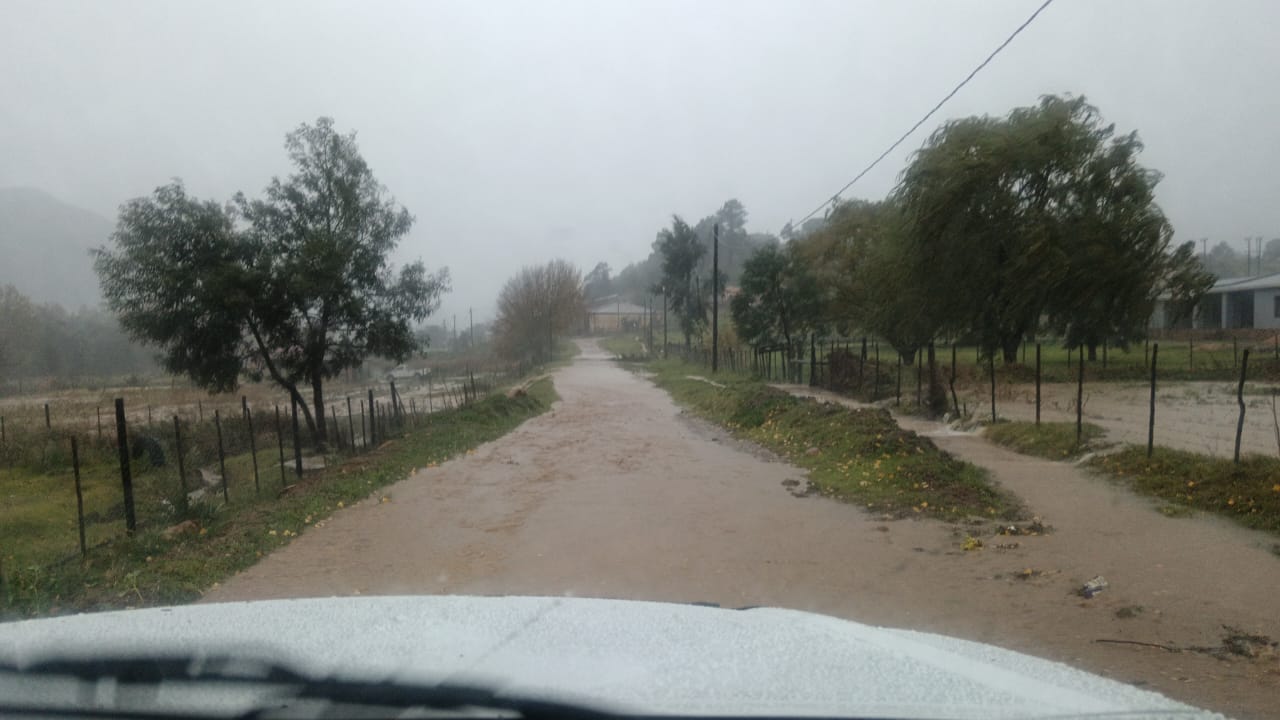 Uniondale. Photo supplied by George Municipality
The parts that were the worst hit are Knysna, Plettenberg Bay, Oudtshoorn and the Langkloof. Hundreds of residents were evacuated after homes were damaged, roofs blown off and informal settlements flooded. Electricity outages, communication failures and water supply disruptions remain major concerns in several areas.
About 76 people remain trapped in the De Vlugt area. Areas beyond Angie’s G Spot are still inaccessible and an EMS helicopter was to be deployed to deliver food parcels and medical care.
Helicopter surveillance is also planned for the Kammanassie area which is still inaccessible.
In Uniondale a water tanker is supplying water as the main water pipeline from the dam to the town was washed away. “They have an emergency pump and a generator there to provide the town with water.”
In Meiringspoort, where access roads were closed early when water levels started to rise, a truck had gone missing, which was discovered only this morning. It has been established that the driver and co-driver are safe and they were to be evacuated by helicopter. He said the poort suffered severe flooding. Helicopter surveys will establish the full extent of the damage, but it is foreseen that repairs will take a long time.
Due to flooding of the Grobbelaars River 64 people, of whom 42 are tourists from Namibia, are still trapped at the Kango Mountain Resort.
The Knysna and Bitou areas were hardest hit where about 460 people had to be evacuated. Informal settlements suffered severe storm damage. Restoring water supply in Bitou is a major concern as the treatment facilities cannot yet be accessed.
Meyer said only four of the region’s 40 clinics and hospitals were significantly affected. He praised churches, non-governmental organisations, farmers and community groups for their support for communities. Evacuations and humanitarian relief will continue.
He emphasised the economic importance of the Garden Route to tourism, agriculture and job creation and said it is a critical contributor to the Western Cape economy and should be protected. When something like this happens it would have an impact on the gross domestic product.
‘We bring you the latest Garden Route, Hessequa, Karoo news’