


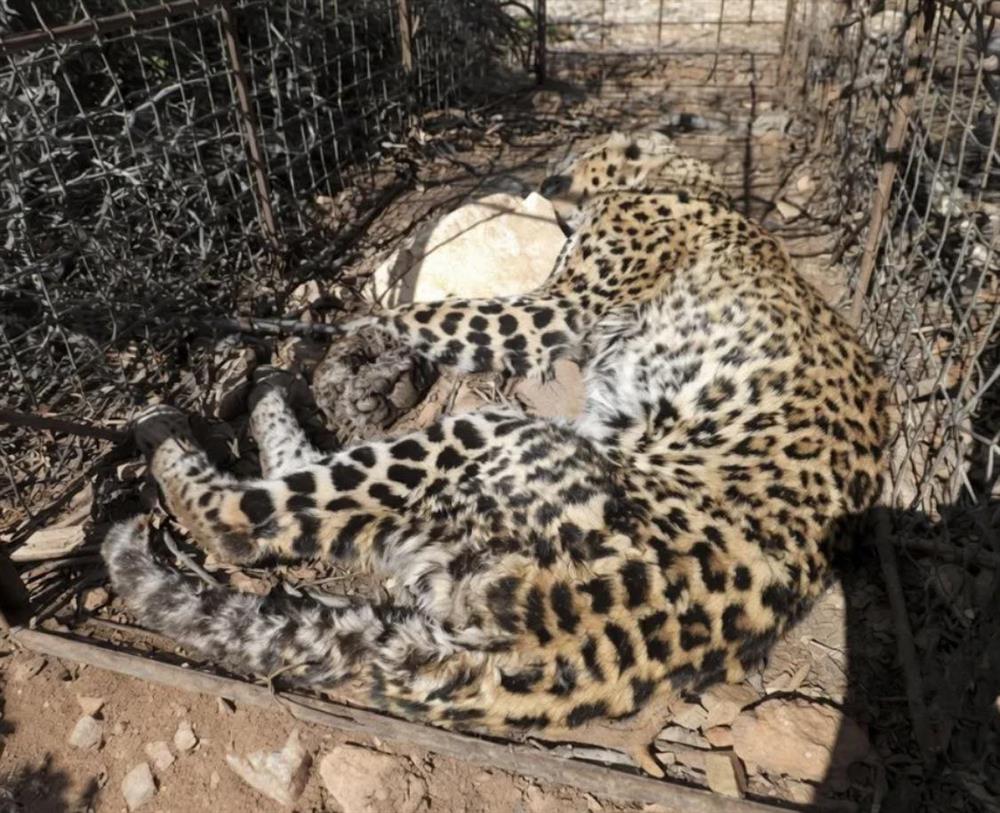
GEORGE NEWS - Uniondale farmer André Barnard was handed wholly suspended fines totalling R60 000 by the Thembalethu Regional Court earlier today, Wednesday 7 October, following his conviction on six charges relating to the illegal trapping and death of a leopard on his farm in 2020.
Barnard was sentenced to a R40 000 fine or two years’ imprisonment on counts one and two, wholly suspended for five years on condition that he is not convicted of a similar offence committed during the suspension period.
On counts three to six, he was sentenced to a R20 000 fine or 12 months’ imprisonment, also wholly suspended for five years on the same condition.
No restriction was imposed on Barnard obtaining hunting permits. The magistrate informed him that he had 10 days to appeal the sentence.
State seeks imprisonment
In aggravation of sentence, the State emphasised the seriousness of the offences and the suffering endured by the leopard. The court heard that the animal was dehydrated and starved and may have survived in the trap for up to 21 days.
It had apparently tried to consume sticks, as some were found in its stomach, and there were indications that it had attempted to escape. The State argued that Barnard could and should have ensured that the cage was inspected.
It also stressed the conservation significance of the loss of a free-roaming leopard. Although CapeNature could not attach a commercial value to the animal, the State argued that its loss went beyond monetary value and that wildlife had to be protected for future generations.
The State argued that reports before the court indicated that Barnard had not shown remorse. Although he was considered a suitable candidate for correctional supervision, it questioned whether this would have sufficient rehabilitative or deterrent effect given that he now farms in a secluded area near Douglas in the Northern Cape.
It sought direct imprisonment coupled with a substantial fine and asked the court to declare Barnard unfit to obtain hunting permits.
Defence argues against jail
The defence argued that direct imprisonment would be disproportionate and that a fine or correctional supervision would be appropriate.
It emphasised that Barnard (55) is a first offender, lifelong farmer, self-employed and the primary breadwinner with a strong family support structure. It argued there was no evidence that he posed a risk of committing a similar offence again.
The defence referred to the financial and personal consequences experienced by Barnard and his family, including drought and livestock losses, financial difficulties, the loss of their family farm, public ostracisation and disruption to his children’s schooling.
It also asked the court to consider the more than six years that had passed since the offence and the lengthy legal proceedings.
The defence argued that there was no commercial motive and distinguished the case from wildlife crimes committed for financial gain.
Court weighs circumstances
During sentencing, the magistrate said the court had to balance the seriousness of the six charges, Barnard’s personal circumstances and the interests of society.
The court regarded the offences as serious, particularly because they involved a protected animal, and recognised the importance of conserving wildlife for future generations. However, the magistrate said public anger or indignation could not determine the sentence.
The court considered two reports and Barnard’s circumstances, including that he is a first offender, married, has two adult children and continues to earn his living through farming after relocating to the Northern Cape.
The magistrate also considered the absence of a commercial motive and said the applicable offences provide for fines and do not prescribe a minimum prison sentence.
The court ultimately found that direct imprisonment was not appropriate and allowed Barnard to remain productive and earn an income, while imposing a sentence intended to deter him and others from similar conduct.
The court did not grant an application by Dr Bool Smuts of the Landmark Foundation seeking leave to make submissions during sentencing in the public interest.
Six charges
Barnard, formerly of Toorwater Farm on the southern slopes of the Swartberg, was found guilty on all six charges on 29 May after initially pleading not guilty.
The charges stem from August 2020, when a leopard was caught in a cage trap on the farm and subsequently died after being left without food and water.
Barnard was convicted on two charges under the Western Cape Nature Conservation Ordinance and four charges under the Animals Protection Act.
The case has been before court for several years and has attracted attention from conservation organisations, particularly the Landmark Foundation.
‘We bring you the latest Garden Route, Hessequa, Karoo news’