

Video
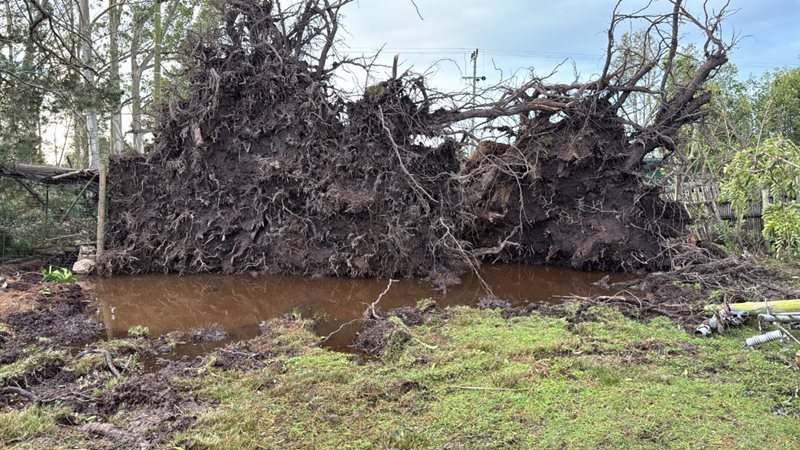
GEORGE NEWS - Two people died, roads were cut off for days and some residents were left without electricity for up to 11 days after many invasive alien trees came crashing down across the Garden Route during the recent storms.
Hundreds of trees crashed down across Wilderness and Hoekwil, blocking roads, damaging infrastructure such as poles, lines and transformers, and hampering emergency access.
Now an expert is warning that unless these invasive species are urgently removed, dire repercussions could result. “If you don’t manage aliens, more lives could be lost,” said Dr Arne Witt, an invasive species expert and Wilderness resident, who believes the widespread storm damage exposed the growing danger invasive trees pose to communities, roads and critical infrastructure.
According to him, an estimated 98% of the fallen trees were invasive species such as pines, wattles, blackwoods and bluegums.
Dane Izatt, a Wilderness resident of 40 years, volunteer and Wilderness satellite base manager at First Care Wildfire Support, said he and his team had spent three consecutive days cutting the roads in Wilderness open to ensure emergency services, residents and municipal teams could maintain access to the areas that had been blocked by fallen trees after the recent windstorm.
“The scale of it just overwhelmed us. It just happened too fast, and we could not keep up.”
According to Izatt, although invasive trees often provide shade, their shallow root systems make them particularly vulnerable during severe wind conditions.
He said invasive vegetation along road reserves is often not sufficiently managed because of budget constraints, and that concerns over the risks posed by these species have been raised for years. “They not only pose a risk to infrastructure, safety and roads, but also fuel fires,” he said.
 The George Municipality’s electrotechnical workers attend to some power outages in Wilderness on 27 May. The restoration to the area is expected to be completed today, 28 May. Photo: Dane Izatt
Izatt confirmed that by Wednesday, he and several other residents were still without power despite the ongoing efforts by the municipal teams to restore services.
According to him, transformer stock has been depleted and, because some affected properties have access to solar power, areas with greater immediate need are being prioritised.
Multiple households in Touwsranten were still without power until Tuesday. These residents are reportedly powered by Eskom.
WATCH: As Witt explain the long-term risks invasive species pose to infrastructure, public safety and future disasters.
Witt echoed these concerns, saying the storms once again exposed the risks associated with invasive alien trees in the landscape.
“In Wilderness Heights, all roads, including the Seven Passes one, were blocked by alien trees, in some cases for several days,” Witt said.
Witt questioned whether more proactive management of invasive species at the seedling stage could help reduce future costs and damage. “Why do the authorities not deal with alien trees when they are seedlings or saplings, when they are far cheaper to remove?” he asked.
Witt stressed that if there had been no alien trees in Wilderness Heights, it was unlikely that roads would have been blocked or that residents would have experienced widespread power outages.
He added that repairing the electricity network alone is expected to cost millions.
Response from the George Municipality
George Municipalitysaid it continues to implement and review its Alien Invasive Management Programme and Plan. A tree-planting masterplan is also being developed, which will include the replacement of invasive trees in road reserves.
The municipality said the plan addresses compliance with the National Environmental Management: Biodiversity Act (Nemba) and prioritises alien clearing according to risks posed to infrastructure.
The enforcement authority for the management of invasive species falls under the Department of Forestry, Fisheries and the Environment.
The municipality’s spokesperson, Chantèl Edwards, said: “The municipality follows an interdepartmental and collaborative approach to vegetation management near municipal power infrastructure.”
She added that routine inspections and maintenance are conducted to reduce risks to infrastructure, public safety and service continuity.
Previous articles:
‘We bring you the latest Garden Route, Hessequa, Karoo news’