


CRIME NEWS - The fourth-quarter 2025/2026 crime statistics released by the South African Police Service (SAPS) on Friday 22 May, did nothing to allay Western Cape residents' grave concerns about rampant crime in the province.
With a modest percentage drop of 8%, the murder rate in the province still translates to 11 murders per day or 983 murders in total for the first three months of 2026.
Countrywide, 5 181 people were murdered from 1 January to 31 March - 58 people every day.
Acting Police Minister Firoz Cachalia warned that arguments, alcohol abuse, toxic masculinity and the normalisation of violence, continue to fuel violent crimes.
During the quarter, more than 7 200 incidents of murder, attempted murder, rape and assault were linked to alcohol abuse.
He says half of all reported rapes in South Africa, occurred at home.
Of the 9 782 rapes, 4 620 took place either at the home of the victim or the perpetrator. More than 1 500 murders, during the same period, also occurred in domestic settings.
According to a United Nations report South Africa’s femicide rate is five times higher than the global average, with more than half of murdered women killed by intimate partners or men known to them.
Gang violence in Western Cape
Benedicta van Minnen, MPP, DA Western Cape spokesperson on police oversight and community safety says it is crucial to note that the slight reduction in violent crimes in the Western Cape occurred prior to the deployment of the SANDF under Operation Prosper.
Contrary to expectations, since the SANDF arrived in hotspots on the Cape Flats and surrounds, there has been an increase in gang violence.
This past weekend alone gun violence claimed the lives of 13 people - seven individuals in Kayamandi in Stellenbosch, three in Makhaza and three in Endlovini - the latter two areas are part of Khayelitsha on the Cape Flats.
Key provincial crime statistics for the quarter include:
- Murders: 983 incidents were recorded, a decrease of 8% from the previous year, with gang-related conflicts accounting for 225 cases.
- Contact crimes: 28 235 counts, down 6,5%, including 1 025 attempted murders and 5 994 cases of assault GBH (Grievous Bodily Harm).
- Hotspot stations: Mfuleni recorded the highest number of murders at 53, followed closely by Delft with 51 and Gugulethu with 49.
- The murder rates in Gugulethu increased by 19,5% and in Khayelitsha by 26,3%.
Western Cape Minister of Police Oversight and Community Safety, Anroux Marais appeals to both residents and Saps to work together.
"A proper, functional intelligence capability is essential if we are to prevent killings before they occur.
"We need to restore public confidence in the SAPS, encourage residents to come forward with information on criminal activities, and ensure that sensitive information is handled responsibly so that those who assist law enforcement are properly protected."
Premier Alan Winde says the levels of violence in the province remain unacceptably high. "Gang violence is a serious concern, accounting for the majority of murders in this region," he says.
Van Minnen says Western Cape police stations are under-resourced, and local detectives face impossible caseloads that hinder thorough investigations.
"We need real reforms that translate directly into safer communities."
She says Saps must implement targeted structural interventions:
- Investigative powers for capable local and provincial governments: Expanding investigative powers to provinces and municipalities will enable local law enforcement to build court-ready dockets and secure convictions.
- Mandatory integrity measures: Introducing strict lifestyle audits for senior SAPS management is vital to root out corruption and syndicate collusion. The Western Cape Government offered to pay for this, and Saps still refused to conduct any lifestyle audits.
- Detective support: National resourcing must prioritise equipping local detective branches with the forensic tools and administrative capacity needed to clear heavy case backlogs.
AfriForum welcomes Cachalia's positive stance
AfriForum also says policing cannot be effectively managed through a centralised system when communities’ challenges with relation to crime, differ drastically from region to region.
"It is therefore encouraging that Acting Minister Cachalia has adopted a positive stance towards expanded cooperation with local safety structures," says Jacques Broodryk, AfriForum’s spokesperson for community safety.
"The Acting Minister must now put words into action and enter into formal cooperation agreements with local safety structures so that not only a slight decline in the crime statistics is recorded, but a tangible difference is felt on grassroots level," Broodryk says.
Environmental crimes
The Western Cape is also plagued by environmental crimes.
Last week 500 kg of abalone, valued at about R900 000, were seized near Simon's Town and Gordon's Bay and two poachers were arrested.
Dave Bryant, MPP, DA Western Cape spokesperson on local government, environmental affairs and development planning, says while these arrests and the recovery of 8 792 units of abalone are a massive victory, they also expose the relentless scale of the illicit marine trade threatening the Western Cape's delicate coastal ecosystems.
"We applaud the rapid response and excellent collaboration of all the departments and conservation bodies involved in the busts. However, our unique marine biodiversity remains under severe, existential threat from highly organised poaching syndicates.
"These criminal networks devastate local ecological balances and fund broader criminal syndicates in our communities."
The busts were the result of cooperation between the Department of Forestry, Fisheries and the Environment (DFFE), CapeNature, SANParks Sea Rangers, K9 units, the City of Cape Town and Provincial Traffic Services.
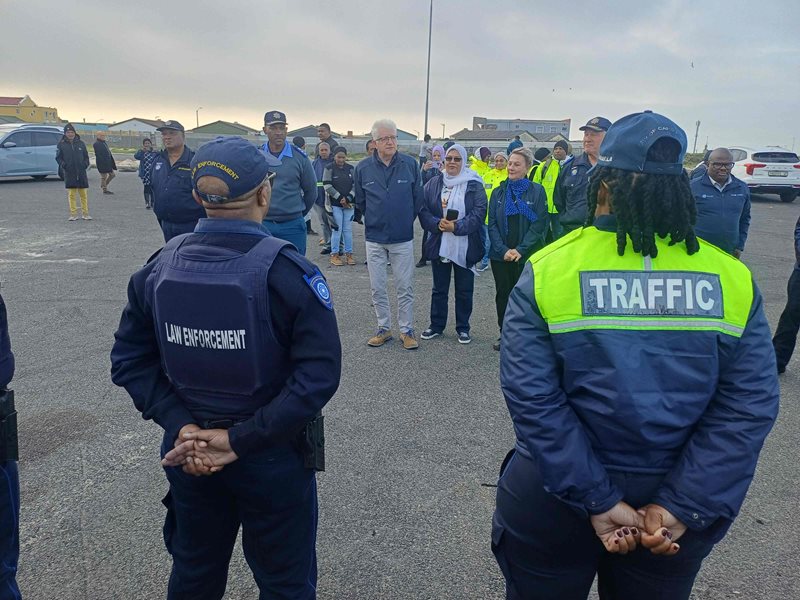
Earlier this week, the Premier, Minister Marais and Mayco Member for Safety and Security in Cape Town, JP Smith, accompanied LEAP, Law Enforcement, SAPS, and Provincial Traffic officials, as well as Neighbourhood Watch Members, on a walkabout in Tafelsig in Mitchells Plain.
Winde says the message was clear: "Criminals must be rooted out of their community."
‘We bring you the latest Garden Route, Hessequa, Karoo news’