


Update
GEORGE NEWS - A prohibition notice has been issued to the employer operating Summer Sixteen, the farm near Herold’s Bay where three men died during a chemical-related incident on Tuesday 13 October.
This is a legally enforceable instruction issued by an occupational health and safety inspector that requires an employer to stop a particular activity, operation, or the use of equipment that poses a danger to workers or others.
The prohibition remains in force until the identified safety concerns have been addressed and the notice is revoked.
However, the issuing of such a notice does not automatically mean that an employer has contravened the law or that an entire workplace must close.
The Department of Employment and Labour confirmed that the incident was reported on the day of the tragedy and that occupational health and safety inspectors visited the farm and conducted a preliminary investigation.
According to the department’s spokesperson, Teboho Thejane, an investigation has since been initiated in terms of Section 31 of the Occupational Health and Safety Act to establish the circumstances surrounding the deaths and determine whether appropriate workplace safety measures were in place.
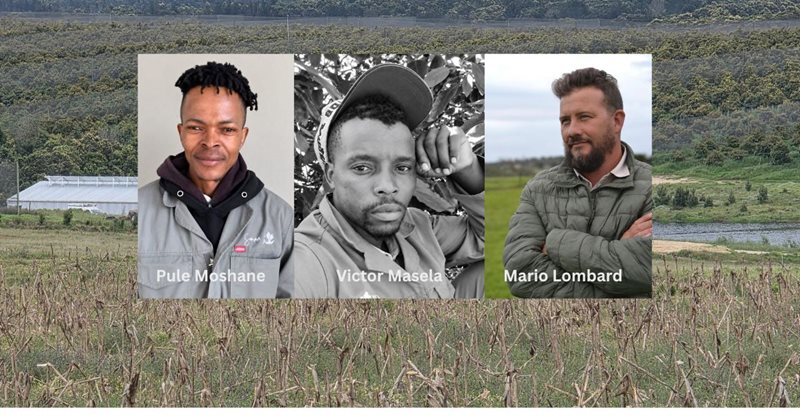
The deceased were farm manager Mario Lombard (41) and farmworkers Pule Johannes Moshane (36) and Tiisetso Victor Masela (33).
In response to detailed media enquiries from George Herald, the department confirmed that the prohibition notice had been issued to the employer. However, it did not specify which activities or operations were prohibited or provide details of the conditions attached to the notice.
Safety measures under investigation
Thejane said the investigation would examine the safety precautions and measures implemented to protect employees, including those working with potentially hazardous chemicals.
According to him, various regulations under the Occupational Health and Safety Act could apply, including those governing hazardous chemical agents and general workplace safety.
However, the investigators have not yet established whether the cleaning of the fertiliser tank contributed to the incident or whether any safety regulations were breached.
Thejane emphasised that the tank itself, or the possibility that it constituted a confined space, could not be singled out as the cause of the tragedy at this stage.
Among the factors to be investigated is the type of chemicals present and whether they could have caused oxygen deprivation or interfered with the body’s ability to use oxygen.
The department explained that certain substances can act as simple asphyxiants by displacing oxygen in the air, while chemical asphyxiants interfere with the body’s ability to transport or use oxygen, even when normal oxygen levels are present.
These are possible hazards being considered and have not been confirmed as the cause of the deaths.
What happened on the farm?
As previously reported, Summer Sixteen (Pty) Ltd, the company operating the farm, released a statement on 15 October outlining the sequence of events.
According to the company, some workers were carrying out routine cleaning of an empty fertiliser tank, removing accumulated residue from the bottom, when one employee collapsed.
Two colleagues entered the tank to fetch him and managed to bring him out to safety. However, both rescuers subsequently lost consciousness.
Lombard then entered the tank in an attempt to save his two colleagues, but also lost consciousness. All three men died on the scene.
The worker initially rescued was taken to George Hospital for treatment and was discharged the following morning.
Employers’ safety obligations
In response to questions about the precautions required when employees work with hazardous substances or enter storage tanks, the department outlined employers’ legal responsibilities.
These include identifying workplace hazards, conducting appropriate risk assessments and implementing measures to minimise employees’ exposure to danger.
Depending on the risks identified, these measures may include atmospheric testing, ventilation, suitable personal protective equipment, adequate training and supervision.
Employers are also required to establish emergency procedures suited to the hazards present in their workplaces.
These should address emergency responses, evacuation, rescue procedures, first aid and the protection of employees and others who may be affected by workplace incidents.
The department confirmed that its investigation would examine whether appropriate safety precautions and protective measures had been implemented in this case.
Possible further action
Asked what consequences could follow if the investigators established that occupational health and safety legislation had been contravened, the department said the enforcement measures would depend on the findings.
These could include additional enforcement notices, recommendations for prosecution or other measures provided for under the Occupational Health and Safety Act.
However, no findings of non-compliance have yet been announced.
The department said a decision on whether to conduct a formal inquiry would be considered once the Section 31 investigation had been completed and all relevant facts established.
Meanwhile, the police have opened an inquest docket to investigate the circumstances surrounding the three deaths.
Previous articles:
- Herold’s Bay tragedy: Farming company reveals details of fatal rescue attempts
- Herold’s Bay tragedy: Cause of three men’s deaths still under investigation
- Herold’s Bay farm tragedy: Three dead after chemical incident, tributes pour in
- Phosphoric acid among chemicals in fatal Herold’s Bay farm incident
- 3 sterf ná blootstelling aan vermoedelike gifstof op plaas naby Heroldsbaai
‘We bring you the latest Garden Route, Hessequa, Karoo news’