

GARDEN ROUTE | KLEIN KAROO NEWS - For farmers living alongside free-roaming predators, the presence of leopards can cause a huge financial loss when livestock or game are lost to predation.
At the same time, conservation organisations are working to protect leopard populations and find ways for predators and farming communities to coexist.
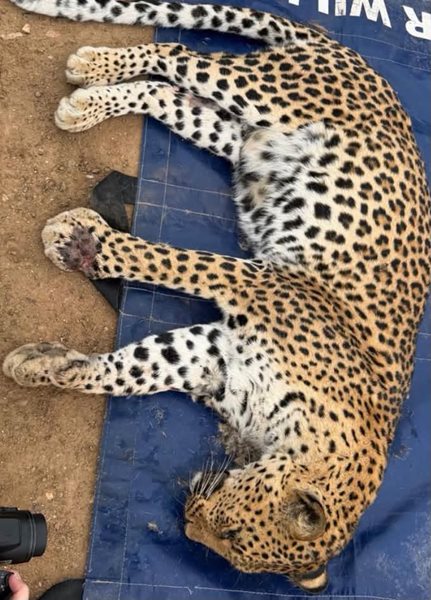
Questions about the role of conservation organisations in helping farmers manage human-leopard conflict in the Uniondale area have prompted a detailed response from the Landmark Foundation. Barry Barnardt raised the questions in an open letter following renewed attention on the death of a leopard on a Uniondale farm in 2020 and the subsequent prosecution of farmer André Barnard.
Barnard was convicted earlier this year on six charges relating to the illegal trapping and death of the leopard. The matter is due to return to the Thembalethu Regional Court on 7 October for sentencing.
Barnardt questioned what practical work Landmark had done with farmers in the district since the leopard's death, including engagement with commercial farmers and the local farmers' association, assistance with preventing livestock and game losses, compensation for verified leopard predation and whether recommended mitigation measures had been adopted.
He also questioned whether Landmark had assessed the effectiveness and affordability of its interventions and how many leopards had been saved through its direct assistance to farmers in the area.
Barnardt said his questions were not intended to diminish the importance of leopard conservation, but to examine the responsibilities of conservation organisations working in areas where farmers and free-roaming predators must coexist.
Landmark responds
Landmark Foundation founder Dr Bool Smuts said the organisation's work should be viewed in the context of more than 20 years of leopard conservation across the Western, Eastern and Northern Cape.
He said Landmark focuses primarily on advocacy, while the Landmark Rewilding Trust conducts research, education and direct-action interventions.
According to Smuts, Landmark has engaged with many landowners in the Uniondale district, including 30 landowners in detailed leopard conservation work over the past two years alone.
"But attitudes remain hardened among some landowners still committed to lethal predator control rather than the non-lethal methods now scientifically shown to protect livestock and biodiversity together. Five leopards and one serval have died in conflict incidents in this district during our years of involvement there. Over the same period, we have rescued four other leopards there. That tally shows how much work remains; not how little has been done."
Compensation scheme
Landmark said its compensation mechanism has operated since 2008 and is based on participating farmers agreeing to forgo lethal control and implement verifiable non-lethal mitigation measures.
"Where a leopard is GPS-collared, verified livestock losses are compensated according to the animal's location data, with payments based on current market slaughter value. More than R1 million has been paid through the scheme to date," said Smuts.
No compensation is paid when a leopard is killed or removed.
The foundation said it has published 24 peer-reviewed scientific papers with universities and international partners and disputed the suggestion that little conservation work had taken place in Uniondale.
Read Barnardt's letter here: George Herald open questions to The landmark Foundation.pdf
Read The Landmark Foundation's response here: Landmark Foundation's Response.pdf
‘We bring you the latest Garden Route, Hessequa, Karoo news’